

Putting Children First in Population Health: Reflections from the Population Health Conference
The conference opened with a simple but powerful icebreaker: finding three things in common with a neighbour. What emerged was a shared passion for the North East and for children’s health. As one speaker reminded us, “We must listen non judgementally to lived experience,” setting the tone for a day filled with honesty, urgency and hope.
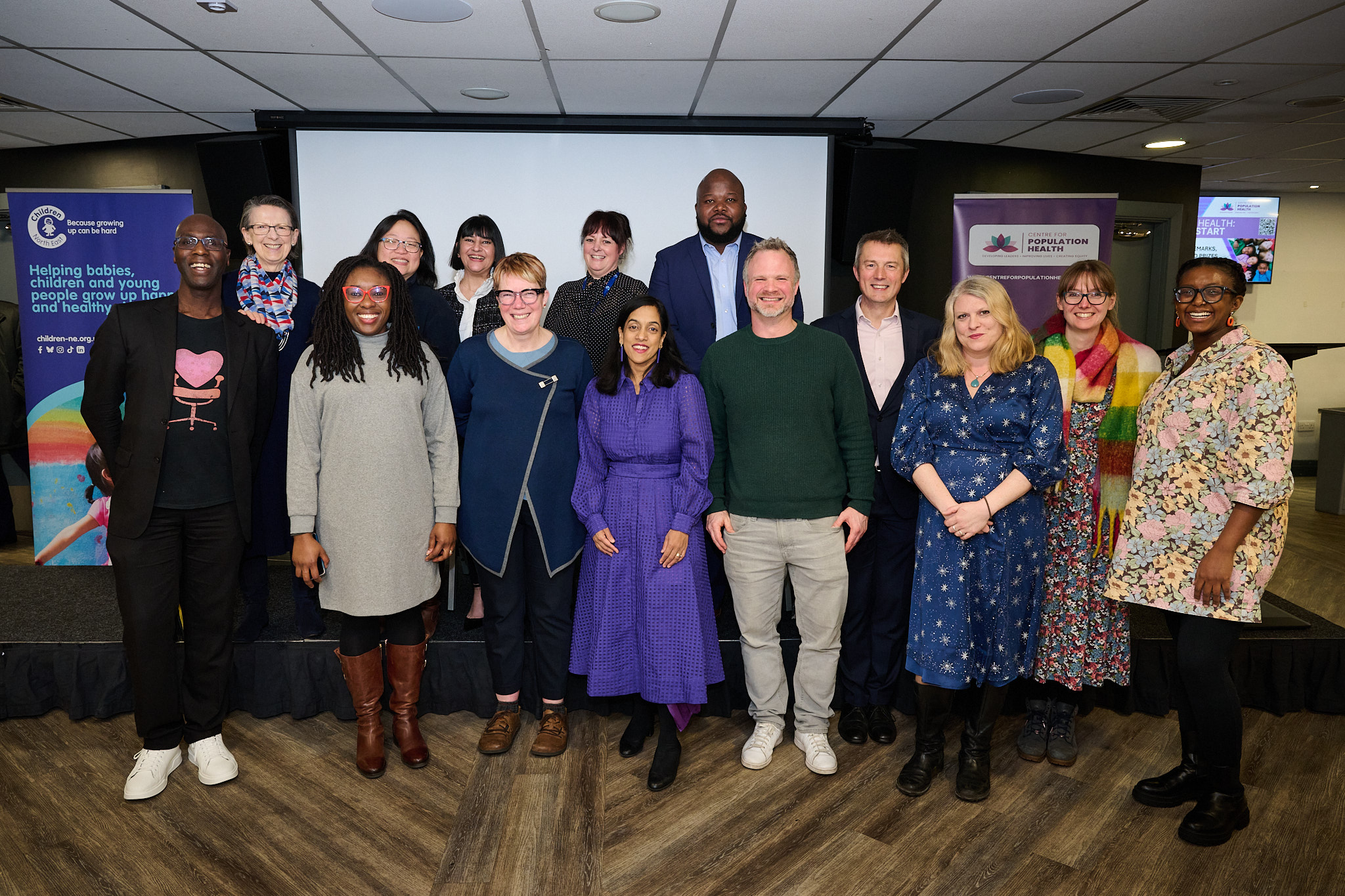
Hosted by Children North East and the Centre for Population Health, the conference brought partners, practitioners, and young people’s voices together in Newcastle to confront the stark inequalities facing children and families in the region. With 32% of children in Newcastle living in poverty, and life trajectories shaped dramatically by postcode, the event explored what needs to change, and what is already working, to build a healthier future for every child.
The day highlighted the emotional and practical realities for children growing up in deprivation, including powerful video content and personal testimonies and speakers emphasised that without truly hearing children, families and communities, services cannot hope to address inequality.
“If we invest in young people now, it won’t show straight away — but it will in 10 years’ time.”
From the high prevalence of asthma and poor oral health in the region, to the soaring number of school suspensions, speakers outlined the structural issues creating poor outcomes. Prevention was reframed as more than “stopping harm” — it’s about creating environments where babies, children and young people can thrive.
The most powerful moments came from personal stories — a consultant’s account of a mother’s experience of repeated missed hospital appointments because transport failed; young people moved eight times before the age of two; families who cannot read health letters because translations simply don’t exist.
Speakers made clear that children in the North East face deeper health and social inequalities than almost anywhere else in the country. Poverty, unstable housing, school exclusion and inaccessible services are all preventable contributors to poor outcomes. But the event also highlighted opportunity: more joined up working, neighbourhood level solutions, creative community programmes and a renewed commitment to listening to young people.
How Poverty Proofing® can support population health
“Healthy food is two times as expensive as normal food per calorie.”
This point underscores how cost barriers shape everyday choices: when nutritious options are financially out of reach, families are pushed toward cheaper, calorie-dense foods, reinforcing cycles of poor health and inequality. On the day, we delivered breakout sessions on what Poverty Proofing is and why it is so important to break down the barriers so health access is equitable.
“This learning has been an eye-opener. I have new awareness of how poverty can affect people. I hope to explore more about how finding help for my patients and advocate for them.”
“It identifies issues that you may not be aware are present in your organisation and can provide opportunities and suggestions on how best to address them.”
Embedding Poverty Proofing® in practice is a strategic, preventative approach to improving health outcomes and reducing inequalities. So far, Children North East have worked with a range of healthcare services including maternity, paediatric diabetes, CAMHS and community practices.
The day ended with a reminder that children don’t vote, and that makes it our job to put them first. The passion, honesty and courage shared across the conference were a powerful call to hope and collective action. Together, we can create a region where every child has the chance to grow up healthy, safe and supported.
Attending the conference didn’t so much alter my professional outlook as it reaffirmed it. The discussions and lived experiences shared throughout the day strengthened my belief that meaningful change happens when we truly listen, work collaboratively, and challenge the structures that keep families locked in inequality. It reinforced why the principles behind Poverty Proofing® matter so deeply in my day-to-day work, ensuring that every decision, practice and policy is shaped with children’s realities at the centre.
To find out more about Poverty Proofing Healthcare;
Email: [email protected]
Call: 0191 256 2444
Guest blog by Eva Thwaite, Poverty Proofing® Support Worker