

18th May 2026
With pre-pandemic child poverty already at unacceptable levels and more families falling into the poverty trap due to COVID-19, never has our Poverty Proofing the School Day work been more relevant.
The release of Child Poverty Action Group’s ‘The Cost of Learning in Lockdown – family experiences of school closures’ a report of the survey of 3,600 parents and carers, gives us extremely useful insight into what life has been like for those living on low incomes during the pandemic.
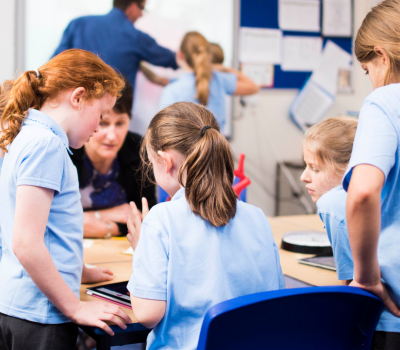
Many schools have not closed during lockdown and continue to pour time and resources into educating all pupils and students in new ways. However, many educators, researchers and decision-makers are seriously concerned that inequalities are being exacerbated by the pandemic. Most children have not attended school since the end of March and for them, home schooling has become the new norm. However, as the CPAG survey highlights, too many families are struggling to provide support, not because they do not want to, but because they are unable to.
Around a third of all families who responded said that they were enjoying learning at home, and these families were much less likely to report having money worries or lacking the resources they needed. Families who were worried about money were more likely to say they found it difficult to continue their children’s education at home.
In the survey, 40% of low-income families reported they were missing at least one essential resource to support their children’s learning – one third of the families who are most worried about money have had to buy a laptop, tablet or other device. It is fantastic that money has been made available to resource this but devices need to get to the right students NOW!
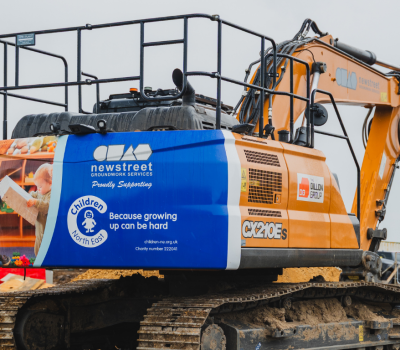
Here at Children North East, we have been able to support some pupils with laptops thanks to the generous donations of individuals and businesses. However, we would still like to do more.
There is also a call for more support for children and parents during current and future disruptions to school life – alternatives to free school meals must continue over the summer break as the report was completed before the successful #HolidaysWithoutHunger campaigning of Marcus Rashford, amongst others, to ensure that Free School Meals continue throughout the summer holidays.
Of course, there is the wider question as to why, in a society that values compassion, children are allowed to go hungry. And there are also more practical questions as to how can we ensure that all children now eligible for Free School Meals are registered and how to ensure that the delivery of this service is done in a dignified way that does not identify those in receipt of them. Looking back to our own school days, we know all too well the stigma that is too often attached to being a recipient of free school meals.
Adapting and building upon our work over the past five years, the survey has helped form our Poverty the Proofing the School Day COVID-19 response. Having poverty proofed hundreds of schools, we know the impact of our work. Our new streamlined, cost-effective version by no means replaces a full audit, but it does provide schools remotely with a powerful tool to identify key issues within their communities and offer solutions that do not inadvertently highlight or exclude those on low incomes. It’s about ensuring schools are fully inclusive.
For more information please contact myself, Lorna Nicoll, at [email protected]
Our news story about the CPAG/Children North East report is here
18th May 2026

30th April 2026
How Little Minds in Mind Helped One Mum Feel Like Herself Again

16th April 2026
Masquer‑Aid: Building Confidence, Community and Self‑Advocacy

1st April 2026
We thank Marcus Rashford for highlighting the issue of food poverty in the UK and for his letter to MPs urging them to reverse their decision to cancel the free school meals voucher scheme in England over the summer holidays.
Thanks to his intervention, the Government has now made £120m available to ensure children eligible for free school meals will receive a voucher. Marcus’ account of what life was like growing up, relying on food banks and free school meals, underlines what is unfortunately an all too familiar experience for the 1.3 million children who receive free school meals in England.
It also demonstrates the power of the voice of someone who has lived in poverty, which is why our Poverty Proofing work is so important. Poverty Proofing the School Day is a toolkit for schools, to reduce stigma and remove barriers to learning. Our school research and delivery practitioners spend time in each school, experiencing what a school day is like for a pupil by speaking to pupils, parents, staff and governors.
By listening to the voice of those in poverty, it identifies any stigmatising practices and policies and leads to a unique action plan for the school to take forward. As a result of the Covid-19 pandemic, now more than ever, this work is important as we see widening inequalities and more families being pulled into the grip of poverty.
“Whilst the Government has reversed its decision on the food voucher scheme for the summer holidays, this is not the end of it, this is merely a starting point.”
Food insecurity is being exacerbated as a result of Covid-19. For example, the Food Foundation estimates 200,000 children have had to skip meals because their families couldn’t access sufficient food during lockdown. In addition, Northumbria University has found that prior to school closures, approximately 25% of children skipped at least one meal a day. This has increased to 35% after school closures and 10% of children skipping more than one meal per day.
Families cannot continue like this, school holiday to holiday, wondering how, when and if they will be able to put food on the table. It is now clearer than ever that a long term commitment and plan from the Government is needed for year-round free school meal provision so that children in poverty are not left hungry.
18th May 2026
30th April 2026
How Little Minds in Mind Helped One Mum Feel Like Herself Again
16th April 2026
Masquer‑Aid: Building Confidence, Community and Self‑Advocacy
1st April 2026
Dr Beng Huat See of Durham University
On 23 March, the UK government announced a nationwide lockdown. Schools and businesses were closed with immediate effect. The suddenness of the closure left many schools unprepared for the new reality and alternative ways to deliver their lessons were hastily conceived. Many schools resorted to online learning platforms to ensure that teaching could continue.
Concerns were immediately raised about the lack of access to online learning for our poorest children. Technological devices to support such learning, which are taken for granted by many of us, are out of reach for many of these children. There were fears that the prolonged closure of schools would further widen the attainment gap.
There are clear reasons for these concerns. Schools in the most deprived areas are less likely to have the necessary digital technology for remote teaching, and their teachers are less likely to be trained to use online platforms. The Teacher Tapp survey reported that teachers, especially those in deprived schools, were ill-prepared for distance teaching.
Nearly half of teachers in the most deprived schools reported that they did not think they could broadcast a lesson. Only 3% of teachers in the poorest schools hosted an online class, and only 4% had audio/video calls with a student. While 60% of private schools in the richest areas already have an online platform in place, the figure was 23% for the most deprived schools, according to the Sutton Trust report. Children from working class families were also less likely to take part in online lessons.
A recent survey by Durham University shows that about 60% of teachers had no previous experience in online teaching: only 59% said they were confident in using education technology tools to deliver lessons and only 47% reported being well-supported with adequate resources.
Children North East reports that some children access school work using their parents’ smartphones.
In a family with more than one child, sharing a smartphone to view online lessons or to access websites for homework can be particularly challenging. Some children do not even have a desk or writing implements at home. Although the government announced a centralised package to support some of these children, provision of laptops and tablets as well as internet access is prioritised for children in care, children with a social worker and disadvantaged children in Year 10. Even then, such provisions only came a month after the lockdown began.
But empirical evidence on the benefits of technological devices like laptops and smartphones is not clear. Randomised control trials (the most robust form of evidence) conducted in low-performing schools in deprived areas suggest that emails, text messages and phone calls about children’s assignments and performance at school are the most promising parental engagement tool that have positive effects on children’s learning (Miller et al.2017; Bergman 2015; York & Loeb).
Some even suggested better outcomes for children with lower attainment. It is possible the lack of access to iPads or computers at home may not be such a big disadvantage after all as long as schools can keep in touch with parents and inform them of work to be completed or send ideas for activities that they can use for home learning via mobile apps or text messages.
Our recent survey of over 3,000 teachers during the period of school closure shows that the majority of teachers (89%) spend up to five hours a week communicating with parents, most often by emails. Teachers have reported literally delivering schoolwork to homes for their pupils. It is the consistent and maintained contact with students that is important. According to the EEF review, it is the quality of teaching rather than the medium of delivery that is more important.
Teachers have done an excellent job and should be applauded for the work they have done under very challenging circumstances, sometimes putting themselves at risk of infection in going to school to teach the vulnerable children and those of key workers.
However, we must not forget that the real problem for many of the poorest children is their mental health. Prolonged periods of isolation away from friends can have a negative impact on children’s psychological and physical health, and those most affected will be children living in deprived communities.
Lack of outdoor space means lack of physical activity, more screen time and irregular sleep patterns. These children are also living in households where parents’ jobs are uncertain and financial conditions are precarious.
There is an increased risk of anxiety and stress and even possible exposure to domestic violence and sexual abuse. Child protection services and safeguards for vulnerable children will be compromised with less frequent visits from social workers. For these children mental health is a real issue. Psychologists say increasing cases of depression and anxiety among children are recorded in several countries.
Post-lockdown, the Government needs to think about how teachers can be supported and better prepared and how access to vulnerable children could be maintained. The system needs to be structured so that in future, if the need for lockdown arises again, measures are in place to promote equality of access and safeguarding of children.
In the longer term, we should think about the wellbeing and mental health of pupils and staff. The UN has warned of a looming mental health crisis and urged governments to redress the historic under-investment in psychological services. The pressures of lockdown will have consequences far beyond the economic. As strategy for the national recovery is formulated, it is vital that policy and investment supports the mental health needs of both pupils and students.
18th May 2026
30th April 2026
How Little Minds in Mind Helped One Mum Feel Like Herself Again
16th April 2026
Masquer‑Aid: Building Confidence, Community and Self‑Advocacy
1st April 2026
We are now several months into the coronavirus pandemic and nine weeks into lockdown, yet still rarely do we hear about how children and young people are experiencing this crisis.
Understandably the initial focus of the media and politicians has been on those most at risk and those on the front line responding to the crisis, like the NHS. However, we have almost entirely heard from adults about adults, for example the impact on jobs, the self-employed and parents.
“What is life like for young people right now? What will the impact be on this generation of young people, who are already bearing the brunt of a decade of austerity?”
As researchers, we are keen to understand how young people are experiencing the pandemic.
It is impossible to make predictions about longer-term outcomes and it would be wrong to rush to quick conclusions. However, it is at least feasible, that young adults will be experiencing now, and will face in the future, negative and particular impacts on their social (The Guardian, 2020), economic (IFS, 2020) and psychological welfare (Oxford University, 2020).
After a decade of austerity, young people continue to experience increasing insecurity and inequality in their transition to adulthood. But what will the impacts of the COVID-19 crisis be on young people’s transitions and how will these interact with pre-existing inequalities?
We are researchers at Durham University and the University of Huddersfield and are concerned that the views and experiences of young people have largely been missing from the main coverage of the Coronavirus crisis. Because of this, we are running a research study to collect and explore the experiences and voices of young people in the North East during the Coronavirus crisis.
We are working with organisations, like Children North East, to explore how the results of the research can be useful for working with young people as we move through this crisis. Policy makers, politicians and those who provide services for young people have a responsibility to consider how to meet the needs of young people now and in the future.
“Over the last decade, young people and young adults have been the worst hit by austerity. So, we can expect that young people will be the worst hit by the Coronavirus crisis now and into the future.”
Early figures support this, suggesting that young people are more likely to work fewer hours and be made unemployed (IFS, 2020) and we are seeing increasing reports of depression and mental health problems (Young Minds, 2020). For young people in the North East, the impacts could be even worse. According to modelling by the Centre for Progressive Policy (CPP, 2020), Middlesbrough is the UK Local Authority where people are most at risk of dying from COVID-19, because of poverty and existing ill health, including amongst young people.
“We need to hear from young people themselves about their experiences and how the crisis is impacting upon them.”
We know from organisations like Children North East that even for those who usually work with young people, such as youth workers, are particularly concerned about young people right now, especially as contact is difficult. Although many are trying to adapt and keep in touch through things like WhatsApp groups, it is difficult to know how young people are experiencing and responding to the current crisis.
How you can take part
Our research involves collecting the accounts of young people using an online survey tool. We are asking young people and young adults, aged 14-30 from across the North East to tell as about how the Coronavirus crisis and lockdown are impacting upon them. Everything they tell us is anonymous and voluntary.
We have created a short online form, which only takes about 5-10 minutes to complete, where young people can write whatever they want about the impact of the crisis on them. We would like to learn about their thoughts and feelings, their education or their job, their housing and financial situations and their relationships with family and friends. Have there been any positive impacts and what has been the worst thing about this crisis for them?
If you are aged 14-30 and living in the North East, we would really like to hear from you. You can access the form here
References
Centre for Progressive Policy (2020, 6th May) ‘COVID-19 local area health risk rating’
The Guardian (2020, 18th March) ‘Fears ‘lockdown parties’ will increase global spread of coronavirus’,
IFS (2020) ‘Sector shutdowns during the coronavirus crisis: which workers are most exposed?’,
Oxford University (2020) ‘COVID-19’s impact on youth mental health the focus of new research’
Young Minds (2020) ‘Coronavirus: Impact on Young People with Mental Health Needs’
For further information, contact:
Dr Hannah King
Department of Sociology, Durham University
[email protected]
18th May 2026
30th April 2026
How Little Minds in Mind Helped One Mum Feel Like Herself Again
16th April 2026
Masquer‑Aid: Building Confidence, Community and Self‑Advocacy
1st April 2026
Waking up the other day to the news that the Government was to provide IT equipment for students who are vulnerable and disadvantaged, I thought I must still be dreaming. I was over the moon! At last the Government was taking measures to finally support those most in need. But then came the small print…
To take a few steps back, I want to be explicitly clear about what I know about families who are living in poverty.
Child poverty is rampaging our country, bringing in its wake significant health and food inequalities and a quite frankly shameful attainment gap within our education system between those that are disadvantaged and those that are not.
Add to this mix the Coronavirus epidemic and you can begin to see how trapped families in poverty must be feeling. If you are living in cramped conditions, especially if you have children, then not being able to leave the house must be beyond challenging.
Schools have been given the directive that no child should be left behind in this unique set of circumstances and teachers are trying to tutor children between the ages of four and 18 without actually having them in the classroom, using a range of apps that require equipment and internet access. So pressure is being put on parents and carers to home school their children with no prior knowledge of teaching and activities are being provided that require finances that many families just do not have.
Children North East’s response to some of this has been to work with schools to distribute resources. We recognise the significant challenges many students face who do not have the technological resources to complete this work and, with four per cent of all families without sufficient IT equipment, this is a significant gap.
Back to the Government response and the small print of the announcement. Schools are being encouraged to provide IT equipment… but only to certain students such as Year 10s who have GCSEs on the horizon; children working with social services or in care and there’s a Government bursary scheme that 16-18s can apply to through their educational provider.
“Our question is: WHY CAN IT NOT BE FOR EVERYONE?”
Schools, by their very nature, have a lot of IT equipment. We know of examples of schools that have distributed some of this technology – could other schools follow suit and loan equipment to those who need it now?
Poverty will increase over the coming months and years, with another recession on the horizon. Some families are already feeling the effects of the Coronavirus crisis with some having been made redundant and others furloughed on 80% of their usual salary.
“The rising tide of poverty is dragging people, who were only just getting by, further under – so asking them now to provide resources and equipment that would usually be available within the school day, is just too much to ask.”
If we are to support those children who are living with the most disadvantage, alongside those who are now experiencing disadvantage for the first time, in order not to let their education fall behind, we MUST ensure that access is provided to resources and equipment whilst schools are closed.
18th May 2026
30th April 2026
How Little Minds in Mind Helped One Mum Feel Like Herself Again
16th April 2026
Masquer‑Aid: Building Confidence, Community and Self‑Advocacy
1st April 2026
Following the Department of Education announcement on March 31, that a National Free School Meal Voucher scheme to the value of £15 would be available for families who have children in receipt of Free School Meals, it was announced on April 4 that the scheme would be extended to cover the Easter Holidays.
This will be a much needed lifeline for the families of an estimated 3 million children who are at risk of going hungry during the school holidays and is indeed welcomed by Children North East. It may also ease some of the pressure on school staff that have worked tirelessly to support their families during these uncertain times.
“However, there are still glaring holes in the National Free School Meal Voucher scheme, which continue to present families with limited choices and difficult decisions.”
Research from the Food Foundation has found that 63% of households with children (aged 8-16) who are eligible for free school meals are receiving a substitute. Whilst this has increased from 54% two weeks ago, this is concerning as it means 507,000 children are not receiving the free school meals on which they relied before the lockdown.
It is well evidenced that one of the consequences of poverty is poorer health outcomes. That means the most vulnerable families are at greater risk during this epidemic. Whilst schools are able to share the Free School Meal vouchers with families either via email or post, the vouchers can only be spent online at two of the six supermarkets.
This raises the question of how parents, who should be shielding due to a health condition, or are single parents and do not want to risk taking their children to the supermarket, are accessing supermarkets. As already highlighted in our previous Free School Meals blog, without access to the full range of supermarkets and local convenience stores, some families may be risking their health and incurring additional financial costs to access supermarkets.
It is also disappointing to see the Department for Education has still not made provision for those children on Universal Free School Meals. Universal Free School Meals are available to all children under the age of eight, regardless of household income. However, during Covid-19, only families in receipt of certain benefits will continue to receive free school meals. Over one million people have signed up to Universal Credit since March 16 and consequently, more families are being pulled into poverty.
With a five week waiting period, there will be children who are now eligible for free school meals missing out on nutrition they need each day. During such a difficult time, a free school meal may provide these families with a vital lifeline and one less worry.
Despite schools applying immediately after the voucher scheme was implemented, many have reported still not being issued with the vouchers and receiving phone calls from anxious families. Whilst there is a promise that vouchers will be back-dated, if received late, what happens in the short-term? Families continue to need to eat. To try and combat this, many schools have gone above and beyond, continuing to supply food packages to families and will continue to do so, until the vouchers arrive. However, this is placing extreme pressures on schools who are already experiencing budget cuts and very little guidance on how to support their families during the epidemic.
“At a time of national crisis, which is putting immense pressures on families and their finances, it is simply not acceptable that children continue to go hungry.”
18th May 2026
30th April 2026
How Little Minds in Mind Helped One Mum Feel Like Herself Again
16th April 2026
Masquer‑Aid: Building Confidence, Community and Self‑Advocacy
1st April 2026