

18th May 2026
Since schools closed we have seen excellent practice of schools going above and beyond to ensure that their Free School Meal children still receive this entitlement by providing packed lunches, staff making and delivering food parcels, and school kitchens remaining open to cook meals to be collected. The announcement from the Department of Education on 31 March 2020 that vouchers for supermarkets will be available for families who have children in receipt of Free School Meals provides a life raft for families struggling to stay afloat at this challenging time. It may also go some way to easing the burden on head teachers who have worked relentlessly over the past few weeks to ensure that their most vulnerable families are cared for at this challenging time.
Families will have access to £15 a week per child, an increase of £3 on the usual Free School Meal amount, and can choose from a range of different supermarkets. Schools can opt to have the voucher codes sent out electronically via email, or if families do not have computer or internet access cards can be posted direct to homes. It is brilliant that at a time of added family stress and financial uncertainty steps are being taken to ensure that food is not an additional worry.
“However, whilst this initiative will go some way towards supporting families during this unprecedented time it also raises some broader questions about food provision, food security and child poverty within our society.”
In amongst all of the news bulletins last week came an update from the Department of Work and Pensions on ‘Households Below Average Income’ (HBAI). This annual analysis of low income households shows that over the past 12 months 100,000 more children in the UK are growing up in poverty, and therefore that there are currently 4.2 million children in our society living in families that are struggling to keep their heads above water. Importantly, of the 4.2 million children in the UK who are currently growing up in poverty, 72% of them are living in a working household. Put simply, this may mean that they are not eligible for or in receipt of Free School Meals and therefore do not have access to this new voucher initiative.
A further added complication with this voucher system is that schools are not being provided with any money to provide vouchers or food to children during the upcoming Easter holiday. We know that holiday hunger is already a significant issue within our society. Estimates suggest that 3 million children are at risk of going hungry during the school holidays. This issue is already well-documented and we have seen an increase in holiday provision, some of which has been funded through the Department for Education, in recent years to address this. Children’s hunger will not pause because it is the Easter holidays, families incomes will not suddenly increase, and it is disappointing that the opportunity to ensure that families are supported during school holidays has not been addressed by the Department for Education through this scheme which now has a mechanism in place to do so.
The voucher scheme is also limiting for families. It limits them to particular supermarket chains, and this may result in a number of difficulties that could have been easily avoided. For some, it will mean that they cannot use their local low-cost supermarket to buy food because it is not signed up to the scheme. It will also mean smaller shops or delivery schemes – businesses that themselves are being placed under enormous strain in the present time – are inaccessible to families. Instead, families may be forced to travel further to get to an eligible supermarket, adding preventable transport costs and potentially increasing their risk of contracting COVID-19. For those already isolating, the good will of friends, family, or neighbours may be stretched if they are being asked to redeem food vouchers from supermarkets that are unnecessarily out of their way. Direct payments to families via the child benefit system would give families a small amount of choice, at a time when options are limited.
Lastly, this continues to place the onus on schools, and in particular head teachers, to manage food provision for their Free School Meal pupils. This is not just as straightforward as ordering vouchers online but negotiating with current catering contractors and working within the realms of existing service level agreements. There is a potential tension between this voucher system and pre-existing contracts that schools have and the Department for Education have not issued clear guidance around this issue which will ensure consistent provision for all. It has already been documented that Free School Meal provision is variable in terms of what children actually receive and this has been highlighted over the past week. In among the brilliant practice we have seen examples over the past week of packed lunches provided which do not fulfil school food guidelines and are neither filling nor nutritious. The current guidance means that there are a significant number of families who will not receive a voucher at all and whilst some may be fortunate and receive a well-balanced nutritious lunch others will be in receipt of a very limited range of lunches items. Many families will continue to be left without any choice about what they receive.
At a time of uncertainty for all, with increasing job losses, business closures and strained family finances, it is more important than ever that we work together and have policies that eradicate child hunger. We support the campaign of Child Poverty Action Group to increase child benefit at this time to support all families https://cpag.org.uk/sites/default/files/files/policypost/CPAG%20COVID-19%20briefing.pdf.
“We do not have a shortage of food, but too many families in our society have a shortage of money which affects their access to food, and this is being exacerbated by the current situation that we all face.”
Child poverty figures for the UK are a scar on our nation’s conscience and there is a very real risk that COVID-19 will worsen an already outrageous situation. In a country like ours we need to ensure that all children have enough to eat, all year round.
-Georgina Burt
18th May 2026

30th April 2026
How Little Minds in Mind Helped One Mum Feel Like Herself Again
16th April 2026
Masquer‑Aid: Building Confidence, Community and Self‑Advocacy

1st April 2026
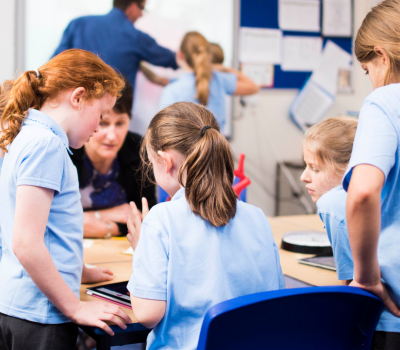
Olivia Hayes is a 20-year-old Politics student at Newcastle University, currently on work placement in our Schools Team. Olivia is compiling a report about the affordability of school uniform and hopes to produce best practice recommendations for schools. She has written this blog to coincide with the parliamentary debate on school uniform initiated by Labour MP, Mike Amesbury.
The bill aims to make Government uniform guidance statutory, meaning schools would be legally required to follow it. The Government does not force English schools to have a uniform, but they are strongly encouraged to do so by the Department for Education.The move would bring the English school system into line with Wales, where new statutory guidance came into force in September 2019.
Mike Amesbury Labour MP, is discussing in Parliament his proposed bill on school uniform that would legally require schools to prioritise affordability. When I was at school, I always knew that uniform was expensive, but after reading an extensive number of reports from Children North East’s Poverty Proofing the School Day initiative, I was shocked to discover there are many more issues surrounding school uniform that often people are not aware of.
“One of the issues I personally find the most shocking, is that in lots of schools, the uniform costs more in bigger sizes.”
This is due to VAT rules, where VAT can be charged on clothing for children aged over 14. I think this in itself is completely nonsensical. There is no reason for children aged 14-18 to have to pay more for their uniform just because they are older. This is an extra cost to an already expensive uniform and is one that families living in poverty struggle to afford.
Not only this, but the VAT issue is also affecting children under the age of 14, as the VAT rules are based on the size of the ‘average’ 14-year-old. This means uniform will also cost more for children who are larger or taller. Even worse, the trend of price differences relating to size is often present in primary schools, despite this uniform only being worn by children younger than 14 and therefore exempt from VAT.
In my opinion, this is extremely unfair and is purely a profit-making scheme on behalf of uniform suppliers at the expense of families. This is a completely unnecessary extra expense and burden that is being placed on families living in poverty.
This is just one of many issues that have been identified by the Poverty Proofing reports I’ve read which hopefully Mr Amesbury’s bill will address.
“I believe that affordable uniform is incredibly important for many reasons but predominately, because in many schools if a child doesn’t turn up to school in the correct uniform they are sanctioned.”
Families living in poverty may not be able to replace lost uniform or may not have the same number of, for example, shirts as their more affluent peers. Children living in poverty should not be unfairly punished for this. If the uniform was reasonably priced, families might find it easier to adhere to school uniform rules meaning students would not stand out from their peers or face unfair school sanctions.
Whatever today’s debate entails, the fact a bill has been proposed on this is an incredibly exciting development in terms of poverty proofing the school day and one that I look forward to following.
18th May 2026
30th April 2026
How Little Minds in Mind Helped One Mum Feel Like Herself Again
16th April 2026
Masquer‑Aid: Building Confidence, Community and Self‑Advocacy
1st April 2026
Gwen Dalziel, from our Schools Team, talks to us about her experience working on the Melva Production.
Recently I have had the opportunity through my work with Children North East to be involved in a wonderful project called Melva. I’d like to tell you all about Melva and why it is so much fun.
Melva is a theatre production staged by our esteemed colleagues at Mortal Fools which has toured schools. My involvement was teaching workshops around mental health based on the production to KS2 children after they had enjoyed the performance.
I cannot overstate what an enjoyable experience this has been and I am truly grateful to my boss for sending me down this wonderful rabbit hole, although the first meeting I attended I found doing the rubber chicken (watch the link) in a room full of people I’d just met, uncomfortably surreal.
It was like a weird work dream when you wake up and think, ‘Well that would never happen in real life!’
“But therein lies the strength of Melva and the power to deliver a serious and much needed message in a relaxed and accessible form.”
Melva is a story about a girl turning 11 who suffers from anxieties or ‘worrits’ as she calls them. Her Grandad stages his own disappearance to push her into an adventure to go and rescue him. The subject matter can be difficult and moving at times, severe depression, bereavement, kinship carers and agoraphobia but Melva delivers in such an uplifting way the overall message is one of solidarity and hope. Worrits can be overcome, people can get better and we can all be a bit nicer to each other.
Children react to the production and the workshops with such enthusiasm. The issues perceived as being difficult to discuss are illuminated and normalised. The workshops give the children tools to take away that will help them with anxieties in every day life but they just feel they’ve had a fun day with the characters and met some teachers who actively encourage them to shout, be silly and not do any work!
One thing I will take with me is that at a point in one of the workshops the children are asked to use a positive word to describe their own character which many find incredibly difficult to do. However, when this happens so does a piece of Melva magic.
“One or more of their peers will always step in with a flurry of gorgeous adjectives. Isn’t that just how the world should be?”
And for me personally Melva has been even more than the benefit I see being conferred onto children. It has allowed me to selfishly indulge in all of the aspects of teaching I enjoy without any of the marking, attainment worries or pressure. It has made me feel part of a safe and happy Melva gang where everyone works together, everyone is kind and work is fun!
I could write more about this magical bubble, its immeasurable value to the children it touches. I could continue to enthuse endlessly about the charismatic, talented people who have made it possible and so warmly welcomed me into their world, but while the benefits of Melva are numerous, they can also be summarised into one word. Talking – pure and simple.
“To normalise talking about anxieties and therefore their mental health, for me, is priceless.”
18th May 2026
30th April 2026
How Little Minds in Mind Helped One Mum Feel Like Herself Again
16th April 2026
Masquer‑Aid: Building Confidence, Community and Self‑Advocacy
1st April 2026
Teacher, CHRISTINE ELRICK, is the founder of Look for a Book North East, a social media project that hides books for children to find. When she visited our Families & Parenting Service, we asked for her top tips on getting young people into reading
Why did you decide to set up Look for a Book North East?
I saw a similar group that had been started in the South and asked if they would mind me trying it out in my local park as I had loads of loved books that my children no longer read. The rest is history!
What was the reaction when you launched it?
It was amazing! I started it very small as a group specifically near to me in East Boldon. A few friends messaged to ask if we could make it a South Tyneside group which I did, of course. Within hours I had requests to make it regional and by the end of the second day I had 10,000 members in my group! It was phenomenal!
How many followers do you have now and have you met any?
I currently have 55,000 members in my group but I reached about 62,000 at the height of the project in the summer. I’ve met lots of members out and about, through work and through word of mouth with everyone of them being amazingly enthusiastic about books and the joy they bring. Many of them grateful for a project in our region that inspired and excited their children about reading.
Can you share any inspiring stories of people sharing books?
There have been so many amazing stories of community spirit and books bringing people together. There have been instances of books being hidden in hospitals. There was one found by a child in the RVI having chemotherapy. They explained on the page how much joy this had brought and how it had distracted them for a time from the treatment they were having. Amazing! The community we have built is fantastic too. People simply care and books have made this possible. After a child who lost everything in a house fire found a book, their grandparent posted that this had made her happy after losing her books in the fire. Within minutes they were inundated with donations of toys, books and clothes for the whole family. Again, thanks to the amazing community in our region.
You are literacy lead at Westoe Crown Primary School in South Shields. Why do you think reading with children is so important? And can you remember being read to in childhood?
It’s hugely important! It’s the key to everything we do in life and it’s a skill that we will always need. We read to relax, be entertained and to learn. I often tell children if they don’t enjoy reading they simply haven’t found the right thing. Reading doesn’t mean wading through a novel. It could be reading magazines, instructions or comics. Anything that interests you. Some of my fondest memories were being read to as a child. I don’t remember a life without books, comics and stories! I also remember my teachers reading to me at school. My favourite time of day!

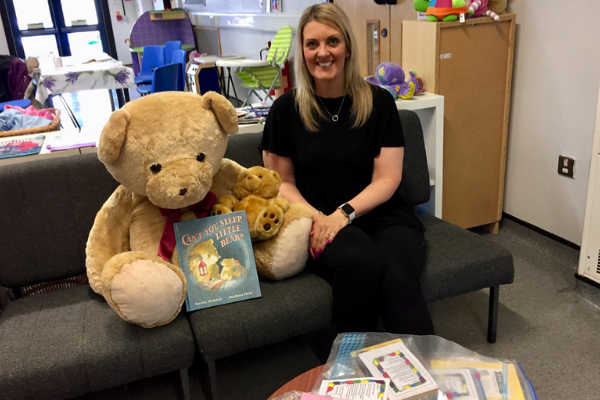
Book packs donated to our Families Service by Look for a Book North East
How do you persuade children to put down their electronic devices and read a book?
Again, it’s finding the right thing to read. Giving children the opportunity to try out new books and authors is crucial which is where libraries are crucial. Bake a cake and read instructions! Read the sporting fixtures in the local paper! There are so many ways to inspire a new generation of readers.
What were some of your favourite books/authors growing up?
This is tricky! I loved, and still love, Roald Dahl. His books are timeless. The vocabulary and made up words in the BFG are amazing. Who doesn’t love words like Snozzcumbers, Scrumdiddlyumptious and Frogspottle? What a creative mind this man had. I also loved getting the Beano comic delivered when I was a child! Dennis the Menace was my hero!
What do you like to read now?
Not enough! I struggle to find time to hide away with a good book as working and being a parent takes up most of my waking hours! I love a good thriller though! I enjoy books that make you think and wonder. Books that take you away from reality and far into another world of imagination.
Any tips for getting boys to pick up a book?
My son, Daniel, who’s 12 (pictured above with his sister, Ruby) has helped me throughout the years with this one. Again it’s finding the right thing. Tom Gates have been a big hit with boys as they include a lot of toilet humour! Tom Palmer, who has visited our school, writes some excellent books about football and adventures relating to war. He kindly donated some signed copies of his Foul Play series which are out in circulation at the minute!

Christine’s children with books donated to our Families Service
Can a book change your life?
Without a doubt. Simply seeing the smiles on the faces of children finding them posted on my Facebook page shows this. Books take you on a journey whether it be an adventure, therapy or just reading the comedy of someone else’s journey it can certainly be life changing. Books allow your imagination to have no limits… the more you read the more you will realise they are endless.
18th May 2026
30th April 2026
How Little Minds in Mind Helped One Mum Feel Like Herself Again
16th April 2026
Masquer‑Aid: Building Confidence, Community and Self‑Advocacy
1st April 2026
Making friends is a crucial aspect of growing up and an important skill that is developed throughout our lives. In this blog, Lorna Nicoll from our Schools Team, looks at how being poor can affect social interactions and friendships.
Eight years ago Children North East distributed hundreds of disposable cameras to children and young people living in disadvantage from the Tees to the Tweed and asked them to document their lives.
Since then our Schools Team has been privy to a huge amount of information about what it is like to be poor – and specifically – what it is like to be poor at school, the place where they told us living in poverty affected them most.
“In a society that is compassionate, we cannot ignore what children tell us, and that is what makes our Poverty Proofing the School Day work so unique and powerful.”
Making friends is a crucial aspect of growing up and an important skill that is developed throughout our lives. During our formative years we make, break and makeup with friends. It’s something that we get better at. Life is challenging for everyone, but what’s it like when you have the additional stress of being poor? In addition to the effects it has on physical health, research shows that poverty and growing up in poverty, affects mental health. The Social Mobility Commission concluded in 2019 that people who live in more deprived areas typically have lower life satisfaction scores, are less likely to think that the things they do are worthwhile, are less likely to feel happy and are more likely to be anxious.* Suicide rates are also higher in deprived areas than in more affluent areas.*
When we go into schools, children regularly tell us that they feel left out at times when significant socialising happens. Understanding what it’s like from a child’s perspective when they are not able to join in the trading cards games at break time because they don’t have the cards or enough of them, or children spectating rather than joining in skipping games because they don’t have a skipping rope. There are other times where they can feel excluded, for example when it’s toy day and, once again, they haven’t been able to bring anything in, or others have commented that their toys are old or ‘rubbish.’ Others have explained how stigmatising it can feel if they cannot afford to go on the same rewards trips as their friends because they cannot afford the end of year trip to the theme park and the only option, year after year, is to go on the free local trip and be separated from their friends. Or those that have saved up to go on the big trip to find that everyone else has money to purchase a queue-jumper ticket and they are alone in the regular line. Where’s the reward in that?
Going beyond the school gates, what’s it like if you are that child who cannot invite anyone to your home for the all-important Friday playdate? Maybe it’s too cold to have friends around, or your accommodation is sub-standard, bordering on dangerous, or there’s not enough space for those living there, never mind visitors. Children get very excited at the thought of having a friend over and can talk about it for days before and after, but if you’re that child whose family has to carefully manage food costs and can’t offer a snack, how does that feel? Not to mention if you don’t have the latest console or games to play online.
How many parents dread it when their child gets invited to a birthday party – what to wear, what presents to buy, what if it’s impossible to reciprocate the invitation? Worse still, what’s it like if your child isn’t invited and feels further excluded?
Building, managing and maintaining healthy relationships is one of the keys to a happy life and schools do a lot of great work to encourage this in their pupils. Which moments are we not aware of where children feel a sense of not being able to participate, or of not belonging? At what point does that become social isolation and they disengage further with what’s around them because they simply do not feel a part of it?
“By listening carefully to what children say, we can stack as much in their favour as possible to ensure no child is restricted in their social interactions and friendships as a result of poverty.”
* Social Mobility Commission (2019) Social Mobility in Great Britain- State of the nation 2018-2019 . [online] Available at: https://assets.publishing.service.gov.uk/government/uploads/system/uploads/attachment_data/file/798404/SMC_State_of_the_Nation_Report_2018-19.pdf [Last accessed 21/08/2019] p.18. ii Public Health England (2018) Health prolife for England, 2018: wider determinants of health. [online] Available at: https://www.gov.uk/government/publications/health-profile-for-england-2018/chapter-6-wider-determinants-of-health
18th May 2026
30th April 2026
How Little Minds in Mind Helped One Mum Feel Like Herself Again
16th April 2026
Masquer‑Aid: Building Confidence, Community and Self‑Advocacy
1st April 2026
As Children North East recently announced, we are delighted to have joined up with Child Poverty Action Group to deliver the Cost of the School Day Project nationwide thanks to £2million funding from National Lottery.
In this guest blog, Alison Garnham (pictured above), Chief Executive of Child Poverty Action Group, tells us more about the project.
As we are bringing children up, poverty is bringing them down. It’s not right that poverty limits children’s chances at school. But when kids grow up poor, financial barriers prevent them from fully participating in school – such as the cost of uniforms, school trips, meals, after-school activities and much, much more. Together with Children North East, we want to lead a cultural shift across the UK to make the school day more inclusive and allow all children to have a happy, healthy and enriching school experience. Children deserve nothing less.
So, this week, we are announcing that Child Poverty Action Group (CPAG) has been awarded £2 million in funding over three years to extend our Cost of the School Day project (pioneered in Scotland) and Children North East’s Poverty Proofing the School Day programme (which works in England) to the rest of the UK.
The project will support children and school staff to remove financial barriers and poverty-related stigma in schools. It combines our track record, in Scotland, of addressing the ‘Cost of the School Day’, and Children North East’s ‘Poverty Proofing the School Day’ programme and we will be operating at scale: 128 schools will be intensively involved in the project over the next three years, and many more will be included and benefit in other ways.
“The project puts children in the lead and works with whole-school communities to identify the practical actions front-line staff can take in schools to reduce and remove stigma and financial pressure. We are positioning Children North East’s Poverty Proofing process at the heart of the project, to ensure that children’s voices continue to steer practice.”
“More than one in four children in the UK are growing up in poverty.”
At CPAG, we are working to prevent and end child poverty. But while we are pushing for national policy change to tackle child poverty, in the mean-time, we are committed to making the school experience better and more inclusive for children from low-income families. To a child, school is a major part of their lives and it shapes their childhood experiences. And, children deserve a happy childhood regardless of its significance in adulthood. Tackling poverty in schools has been a part of our work for a long time. In fact, one of our first activities, after CPAG was established in 1965, was campaigning for free school meals for children. With this project, we are pressing forward with our work in schools and tackling the bigger picture.
CPAG and Children North East both have a proven commitment to tackling the barriers in our education system that have a devastating impact on children and families living in poverty. We have a shared vision for a more just and more inclusive education system. By forming a partnership, we see enormous potential to change attitudes, practices and policies on a long-term basis and to make all aspects of education accessible and inclusive for all children.
This project has been developed based on strong evidence from two existing programmes that have successfully removed barriers to learning and poverty stigma in schools. For example, a recent evaluation of CPAG’s work in Scotland found that the Cost of the School Day programme led to increased participation in school and after-school activities and reduced financial pressures for families. An evaluation of Children North East’s Poverty Proofing the School Day work found a positive impact on children and families, including improved attendance, a greater uptake of free school meals and a significant impact on the school culture and ethos. Our two organisations have extensive expertise in this area, and both bring a wealth of knowledge, data and insight to the issue. We will use this broad evidence base and experience to work together to achieve tangible results.
Children North East bring their Poverty Proofing the School Day process and essential guidance and expertise to ensure this project gives schools the opportunity to reflect in a unique way, by listening to the voice of all children in every school on policies and practices that may, throughout the day, unwittingly stigmatise and exclude children living in poverty – for instance, the way that free school meals are administered. We are combining this approach with our existing Cost of the School Day model, which has been successfully implemented in different areas of Scotland since 2014. Our local authority wide approach has prompted policy changes at council level with a positive impact on thousands of children. We are creating a hybrid of the two approaches, with their different strengths and learning accumulated over the years, to achieve the greatest benefit for children and families living in poverty.
We are very excited by the potential of this project to make a real difference in children’s lives. Together, we can drive a movement among schools and local authorities to recognise and amplify inclusive school practice across regions and nations. Our shared ambition is to achieve a UK-wide cultural shift towards a fairer and more inclusive education system, one in which all children can make the most of the school day and go on to be happy, successful adults.
To continue reading about this partnership, head over to our blog by Georgina Burt from our Schools Team.
18th May 2026
30th April 2026
How Little Minds in Mind Helped One Mum Feel Like Herself Again
16th April 2026
Masquer‑Aid: Building Confidence, Community and Self‑Advocacy
1st April 2026