

18th May 2026

When asked what is most important to us, and what gives us a sense of identity, value and purpose, most of us think about our families and friends, homes and communities, health and wellbeing, hobbies and interests, people and places.
We likely think about our jobs too – they can give us a sense of purpose and social connection, as well as paying the bills – but often don’t define us.
Yet, sadly, in recent years this is how we have come to be defined by our leaders of our country. Within policy, our value is repeatedly reduced to what we contribute to the economy, how many hours we work, how much we earn. Lives defined as economic units on a spreadsheet of GDP and tax revenue.
This approach is totally at odds with a vision for a healthy and compassionate society.
It doesn’t recognise or value the vitally important unpaid work millions of us do; caring for children, elderly relatives and the people in our lives who need support.
It doesn’t value unpaid roles in the community – involvement in local politics, school governance, or those running volunteer search and rescue teams which literally save lives.
For people unable to work because of complex health and disability this approach is dehumanising.
This approach also fundamentally undervalues children, treating them as a burden rather than a blessing.
Children don’t personally contribute to the economy, but they cost money; they need feeding, clothing, education, healthcare and 24/7 care.
The time families invest in raising their children; the story times, bath times and 4am feeds, listening, laughing together, making memories – none of this can be monetised.
Yet social policy around children has reduced to childcare to enable parents to work and contribute to the economy.
Of course, this picture is far from a fair reflection of the value of children and makes for alarmingly short-term, self-defeating policy and investment choices.
Why? Because work with children adds hundreds of thousands of jobs to the economy. Because this work – paid and unpaid – shows the next generation good role models that makes for a thriving society built on respect and encouraging empowerment.
Because children are the doctors, nurses, scientists, engineers, business owners of tomorrow – those who will pay their taxes and keep the economy going. Because they will become the mothers, fathers, carers, and teachers who raise the generation that comes after them.
Because children have innate worth and bring into our families and communities priceless love, joy and fun.
The impact of creating a society that devalues children is now directly affecting population demographics; across the developed world, birth-rates have fallen rapidly within a generation, raising concerns that there will not be enough of the next.
We are already seeing the impact of falling birth rates and an ageing population in workforce short-falls, as we struggle to recruit and retain enough workers – especially in healthcare – to meet our population’s needs, and this is only set to grow. Our recent government’s short-term fix is to rely on immigration to fill those gaps, but without a long-term vision to address this ‘ticking time-bomb’.
An increasing number of people are choosing not to have children altogether. For some this is a positive choice, but tragically, many people who would love to be parents feel they can’t afford to start a family, or have another child, as the gap between incomes and housing costs means the rites of passage for young adults of buying their own home is becoming impossible for many.
And far from supporting families and those who want to have children through child-friendly tax and benefits policies we have the opposite. Our two-child limit is the only one of its kind among comparable countries in the western world, and was specifically designed to discourage lower income families from having ‘too many’ children, by limiting the amount of Universal Credit they can claim to only including a maximum of two children regardless of the actual household size.
After seven years of the policy, the evidence shows that the majority (60%) of the families affected by the limit are working families, on low wages and often in insecure work. Moreover, even as the overall birth rate has dropped in this country, the policy has had a negligible impact on the birth rate among lower income families, showing that those who are choosing to have more children do so because they want to have a large family, even if it leaves them less well off. But by plunging hundreds of thousands of children into poverty, we are compromising from the beginning their chances of growing up happy, healthy and making a positive contribution to our future society.
As we approach a general election this year Children North East is challenging this worldview and calling on those aspiring to be the next government to restore a holistic vision for our society.
A vision in which all our society members are valued, including those who are not able to contribute financially, or can contribute less, ensuring they are properly supported through a social welfare safety net.
We are calling for children to be seen as an investment, not a cost. We want the next government to put children at the heart of policy and decision making, not treat them as a problem to be solved.
We want parenting to be valued, parents to have real choice about how they balance work and raising their families.
We want child poverty to be tackled head on, so children are not growing up without the basic things they need.
We want babies, children, young people and their families to get the support they need when they need it, without long waits, complex assessments and high thresholds.
Our election briefing An Investment Not a Cost sets out our vision for the values that should underpin public life, and the aspects of social security and services and support for children which need to be reformed and invested in, for all our children to grow up happy and healthy.
Join us in calling on all those running for Parliament to commit to putting children at the heart of policy making in the next government.
18th May 2026

30th April 2026
How Little Minds in Mind Helped One Mum Feel Like Herself Again

16th April 2026
Masquer‑Aid: Building Confidence, Community and Self‑Advocacy
1st April 2026
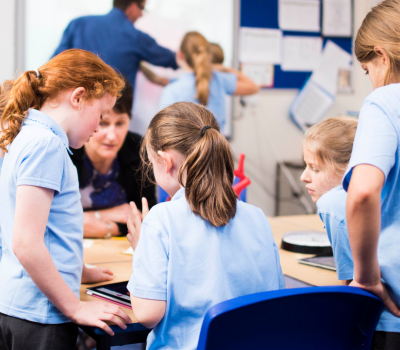
Our Young People’s group based at our Benwell Allotment have been working their way through the history books to bring a new installation to the community!
As part of Life of the Wall project, the team explored what life was like at the time of the Romans when Hadrian’s Wall was built – which runs right along the Allotment site now! Our group visited Segedunum Roman Fort in Wallsend, and were joined by experts from Tyne & Wear Museums at our Graingerville location where they learned more about life as a Roman through artefacts and talks.

Visiting the Herb Garden at Segedunum, the group learnt how herbs were used for medicine and cooking, and that many still are today. They’ve now planted their own herb garden at the Allotment with the hope they’ll be able to use them in the future for their own cooking at home!
From the sessions at Great North Museum, our group found a lot of similarities between life in Roman times and nowadays – from architecture, drainage and even fast food! When tasked with designing and building an installation to mark the area, the group wanted to make something which made them think of home – of shared experiences, family, friends, different cultures and the food they shared. This inspired them to build a Pizza Oven in the Allotment which could be used by the wider community, with space for communal gathering nearby and Roman inspired decorations. Trying their hands at mosaic, the group have created designs which have been transferred to paving slabs to form the base, and worked with clay to build the outside of the oven.

This week, we fired up the Pizza Oven with some friends and special guests in a celebration of the group’s incredible work! Bringing out homemade pizza dough, fresh mozzarella and herbs grown in the allotment, the group made their own pizzas and cooked them on site – despite the typical North East summer rain it was a great afternoon and a fantastic way to round off the project! The group are now looking forward to more events and experimenting with what else they can cook in the oven – marshmallows are definitely on the list!

A special thanks to Tyne & Wear Museums, Historic England and local artist Marek Gabrysch for the support with this project.

18th May 2026
30th April 2026
How Little Minds in Mind Helped One Mum Feel Like Herself Again
16th April 2026
Masquer‑Aid: Building Confidence, Community and Self‑Advocacy
1st April 2026
Between October 2021 and January 2024, the North of Tyne Poverty Truth Commission listened to people with experience of poverty in Newcastle, North Tyneside, and Northumberland to develop a deep understanding of the issue for our region.
What is a Poverty Truth Commission?
The guiding principle of a Poverty Truth Commission is ‘Nothing about us, without us, is for us’. In a Poverty Truth Commission, those with direct experience of poverty (‘Community Commissioners’) share their knowledge about what is needed to make meaningful changes to improve the lives of those living in poverty. Together, they explore their experiences and decide what they would like to communicate about poverty to their community. Individuals with the power to influence change within organisations and institutions (‘Civic and Business Commissioners’) also participate in the process, building understanding and relationships, and promoting best practices across their organisation and networks.
What makes the North of Tyne Poverty Truth Commission unique?
North of Tyne was the first Combined Authority in the UK to host a Poverty Truth Commission and the project was the first to serve multiple council areas, including Newcastle, North Tyneside, and Northumberland. The Commission was a direct response to the ongoing effects of the COVID-19 pandemic, which had made life difficult for many residents.
Timeline

What the Commission want you to know…
Over 18-months of sharing stories and experiences of poverty, Commission members identified some major challenges affecting people living in poverty they wanted to increase awareness of:
Hear first-hand the impact of poverty on the lives of Commissioners

North of Tyne Poverty Truth Commission
Gemma’s story
“Can you imagine being a parent of a child with SEND and not being able to pay for everything they need for their care? You rely on health and social services to decide what help you can access, and housing services choose where you live.”
Penny’s story
“Part of the challenge is the stigma, the idea someone accessing any kind benefits are playing the system or going to make bad decisions. In reality, it’s such a small percentage who abuse the system.“
David’s story
“From when you wake up to when you go to bed, it’s about surviving. I’ve worked and paid in during my life and now care for my mum. If you have a shorter-term problem, kids, time-off work or family, the system doesn’t take account of that.”
Amy’s story
“ I truly want all vulnerable single parents to be properly supported by society and not labelled, caring is a valuable role too and should be seen in that way.”
Outcomes of the North of Tyne Poverty Truth Commission
The North of Tyne Poverty Truth Commission was a complex project building relationships across diverse communities, deep listening to the challenges of poverty across the North of Tyne, and raising awareness about how poverty can be better understood and alleviated.
Some of the more tangible outcomes of the Commission include:
The video Pride and Dignity in Food Shopping, supporting those living in food poverty to understand a range of options available to them and highlighting the value of autonomy in food choices. Watch Pride and Dignity in Food Shopping >
Over the course of the Commission, some Community Commissioners were recognised for their advocacy and given platforms to continue their work, including David Black being appointed as a Governor at Newcastle Hospitals and Penny Walters being awarded a British Empire Medal for her work campaigning against poverty.
Two open letters to MPs, CEOs, policy-makers and other leaders on in Health and Care. One calling for a more proactive approach to preventing illness and the other removing barriers to people with caring responsibilities to employment.
Funding was secured by Commission members to develop further work tackling poverty.
Pledges were made by guests of the end of project event, committing to actions that would promote change, including increased campaigning, improving understanding of poverty within their organisation, listening to ‘experts of experience’ and promote their staff be trauma informed.
A ‘Call to Action’ event has inspiring many organisations in the North of Tyne region to continue the work of the commission. Read press on the Call to Action event >
The North of Tyne Poverty Truth Commission was delivered by Children North East and funded by the North of Tyne Combined Authority, Joseph Rowntree Foundation and Community Foundation Tyne & Wear and Northumberland.
18th May 2026
30th April 2026
How Little Minds in Mind Helped One Mum Feel Like Herself Again
16th April 2026
Masquer‑Aid: Building Confidence, Community and Self‑Advocacy
1st April 2026
This summer, our campaign to Get Out & Grow shines a spotlight on the incredible work our youth groups have been involved with, including our Social Action Group who have been looking after their local environments through litter picking and building bug hotels, and our Allotment Group who have been working on a special project with the National Trust and Great North Museum to build their very own pizza oven!
 Through these projects we’ve been encouraging children and young people to get in to nature and explore the world around them. The activities have helped improve their mental health, shape team-building and communicative bonds and the sensory developments of children learning new sensations and textures.

Whether you live in a rural area with plenty of green space, or a city with a local park we are encouraging families to spend time together learning about the natural world.

If you would like to join in with the action, we are offering free Seed Grow Pouches to encourage people to Get Out & Grow! These handy pouches are small enough to thrive on a windowsill and will grow bee attracting flowers which can be planted outdoors or in a pot. Teaching children the cycle of seed to sproutlings to full plants, and how these play an important role in our biodiversity. Sign up now to get your free Seed Grow Pouch, and make sure to send us some photos!
Follow along as we #GetOutandGrow!

18th May 2026
30th April 2026
How Little Minds in Mind Helped One Mum Feel Like Herself Again
16th April 2026
Masquer‑Aid: Building Confidence, Community and Self‑Advocacy
1st April 2026
Maternal Mental Health Awareness Week aims to raise awareness and understanding about mental health problems both during and after pregnancy. The most common form is typically Post Natal Depression, but can also include anxiety, obsessive-compulsive disorder (OCD), post-traumatic stress disorder (PTSD), and eating disorders. Started by PMHP UK (Perinatal Mental Health Partnership UK) in 2017, the campaign aims to raise public and professional awareness around these concerns, advocate for families and change attitudes.
At Children North East, we want to ensure every child has the happy, healthy start in life they deserve – and this includes caring for expectant mothers too. We offer a range of welcoming and non-judgemental services to help support parents with their emotional wellbeing, creating a support community and developing essential skills to help them thrive.
“You helped me a lot in my bad time. I will never forget you. Because of you, I know I have the strength to be a good mother”

Services range from one-on-one professional support through our Therapeutic Practices services, including Little Minds in Mind. This is our parent-infant service to help you and your baby (up to two years old) develop a healthy relationship. We can work with you if you are a mother, father, grandparent, foster carer or adoptive parent.
Our expert and welcoming team will work closely with you and your family to achieve the very best for you, your baby and family. You will work with a specially trained practitioner, who will get to know you and your baby and develop an understanding with you of the difficulties that are affecting your relationship.
“I can’t thank you enough, your support was amazing, just being able to talk openly and honestly without judgement was so helpful. I felt like a complete failure as a parent but now I feel confident and I am finally enjoying my baby”

We also offer community based support, like Boogie Bairns, Stay & Play and Baby Massage where we encourage families to come together and build their own networks, to one-on-one volunteer support where volunteers are paired with an expectant mother to offer support and guidance.
1 in 5 women experience a perinatal mental health problem
All parents and carers are welcome at our family hub sessions for one to one support or our “preparing for baby” and “baby’s here” group work sessions. Outside factors including previous health issues, lack of support, financial concerns or insecure housing and traumatic experiences, including birth trauma, are all contributing factors to Maternal Mental Health issues and these can affect anyone.
”The sessions have been invaluable, very helpful and have been a sort of ‘Diversional Therapy’. My baby has been engaging and socialising with other babies, and I also learnt new things, and I got clarifications from my worries”

For more information, please contact us on [email protected]
18th May 2026
30th April 2026
How Little Minds in Mind Helped One Mum Feel Like Herself Again
16th April 2026
Masquer‑Aid: Building Confidence, Community and Self‑Advocacy
1st April 2026

The new North East Combined Authority offers an opportunity for investment and connection to make the North East a great place to live. Whoever is elected in the upcoming election must make children a priority in their decision-making, to give children here the best opportunities in life.
It now seems indisputable that the political landscape of the UK is going to change significantly in the coming months. But whilst many eyes are focused on the general election – which must happen by January 2025 – for the North East, elections taking place on the 2nd of May are set to have a huge impact on the future and prosperity of our region.
What is the North East Combined Authority?
Unlike other city regions like Manchester, Liverpool and the West Midlands, up until now, there hasn’t been a devolved mayoral authority covering the whole of Tyne and Wear. Whilst other city regions have had significant investment made in their regional infrastructure, and the power to make big changes – like bringing buses back into public ownership – the North East has lagged behind.
But finally, from May this year, a new combined authority covering the whole of Tyne and Wear, as well as Durham and Northumberland will be formed, led my an elected regional mayor.
What powers will the Mayor have?
The Devolution Deal, as it is called, signed by Westminster and the seven Local Authorities, will hand over powers and significant investment, with a 30-year commitment to strengthen and develop the region.
This includes the power to make decisions about infrastructure and spending on public transport and active travel – cycling and walking – with over £500m of funding available for this, and power to make decisions about planning such as housebuilding and development of land for business, shopping and leisure. It also includes the adult education and skills investment being coordinated at a regional level. The mayor is also likely to have some additional investment it can use for other priorities they identify for the region, and to apply to the national government for further funding if there is a clear case for investment.
This deal is being badged as a ‘trailblazer’ by the national government, with an additional focus on using innovation and technology to improve public services, a new Coastal and Rural Taskforce, and specific funding earmarked for redeveloping parts of the West End of Newcastle, and a new film and TV studio in Sunderland.
The deal is set to be worth £4.2 billion over the next 30 years.
What will this mean for babies, children and young people?
Children North East is asking all candidates running to be mayor to make sure children are a priority. This means making public transport accessible and affordable for families so children growing up in households without access to a car don’t miss out.
We want to ensure decisions about housebuilding make sure families can access affordable homes when children can be safe and warm, free from damp, mould and overcrowding.
We’re asking the next mayor to make sure post-16 education pathways ensure all young people have access to training, opportunities and jobs which reflect their talents and ambitions, and have good, well-paid job prospects in the region.
Finally, we want the next mayor to continue work begun across the North of Tyne to focus on tackling and alleviating child poverty and the barriers it creates for children, especially in making the most of education and opportunities.
Who are the candidates?
There are six candidates running for the regional mayor. Each has a website where they have published a manifesto, a document setting out what they would do if elected.
If you want to learn more about the issues that matter to children and young people, our Change Now report shares the voices of over 35,000 5 to 25 year olds on themes such as education, health, culture and services.
18th May 2026
30th April 2026
How Little Minds in Mind Helped One Mum Feel Like Herself Again
16th April 2026
Masquer‑Aid: Building Confidence, Community and Self‑Advocacy
1st April 2026