

18th May 2026
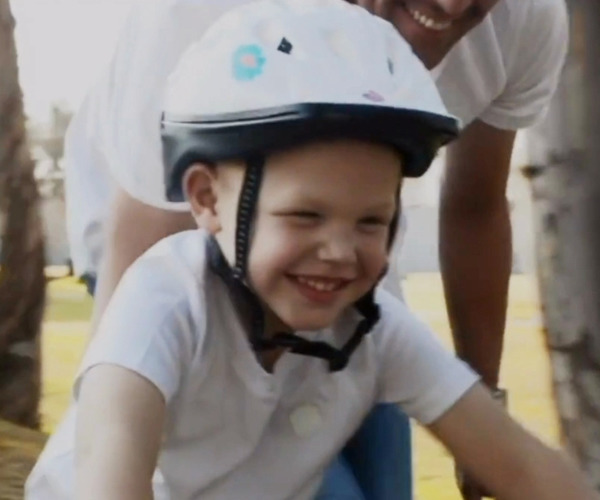
Music has the power to inspire, uplift, and make a real difference. When talented local musicians come together to create a song that not only captures the joy of cycling but also serves a greater purpose, it’s a cause for celebration. Children North East are thrilled to introduce to you, ‘Free Wheel’ by Double Blue, a song about the joy of cycling, that not only fills your heart with rhythm but also supports a vital cause. All song proceeds are kindly being donated to support babies, children and young people across the North East.
Before we dive into the heart of the song, let’s first meet the maestros behind ‘Free Wheel.’ Double Blue, local blues guitar legends, have been making waves in the music scene for years. With their unparalleled skill, soulful melodies, and electrifying performances, Stu Burlison and Jimmy Smith have earned their reputation as true musical gems in the local community.
‘Free Wheel’ is more than just a song; It’s a heartfelt tribute to the joy of cycling. The song’s lyrics and catchy base will have you tapping your feet in no time. It’s the kind of tune that makes you want to grab your bike and hit the open road, wind in your hair and a smile on your face. The music video which was produced by Paddytech Videos, captures the freedom and exhilaration that cycling across the beautiful scenic North East can bring. Make sure to give this a watch too!
The best part? You can download and listen to ‘Free Wheel’ for only 99p. It’s a small price to pay for the lasting impact it’s going to make. Every penny from the song’s proceeds go towards supporting Children North East. Can you help us share the song with your family, friends, and colleagues? With your help, we won’t stop until every baby, child and young person has the healthy, happy start in life they deserve.
So, fasten your seatbelts (or should we say, pedal straps?) and get ready to ride along to the catchy chorus through the download links below.
Download now on Apple Music and Amazon Music
18th May 2026

30th April 2026
How Little Minds in Mind Helped One Mum Feel Like Herself Again

16th April 2026
Masquer‑Aid: Building Confidence, Community and Self‑Advocacy

1st April 2026
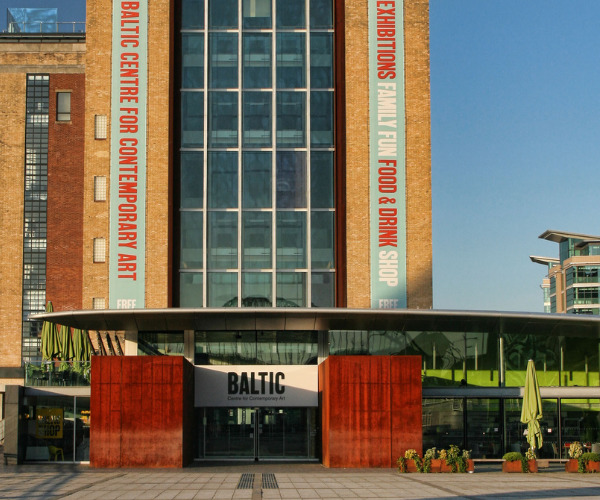
In 2020, the Poverty Proofing® team at Children North East worked with the Baltic Centre for Contemporary Art to listen to the experiences of their visitors, communities, staff, volunteers and trustees on how poverty impacts their engagement with the venue and to explore ways to remove barriers for those living in poverty. Located on the Quayside of the Tyne, where cities Gateshead and Newcastle meet, it has welcomed over eight million visitors and was the first venue outside London to host the prestigious Turner Prize. Two years on, our team sat down with Vicky Sturrs, the previous Head of Learning and Civic Engagement at Baltic to learn more about the impact the project had made for the Centre and its communities.
What have you seen change at Baltic since you embarked on the Poverty Proofing® journey?
“One of the main things that I saw change was staff understanding that working with people in poverty, and supporting people in poverty, and changing practice for people in poverty, was everybody’s responsibility. Initially expectation was that it would focus on events, the shop, the café – but when we got to the end of the process, it opened up things about space, about exhibitions, about what you programme. I don’t think we ever expected that this would impact what we did and our practice. It made the organisation more interesting, valued, engaging. That was a revelation to the organisation.
“What Poverty Proofing® did was give that advocacy to community. It gave the ammunition that was needed for a board to see that communities are struggling more and more and we have the power to change that, within our sphere of influence.”
What are your ‘Top Takeaways’ from the process?
It can inform valuable change across every corner of an organisation:
“It gave us takeaways to use in business plans, report writing, ACE funding… we used it in so many different ways. We talked about the training, and being part of that, as such a marker of what Baltic wanted to be. That can’t be understated.”
Be open to being challenged and changing your perceptions:
“There’s something on a personal level about the need to understand that that the perceived ‘good job’ you are doing is not always as accessible or inclusive as you hope or think. It made us have to look so much more widely. We had ‘go and see visits’ and some people didn’t make it past the front desk… and that was really valuable. What we thought was happening, in some cases, just wasn’t happening.”
How do you think the process has empowered people?
“Through the process I felt very separate from the communities that had been involved. It highlighted that there was a lot of people that wanted to give their opinion and we didn’t know them. We didn’t know that we hadn’t given them the opportunity. I hope that the process started that journey for Baltic. It made us think a lot about threshold crossing.”
What would you say to another organisation who was considering undergoing the Poverty Proofing® process?
“Approach Children North East in the process as being a critical friend. It’s a supportive process. No-one is running you up a flag pole to say you’re doing the wrong thing, it’s how do we action things together.
“Think really carefully about who your liaison is, what their position in the organisation is, and what their power to influence the organisation is, and what their capability to make change is. That individual might have to have a strength of will to pull the organisation up the hill.”
Poverty Proofing® is a concept developed at Children North East. For further information or to look at a bespoke process designed around the needs of your organisation please contact [email protected].
18th May 2026
30th April 2026
How Little Minds in Mind Helped One Mum Feel Like Herself Again
16th April 2026
Masquer‑Aid: Building Confidence, Community and Self‑Advocacy
1st April 2026
 In this article Lesley Barron, Poverty Proofing Co-ordinator at Children North East, explores the impact of travel and the Healthcare Travel Costs Scheme on how people access and experience healthcare services.
Through our Poverty Proofing® work in a range of healthcare settings, Children North East have been digging deep to unearth the barriers faced by millions of people who live in poverty, when attempting to access healthcare services. Our work has already identified several recurring themes in health inequalities, but one theme that presents itself over and over again, is the cost of travel to and from healthcare settings.
‘If you’re referred to hospital or other NHS premises for specialist NHS treatment or diagnostic tests by a doctor, dentist or another primary care health professional, you may be able to claim a refund of reasonable travel costs under the Healthcare Travel Costs Scheme (HTCS).’
This is the opening paragraph taken from the NHS Healthcare Travel Costs Scheme, which should be a ‘quick win’ for those struggling to afford healthcare travel costs. But is it?
A familiar story
Let me introduce you to Sam…
Sam is one of around 14.4 million people living below the poverty line in 2022 and her story is typical of many we hear when Poverty Proofing®.
Sam has an appointment to have an expired contraceptive removed and is in a lot of pain. She arrives 20 minutes late and is told she can’t be seen. The receptionist may think ‘serves her right, she should have been on time.’ However, what isn’t realised is that Sam relies on the Metro to get anywhere, and through no fault of her own, the Metro was delayed. Another assumption is that she could have phoned ahead to let them know she was running late. However, the reality is that Sam has no credit on her phone, and can’t top it up until her benefit payment is paid in three days.
Perhaps she just needs to speak to the receptionist, explain what’s happened to make her late, and persuade them to fit her in? The reality is that Sam feels incredibly uncomfortable talking to the receptionist, whom she feels looks down on her and can be very rude and unwelcoming towards her. Sam feels stigmatised and disrespected, and this negatively impacts on her confidence and self-esteem, and on her ability to articulate that she is actually in a lot of pain and really needs help. Many people in a similar situation could perhaps just ring in the morning to make another appointment. However, the urgency for Sam is more acute because remember, she’s got no credit on her phone. She also can’t afford to pay the Metro fare to come back another day. She would end up travelling without paying, risking prosecution and a hefty fine.
At every turn, Sam was faced with a barrier, preventing her from accessing the care she needed. This is not uncommon for the millions of people living below the poverty line. As Dr Laura Neilson (founder of Shared Health Foundation, Focused Care CIC and Hope Citadel CIC) says, “In areas of deprivation, the stories behind the stories are really important”.
We owe it to people like Sam to understand what the barriers are and to make changes in our structures and processes, on an organisational level, in order to make our healthcare system accessible to everyone.
Healthwatch UK (2019) revealed that 9/10 people consulted said a convenient way of getting to and from health services was important to them. Difficulties with transport were also identified as a common reason why patients miss appointments.
Common problems with the NHS Healthcare Travel Costs Scheme
“You used to be able to claim travel expenses. I think they make it so difficult and awful, people just don’t bother. Now there’s no petty cash. No petty cash but lots of petty rules.”
“If you’ve got somebody out in Northumberland and you send them an appointment for a face to face, and they’ve got no money, how are they going to get in?”
“It’s not uncommon to say to someone, ‘I’ve got an appointment for you’ and they say ‘I can’t come because I physically cannot get there’.”
This is a fairly typical response from staff when asked about the travel reimbursement scheme: “We don’t do travel expenses. It’s not discussed, we don’t reimburse travel.” However, some staff members from the same setting contradicted this, “Everything’s free, I think they can get travel costs back, I don’t know much about that though.”
Some patients have spoken to us about not using the claim forms that are available, due to the fear that they are taking away support from other families who may be worse off: “There is an expense attached to attend clinic because we use buses. You can claim this back I think but I don’t because I always think there’s someone worse off than me.”
A patient goes to the desk to claim their expenses from petty cash, only to be told that the petty cash tin isn’t kept here. It is kept on the hospital’s other site, three miles away on the other side of town. Poverty Premium at its best! The person who can’t afford to travel to hospital, has to make an extra journey in order to claim their travel costs back.
Following their appointment on Tuesday, a patient goes to the desk to claim their travel expenses from petty cash, only to be told that it’s not possible to claim this back today, because the key holder of the box only works on Thursdays and Fridays! The patient is asked to come back later in the week.
A patient goes to the desk to ask the receptionist how they can go about claiming their travel costs back. The receptionist is very friendly, says she will go and get the necessary form and asks the patient to have a seat. This helpful and enthusiastic response goes horribly wrong when the receptionist returns, waving the form in the air, whilst declaring to the whole (rather full) waiting room, “Here’s the form to claim your travel back!”. The poor patient turns a vivid shade of scarlet and is left feeling humiliated and embarrassed.
For potential claimants, there are too many hoops to jump through, which make the process too much of a rigmarole. NHS staff themselves are often unaware that the travel costs scheme even exists; or if they do know it exists, they are often confused about how it works. Also, being reimbursed assumes that the person can afford the cost of travelling to the setting in the first place. However, if people can’t afford the upfront cost of travel, they may fail to attend at all, leading to wasted appointments and huge unnecessary costs to the NHS. There must be things we can do better to help overcome this unnecessary barrier caused by the cost of travel.
What you can do to help
– Ask patients about travel: Can you afford it? Can you get here?
– Provide a travel pass/ticket up front for those with no resource at all
– Provide staff training about the travel scheme
– Improve staff awareness of poverty and its impact on patient health outcomes
– Explain the process clearly and openly and reassure patients that claiming what they are entitled to does not directly affect another person’s ability to claim, then more patients would feel able to access the financial help they need and are eligible for
– Ensure easy access to petty cash tin
– Make reimbursement available at time of appointment to reduce/avoid unnecessary trips
– Leaflets/signs/posters to raise patient awareness of scheme
– Advise everyone of the scheme, so as not to single out or stigmatise anyone
In conclusion
The NHS Healthcare Travel Costs Scheme is often seen to be a poorly-thought-out and executed system, yet it has the promise of so much more. Its profile must be raised and its existence made common knowledge. It needs to be simplified and streamlined in its systems and processes, with fewer hoops to jump through, and it must be broached with sensitivity by staff. Only then can it make a genuine attempt to alleviate just one of those many barriers faced by people in poverty.
Poverty Proofing® is a concept developed at Children North East. For further information or to look at a bespoke process designed around the needs of your organisation please contact [email protected].
18th May 2026
30th April 2026
How Little Minds in Mind Helped One Mum Feel Like Herself Again
16th April 2026
Masquer‑Aid: Building Confidence, Community and Self‑Advocacy
1st April 2026
This summer teams across the charity have been delivering an exciting calendar of events for children, young people and families; bringing together new and existing groups for food, friendship and of course…fun! In this photo series we share some of the magical moments that have this summer so special.


A day at Tynemouth beach is a chance for some serious playtime and sweet treats. Parents, carers and little ones joined in the fun for one of the biggest beach picnics in our history!

Some our HAF group take a big leap at Shiremoor Adventure Park.


A trip to National Trust Wallington is a chance to get stuck into nature, with highlights including learning skills around the fire and… squirrel races!

For some young people, the summer started with their first ever PRIDE march (undeterred by the rain). How much do you love the banner they created?

A trip to St Mary’s Lighthouse in Whitley Bay also saw a rock pooling expedition. Shell, yeah!

Some of our allotment crew went exploring one of the North East’s biggest gardens, Gibside. Foraging and bird watching were on the agenda, with lots of inspiration to bring back to their Benwell space.
18th May 2026
30th April 2026
How Little Minds in Mind Helped One Mum Feel Like Herself Again
16th April 2026
Masquer‑Aid: Building Confidence, Community and Self‑Advocacy
1st April 2026

Between October 2020 and July 2022, Children North East and Newcastle University joined forces to deliver VOICES Project, a consultation with almost 2,000 children and young people living in the North East, in particular is areas of high deprivation. Funded by the Economic and Social Research Council, VOICES used coproduction methods, such as drawing, writing, comic book making and video creation to explore how their lives had changed as a result of the Covid-19 pandemic. A final report was produced, sharing findings and learnings.
Yet the question remained, what was to be done with the thousands of artworks created by children and young people that captured first-hand their experiences of living through the pandemic? How they felt, what they got up to, how it changed their relationships. In our latest blog, VOICES Project contributor Kat Bevan explains what makes this cultural archive so important and what it was like taking such a unique piece of history on the road, touring an exhibition across space in the North East connected to children and young people.
The VOICES exhibition is a testament to the resilience and creativity of children and young people in economically disadvantaged areas across the North East. Those whose lives have been deeply affected by the Covid-19 pandemic and resource divide. Those who faced exceptional, often compounded challenges of domestic abuse, crime, disruption to their education, online abuse, hunger and food insecurity, inadequate housing and homelessness, social isolation, financial hardship, and the stress and uncertainty of the lockdowns (VOICES Project, 2021). Each factor has profoundly impacted their overall physical and mental health and wellbeing, with potentially long-lasting effects (Maciolek and Bou, 2020).
The heart and soul of the exhibition were the artworks created by children and young people. Their inner worlds were laid bare through drawings and writing, a mosaic of emotions and experiences vividly depicting their realities, unfiltered and raw. Together, the artworks made a tapestry woven with vibrant threads of imagination, illustrating the profound impact the pandemic had on their lives. Breathing life into their thoughts through several prompts – what brought joy to their lives, what caused them distress, and what held utmost importance – their responses unfurled onto the paper with poignant honesty. A symphony of their funny, sophisticated and heartbreaking thoughts, hopes and concerns. The joy and innocence captured in the vibrant colours of their depictions of virtual and physical playgrounds, friendships and family life contrasted starkly with the dark shades and heavy strokes, portraying isolation, longing and loneliness.

Moreover, the North East is a region of contrasting landscapes – from picturesque, rolling fields interwoven throughout the rural areas to towns of rich, often overlooked, industrial heritage, like Ashington, Hartlepool and Stanley, to metropolitan post-industrial spaces that have instrumentalised the creative economy for urban regeneration, or cynically, beautification (Mould, 2018), such as Newcastle and Middlesbrough. Each has entrenched social and economic deprivation and has drastically increased child poverty since 2014/15 (NECPC, 2023). These conditions are the harsh reality of these young lives. Through their eyes and voices, their artworks bared individual stories and collective struggles, offering a powerful lens to interpret and understand the region’s complexity.
In developing the exhibition, the significant increase in child poverty across the North East in recent years weighed heavily on my mind. The stark fact is that 35% of babies, children, and young people are below the poverty line, with some areas like Middlesbrough exceeding 40% (NECPC, 2023). Likewise, the connection between poverty and poor health outcomes among children and young people is undeniable yet avoidable (RCPCH, 2023). Living in poverty harms their mental and physical health and wellbeing, making them considerably more likely to suffer acute and chronic illnesses (RCPCH, 2023). The VOICES research that illuminated this link with the artworks was etched in my mind. These children were battling economic challenges and fighting for their physical and mental health in a society stacked against them, making the urgency of the exhibition even more apparent.

The VOICES team carefully selected the venues to house the artworks to ensure the exhibition was accessible. These venues hosted the children’s and young people’s voices, creating space for them to see their accounts represented in places that hopefully resonated with their daily lives: libraries, youth centres and schools. Libraries hold the promise of knowledge. Youth centres echo shared stories and a sense of belonging. Schools represented challenge and learning.
To begin with, however, finding accessible spaces that align with Children North East’s Poverty Proofing® criteria proved challenging. We set up the exhibitions in the backdrop of substantial, damaging yearly cuts to libraries, youth centres and schools since 2010 (YMCA, 2020; CIPFA, 2023; Unison, 2023). Consequently, these safe youth-focused spaces have faced ongoing significant challenges, impeding the quality of and access to education, services and facilities (YMCA, 2020; CIPFA, 2023; Unison, 2023). Thus, demonstrating the importance of such spaces hosting VOICES. Subsequently, accessible venues in County Durham, Gateshead, Middlesbrough, Newcastle and North Tyneside exhibited the artworks.
Embarking on this journey, my aim was clear: ensure these young voices were heard and represented. Setting up the exhibition was not just about curating artworks; it was about building bridges between these children’s and young people’s voices and the influential figures who could make an active difference. The artworks stood as a testament to the impact of the resource divide, the trials and triumphs of young souls navigating a world in turmoil, and a beacon of hope for change to make even the most established policymakers, business leaders and community organisers pause and reflect. They needed to see beyond statistics, headlines and adult interpretations of the world to understand the lived experiences behind the artworks. Only by connecting these worlds could we hope to bring about meaningful change; it is up to those in positions of power to respond with empathy and action.


References
CIPFA (2023) ‘Press release: library expenditure in Great Britain falls 17%’. 2 March 2023. Available at: https://www.cipfa.org/about-cipfa/press-office/latest-press-releases/press-release-library-expenditure-in-great-britain-falls-17-percent (Accessed: 21 August 2023).
Maciolek, A. and Bou, C. (2020) Children in Lockdown: The Consequences of the Coronavirus Crisis for Children Living in Poverty. The Childhood Trust. [Online]. Available at: https://www.childhoodtrust.org.uk/wp-content/uploads/2022/01/Children_in_Lockdown_Report_Authored.pdf (Accessed: 10 August 2023).
Mould, O. (2018) Against Creativity. London: Verso.
NECPC (2023) Facts & Figures. Available at: https://www.nechildpoverty.org.uk/facts/ (Accessed: 7 August 2023).
RCPCH (2023) Child health inequalities driven by child poverty in the UK – position statement. Available at: https://www.rcpch.ac.uk/resources/child-health-inequalities-position-statement (Accessed: 7 August 2023).
Unison (2023) Cuts since 2010 have cost pupils £5,000 each in lost education. [Online]. Available at: https://www.unison.org.uk/news/2023/05/cuts-since-2010-have-cost-pupils-5000-each-in-lost-education/#:~:text=Independent%20analysis%2C%20commissioned%20by%20the,remains%20significantly%20below%202010%20levels. (Accessed: 21 August 2023).
VOICES Project (2021) Covid disruption and the resource divide: interim evidence from children and young people in the North East. Children North East and Newcastle University. [Online]. Available at: www.voicesproject.co.uk (Accessed: 10 August 2023).
YMCA (2020) Out of Service: A Report Examining Local Authority Expenditure on Youth Services in England & Wales. YMCA. [Online]. Available at: https://www.ymca.org.uk/wp-content/uploads/2020/01/YMCA-Out-of-Service-report.pdf (Accessed: 21 August 2023).
18th May 2026
30th April 2026
How Little Minds in Mind Helped One Mum Feel Like Herself Again
16th April 2026
Masquer‑Aid: Building Confidence, Community and Self‑Advocacy
1st April 2026

This summer, charity Children North East are on the hunt to find the BEST EVER sandcastle! We’re asking kids across the North East to create a sandcastle and sharea picture of it with us! We want you to get creative… could you draw it, build it, paint it, make it from lego?
There are prizes up for grabs for the most imaginative sandcastles, so get your thinking hats on!
Send your entry by post or email, with your name and age by Monday 31st July. Or tag us in your entry on social media!
Email: [email protected]
Post: Vicky Williamson, Children North East, 89 Denhill Park, Newcastle upon Tyne, NE15 6QE
18th May 2026
30th April 2026
How Little Minds in Mind Helped One Mum Feel Like Herself Again
16th April 2026
Masquer‑Aid: Building Confidence, Community and Self‑Advocacy
1st April 2026