

18th May 2026

Today, our Chief Executive Leigh Elliott shares the charity’s response to the Spring Statement and its ask for the Chancellor to reconsider his decision not to give better protections to babies, children and young people living in poverty.
The expansion of funding for childcare announced in the Spring Statement masks the reality that there are no real measures to tackle the underlying causes of soaring child poverty in the UK.
The headline announcement in this week’s Spring Statement will be very welcome for families struggling with the high cost of childcare. But it doesn’t tackle the issues of low wages, insecure employment or a broken Social Security system keeping 3.9 million children in the UK trapped in poverty, and there is limited help for families battling with the rising cost of living.
Children North East are disappointed that the Chancellor missed the opportunity provided by the Spring Statement to take decisive action on the causes of spiralling child poverty.
Children North East are disappointed that the Chancellor missed the opportunity provided by the Spring Statement to take decisive action on the causes of spiralling child poverty, and improve the chances of all babies, children and young people to grow up happy and healthy. Whilst we welcome some of the measures announced, the reality is they don’t go far enough in helping families struggling with the cost of living now, or reducing child poverty over the long term.
The move to end the premium paid by energy customers on pre-payment meters is long overdue, and we are relieved with the decision to delay the increase of the energy price cap. However, the current cap is still almost double the amount it was a year ago, and is one of the biggest causes of increased hardship for families. Moreover, with Local Housing Allowance still frozen and rents going up (Homelet Rental Index, March 2023), even more money will be eaten up in housing costs, with little left to cover the basics.
The OBR’s sobering analysis that living standards are expected to fall by 6% over this fiscal year and next, comes after years of cuts and benefit freezes, which have left hundreds of thousands of families with nothing left to cut back on. It is frustrating that the government has ignored calls to extend Free School Meals to all families on Universal Credit, or to increase Child Benefit to give families the cash they need to put food on the table. In the light of the Mayor of London announcing Universal Free School Meals for Primary School children in London, the government failing to match this commitment for children across the rest of the country will increase inequalities for children in places like the North East, which has the highest child poverty rate in England.
The Chancellor has set out that his priority is to get more people into work, and we know that in the long-term, work is one of the best ways of lifting families out of poverty. The 30 hours funding for Childcare for 1 and 2 year olds will make a big difference to many working families. But the majority of parents with children under five say they would like to spend more time with their children but feel they can’t afford to (Centre for Social Justice). Attachments with a consistent primary caregiver in the first two years are vitally important for child development (Parent Infant Foundation), and it is important that the government value the role parents play in their children’s lives, not just their contribution to the economy.
Guarantee the essentials, so that our social security system provides a genuine safety net for families on low incomes.
The main causes of child poverty, particularly in the North East, are wages failing to keep up with inflation (North East Child Poverty Commission) and a benefits system that fails to provide families what families need to cover the basics. We echo the calls of the Joseph Rowntree Foundation to guarantee the essentials, so that our social security system provides a genuine safety net for families on low incomes. Deductions from benefits payments because of debt or sanctions are already a leading reason for families’ income falling below the minimum they need to live on (North East Child Poverty Commission), so we are concerned about proposals to extend the use of sanctions further. Rather than moving people closer to the labour market, there is a risk it will push some of the most vulnerable families further into poverty and destitution.
Children North East urges the chancellor to reconsider how the government protects children in poverty facing even greater hardship over the next two years, and to focus not just on how to get parents back to work, but how to build a prosperous future for everyone, and one which puts the wellbeing of babies, children and young people at its heart.
18th May 2026

30th April 2026
How Little Minds in Mind Helped One Mum Feel Like Herself Again

16th April 2026
Masquer‑Aid: Building Confidence, Community and Self‑Advocacy

1st April 2026
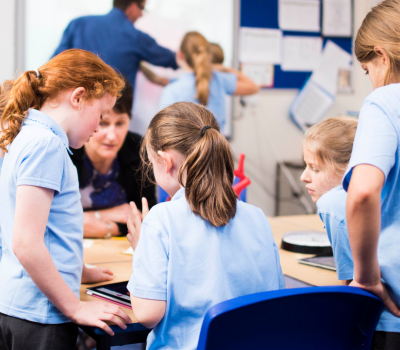
 In our latest team blog, Poverty Proofing expert Bethany Reeve uses her first-hand experience of talking to young people about period poverty in school to explore the issue and shares what staff can do to help combat it.
What is ‘period poverty’?
Period poverty is when an individual lacks the financial means to access sanitary products, sanitation facilities and adequate education surrounding periods. Period poverty is believed to affect 1 in 3 girls at some point in their lifetime. With the cost-of-living crisis and poverty levels on the rise since the COVID-19 pandemic, girls living in the North East of England are suffering disproportionately from period poverty, and it is expected in the coming years, period poverty will be on the rise due to the current financial climate. On average, a girl will start their period between ages twelve to thirteen, however, girls can start their periods as early as eight years old, making it vital to educate and discuss periods within both primary and secondary schools. A recent survey conducted by Water Aid uncovered the horrifying statistics that 26% of girls’ wear period products longer than they should, posing a huge health risk and 15% have taken time off school or work due to their period.
The Red Box Project
Founded in 2017, the Red Box Project was set up by three friends who wanted to provide young girls with sanitary supplies in their local area. After carrying out research surrounding period poverty in England they decided to take action aiming to ensure there were always period products available for girls in schools within their local area. Feedback received from the teachers and school staff in these schools suggested this was a nationwide issue. This then drove the founders of the Red Box Project as well as hundreds of volunteers both in the UK and overseas to campaign and launch a legal challenge against the Government. This fight for menstrual equality saw the change in Government policy in early 2020 with the government now providing menstrual products in all schools and colleges across the country.
Why it matters
14% of girls admitted they didn’t know what was happening to their body when they began their period. This can be a terrifying time for a young girl if they are not educated on what is happening to their body.
It is common for girls to feel embarrassed about their period, not only for young girls but women as well. Although periods are experienced by approximately 50% of the population the subject of them is still extremely taboo. Many schools have policies in place which involve the individual asking a teacher for sanitary products or using a code word to alert the teacher they need sanitary support. However, research has found approximately 78% of girls don’t feel comfortable speaking to their teacher about their period.
For these girls having to go to a teacher may cause avoidable stress and upset at an already sensitive time for them. For this reason, it is important that girls can access sanitary provision without having to directly address a teacher or member of staff. An alternative system which is being adopted by many schools is known as the ‘red box’ system. This entails a member of staff keeping a fully stocked box of period products in the bathroom at all times. It is vital that this box contains a variety of absorbency levels and both pads and tampons to make these provisions accessible to all. Ensure all girls are aware of the supplies and monitor the box regularly to ensure supplies are never running low.
At Children North East, during our Poverty Proofing® The School Day audits, pupil support around periods and access to sanitary provisions is investigated. We see a range of different support in place for girls, from excellent practice like the Red Box system to schools where girls are unaware of not only what the systems are in school but what the word period or sanitary protection means. We know that there are also cases of pupils taking products home for other family members to use. Being able to bring this to school attention is vital and shows that more awareness of this topic can bring better practice, improving the lives and the opportunities for young women.
Top tips for combating period poverty
18th May 2026
30th April 2026
How Little Minds in Mind Helped One Mum Feel Like Herself Again
16th April 2026
Masquer‑Aid: Building Confidence, Community and Self‑Advocacy
1st April 2026

In our latest team guest blog Emma Leggott, one of our expert Poverty Proofing managers, brings together key insights and reflections to support organisations considering becoming a warm space.
There is a real interest from cultural organisations who are either thinking about or already have, turned their gallery spaces, exhibition rooms, cafes and music halls into Warm Spaces. This roundup from Children-North East shares some of what’s been happening in our region and some things to think about, using some of the key principles from Poverty Proofing®.
‘A Warm Welcome’ Setting up a Warm Space in your Community offers a comprehensive guide commissioned by Money Saving Expert Martin Lewis, covering everything from suitability of venue, access, transport and health & safety. It goes into great detail and even provides a handy risk assessment template at the end! Gateshead Council have also done a lot of work in this area and have quickly acted, turning two of their most prestigious cultural venues into Warm Spaces.
Providing a Warm Welcome
Aside from all the practical stuff, we loved the reflection that welcoming people into your space is vital to ensuring that those who need it most feel able to use it. We couldn’t agree more.
In accessing cultural venues, we know that those on the lowest incomes face the greatest number of ‘hurdles’. We also know attendances are lower as a result (The Warwick Commission, 2015). We must hold in our minds eye therefore and understand – when thinking about warm hubs – that deeply held perceptions of prejudice and class inequality are not all of a sudden going to dissipate because there’s a cold snap and a cost-of-living crisis.
Whilst the concept of Warm Spaces is still so new, how they are perceived by people living in poverty is not yet widely known or understood. There is an argument, however, that the set-up is not dissimilar to foodbanks. Despite recent surges in demand for foodbanks there is still a stigma surrounding them and associated feelings of shame, guilt and pride can often prevent people from getting help when they need it most.
Poverty Proofing®
From a Poverty Proofing® perspective, no matter how well intentioned or well-meaning an action, if it identifies, excludes, treats differently or makes assumptions about those whose income or resources are lower than others it is likely to miss the point and may even cause further stigmatisation.
Therefore, making someone feel welcome, is as important as the intervention itself. Putting the heating on, opening up a venue, doing a risk assessment; this is the straightforward part. The art of great ‘Hostmanship’ is making ‘someone feel the best they can’. It is where the skill and thought comes in and – from a commercial perspective – the input that is most likely to see the greatest impact for your time, effort and investment.
Cultural Venues as Warm Spaces: The Exciting Part
What brings us great joy here at Children North East is that we know that the cultural sector is full of brilliantly creative, socially engaged artists, practitioners and free-lancers. Use your collections, your volunteers and your Front of House team to face this challenge head on in the most artistically, creative and culturally inspired way possible.
Think about Language
We heard CEO of Oasis Trust talking earlier this year about opening up doors in their schools and other settings but calling it a movie night or a family bingo evening, to avoid stigmatizing and othering language.
What ingenious responses can you come up with that will help relate coming into your space to more exciting and universal activities than just warmth?
Think about Value for Money
Whatever you do, it must create value. Ask yourself, if I was a person or a family on a really low income would the overall benefit of coming to your space outweigh the overall cost of leaving the house? This could include direct costs such as transport and appropriate winter clothing or hidden costs such as missing home-life routines (leaving the dog, not being able to watch what you want on the telly), going somewhere alone, bad weather, arriving back to a cold house and so on.
A Warm Welcome outlines six other areas to consider when thinking about Hostmanship in Warm Spaces:
Join the Conversation
We hope this piece has provided some food for thought and whether you have already opened your doors as a Warm Space or are thinking about it join the debate! Tell us your ideas, your stories and share your learning on Twitter, tagging @ChildrenNE.
Learn more about Poverty Proofing®
For organisations wanting to take informed, effective action on creating inclusive cultural services and experiences, our Poverty Proofing© Cultural Organisations team can support teams to listen to the experiences of their visitors, communities, staff, volunteers and trustees on how poverty impacts them.
References
A Warm Welcome, Setting up a Warm Space in your Community, Warwickshire County Council, Martin Lewis Foundation. Online, available from a_warm_welcome_2022.pdf (ymaws.com)
18th May 2026
30th April 2026
How Little Minds in Mind Helped One Mum Feel Like Herself Again
16th April 2026
Masquer‑Aid: Building Confidence, Community and Self‑Advocacy
1st April 2026

In our latest team guest blog, Poverty Proofing Co-ordinator Joanna Lowes shares her experience of joining Children North East.
A good friend of mine sent me the job description; “Oh I’m not sure I thought” whilst researching all about the charity and being astounded by their work. I found my inner self talking to a much younger Jo, who as a child lived in some areas of deprivation. This gave me fire in my belly to want to help people, from a young age.
That was 30 plus years ago and It was incredible to find that Children North East have been supporting families just like this since 1891. The thought of leaving my job as a wellbeing champion in a large primary school was daunting. I had helped create meaningful relationships with families and children who needed support, nurture or just a helping hand – I got to see and feel the other side of education and so it was hard to say goodbye but I felt empowered to want greater change.
My first day at Children North East was a ‘service day’, bringing together all the frontline teams. I arrived early and sat nervously in the car… yet as I entered the room, I instantly felt at ease. The hall was buzzing with personalities that echoed the ethos of the charity. The day began with overviews and presentations from different people who worked in other areas of the organisation. The afternoon focused on a team building task that was brought out laughter and togetherness.
The nervous energy I felt prior to 9:30 now felt like excitement, readiness to learn, and everyone was genuinely lovely and welcoming.
Day two and I was off to visit a primary school with a colleague on an audit; meeting with children across the school, talking to staff to gather their views of potential barriers to education and how poverty may affect their school. Here I am weeks in and although there is still lots to learn. I am fascinated by the cause and learning something new every single day whilst helping break down barriers for children and families experiencing poverty.
I know I am working with an incredibly talented team who support one another. We’re all steering in the same direction for that greater change.
I still get to create those meaningful relationships just in a different way, engaging with, parents, staff and young people is brilliant! If leaders can plan the school day for just one child they know who is living in poverty then they will poverty proof their setting for all whilst still creating a fun experience – making sure that it is a fair playing field despite the disparities that society can create.
If you’re interested in joining Joanne and the team here at Children North East, explore our vacancies and find your next chapter.
18th May 2026
30th April 2026
How Little Minds in Mind Helped One Mum Feel Like Herself Again
16th April 2026
Masquer‑Aid: Building Confidence, Community and Self‑Advocacy
1st April 2026

As part of our Give Hope for Christmas campaign, we share the story of one teenager taking the first steps in a new story.
We all know it can be hard taking the first step on a new journey. Harder still when you have faced difficult experiences on similar journeys or when you are dealing with the weight of mental health challenges.
Waiting in the rain with her daughter, Mum Alice had hope today would be the first step for her daughter towards a new opportunity for support. At fifteen, Mia had been diagnosed with ADHD and was awaiting a further diagnosis for autism, alongside this she was experiencing mental health challenges.
It was the first time they had ventured to Masquer-Aid, a support group run by Children North East for neurodiverse young people to share experiences, learn, laugh and get help with their mental health; and they were struggling to find the venue.
“Nina kindly met us in the rain and introduced herself and the Masquer-Aid service.”
The three of them came in from the rain, into a safe space with sky blue walls and warm faces.
Mia had been reluctant to attend, after finding similar professionals didn’t “understand her”, cancelling the previous appointment.
“Nina was very understanding of this and gave me more time to encourage Mia to give Masquer-Aid a chance. I really appreciated her patience.”
“The way Nina spoke with Mia, understood her needs and issues and made her feel at ease. Mia opened up to Nina in a way she hasn’t done for any other professional.”
After the session, Alice shared that she had hope it was the start of something that will make a difference for her daughter.
“Mia was equally impressed as I was yesterday by Nina and what she had to offer in terms of support and understanding.
“Mia really felt like you were on her level, and you actually understood her and she never feels like that, ever.”
Sometimes the first step on a new journey can be hard, but the Children North East are here to offer our support; whatever the weather.
Names have been changed to protect the privacy of the family.
18th May 2026
30th April 2026
How Little Minds in Mind Helped One Mum Feel Like Herself Again
16th April 2026
Masquer‑Aid: Building Confidence, Community and Self‑Advocacy
1st April 2026
In our latest team guest blog, Emma Leggott our Poverty Proofing Co-Ordinator for arts, culture and heritage shares her vision for a sector that challenges itself to break the cycle that sees financial background influence engagement, sharing her Poverty Proofing® expertise along the way.
‘Imagine If… 2022’ is the theme of this year’s brilliant Culture Bridge Annual Conference, which is exploring how organisations can take action to ensure that each child and young person has access to arts and culture, today and every day.

Imagine if…admission to all museums was free, imagine what the impact would be for children living in poverty and the gains that would be made in addressing class inequality. Huge right?
Well, perhaps not. My work in cultural settings has given me insights that encourage me to challenge some of the assumptions around free admission and provides some alternatives that could prove more effective.
Poverty and class aren’t the only determinants influencing someone’s likelihood to take part in the arts or visit a cultural setting. Ethnicity, geographical location, parental beliefs, attitudes and experiences are all up there as deciding factors (Brook et al 2020).
As a society our appetite for arts and cultural attendances is not as widely pursued as one might think. Even cinema which is viewed as pretty mainstream only sits at around 60%, with 1/3 of Brits attending only one live music concert per year, 5% attending ballet, 1/5th art galleries, 1/12th classical music, 4% opera and 3% contemporary dance (Brook, 2021). Overall attendances at museums and libraries appear to be declining too, as people opt instead for film and video (one of the few areas to see an increase in participation – 49% to 71.1%) according to audience survey data (Whitaker, 2016, The Warwick Commission, 2015).
It is worth pointing out that ‘culture’ – in the context of an article about poverty, cultural inequality and class divide – is in and of itself ‘ordinary.’ Food, music, hobbies, interests, TV, religion, family routines, community rituals are all ‘expression of beliefs and values in the everyday conduct of life’ and are all forms of culture (Williams cited in Matrasso, 2021 p33).
Where access to culture becomes less ‘ordinary’ is in the domain of – often publicly funded – art galleries, theatres, music venues and heritage sites where it is that a privileged minority make up the majority of programmers, participators and attendances (Warwick Commission, 2015, p33, Brook et al, 2022).
The reasons why this is so and why people from lower socio-economic backgrounds are less likely to take up this space is complex and well debated. Generally speaking, barriers to access tend to fall into two main categories- either practical (relating to transport and cost) or social or attitudinal (relating to beliefs, experiences, feeling welcome, sense of belonging) (Whitaker, S. 2016).
From a Poverty Proofing® perspective, organisations, at the start of their journey, tend to have an awareness of social and attitudinal barriers (grand-off-putting-buildings, feelings of ‘it’s not for me’), yet tend to focus more of their thinking and resource towards addressing the more tangible, practical barriers such as free admission when looking to improve access for people from lower socio-economic backgrounds.
Free Admission
Is this down to the premise that cultural leaders find it ‘traitorous to acknowledge’ that free admission doesn’t work?
This was the conclusion arrived at by Colleen Dilenschneider in her 2019 article ‘Digesting the Data – Five Cultural Organisation Findings Even We Found Difficult to Swallow.’ She wrote that cultural organisations can’t let go of the idea that being free is the same as being welcoming. She argues it is not and goes further in her data to show the opposite in fact – that ‘free admission does not significantly impact attendance’ and ‘free admission to museums does not attract lower income individuals’ (Dilenschneider, 2019).
When, for example, DCMS (Department of Culture, Media and Sport) made entry to its London museums free only 13% of attendances were taken up by people from lower socio-economic groups, compared to 87% from higher (Warwick Commission, 2015).
According to Dilenschneider visiting a cultural organization as a child with family is one of the most likely determinants influencing participation in later in life. She also pointed out this impact is not the same for children who only ever visited as a group or with school. These visits tended to be ‘one-off’ encounters, more likely to leave a negative lasting impact’ where people reported falling asleep, feeling bored or unwelcome. This was in contrast to visiting as a family where the lasting impact was associated with more positive memories and experiences.
The Poverty Proofing® Principles
Poverty Proofing principles recognise the need to strike a careful balance between the diversification of income for cultural organisations, whilst also removing barriers in access to families in poverty. Making things free – as this article has shown – is not the ‘magic bullet’ in addressing cultural or class inequality (nor is targeting school groups).
The challenge is to widen thinking beyond free admission and instead think about how to create and achieve the same sense of warmth and belonging for those who did not get to experience it as a child. Here are six key Poverty Proofing® principles to help achieve this goal:
Poverty Proofing® is a concept developed at Children North East. For further information or to look at a bespoke process designed around the needs of your organisation please contact [email protected].
References
Brook, O. et al (2020) ‘Why Culture is Bad for You,’ Manchester University Press.
Brook, O. (2021) Culture and Privilege, Thinking Allowed, BBC Radio 4, 08 September 2021.
Dilenschneider, C. (2019) School Groups vs Family Visitors: Which Kids Come Back as Adults, online, available from: School Groups vs. Family Visitors: Which Kids Come Back As Adults? (DATA) – Colleen Dilenschneider
Dilenschneider, C. (2019) Digesting the Data – Five Cultural Organisation Findings Even We Found Difficult to Swallow, online, available from: Digesting the Data – Five Cultural Organization Findings Even We Found Difficult to Swallow – Colleen Dilenschneider
Matarasso, F. (2019) A Restless Art: How Participation Won and Why it Matters, Calouste Gulbenkian Foundation, London, UK.
The Warwick Commission (2015) ‘Enriching Britain: Culture, Creativity & Growth,’ University of Warwick, available from: warwick_commission_final_report.pdf, accessed 09.10.22.
Whitaker, S. (2016) Hurdles to the participation of children, families and young people in museums: a literature review, Kids in Museums, available from: Hurdles-to-Participation.pdf (kidsinmuseums.org.uk), accessed 09.10.22.
18th May 2026
30th April 2026
How Little Minds in Mind Helped One Mum Feel Like Herself Again
16th April 2026
Masquer‑Aid: Building Confidence, Community and Self‑Advocacy
1st April 2026