

18th May 2026

Our Chief Executive, Leigh Elliott shares our charity’s response to yesterday’s Autumn Statement from Chancellor Jeremy Hunt.
We are relieved that the Chancellor has chosen to do the right thing in his Autumn Statement by fully uprating benefits in line with inflation, increasing the Minimum Wage and unfreezing Local Housing Allowance. This is the bare minimum low-income families need in the current climate to keep their heads above water. However, this set of announcements falls far short of what is needed to tackle the scourge of child poverty and to protect the most vulnerable families.
Not extending the minimum wage to under 21s, many of who are forced to support themselves without help from family, is an unacceptable form of age discrimination. Young workers, doing the same job, and often having the same rent and bills to pay as their older colleagues, need to be properly paid for the work they do.
Moreover, the rhetoric around extreme sanctions for those who ‘don’t look for work’ is deeply concerning, and could have a catastrophic impact on the most vulnerable people in our communities.
The existing claimant commitment stringently ensures those who are able to look for work do so. Families don’t need sanctions to get them back to work, they need affordable childcare, especially during school holidays, jobs which are flexible around the needs of their children, and the NHS treatment they need without long waiting lists. These are the issues government should be tackling, rather than using stigmatising language and a blame narrative to heap pressure and threats onto the minority of households who are already struggling the most.
People with complex health conditions fear work capability assessments will deem they can work when they are already using every ounce of their capacity to meet the basic care needs of themselves and their children. The anxiety that they could be forced to look for jobs they are unable to do, or be left with literally nothing to live on, will make things far worse. We want urgent reassurances from the treasury that children in non-working households will be protected from even deeper poverty and destitution.
We are asking all political parties in their upcoming manifestos to commit to a full reset of tax and welfare policies in a ‘child-first’ budget, and a cross-departmental strategy to tackle child poverty and enable every child growing up in the UK to thrive. And we are calling on our government as leaders to renew their commitment to looking after the most vulnerable in society, and abandon the rhetoric of blaming and shaming the poorest people for being ‘a burden’ to deflect from the wider problems around the management of taxpayers’ money.
18th May 2026

30th April 2026
How Little Minds in Mind Helped One Mum Feel Like Herself Again

16th April 2026
Masquer‑Aid: Building Confidence, Community and Self‑Advocacy

1st April 2026


Children North East is thrilled to share that Newcastle United player James Huntley, is working with the charity as an ambassador.
A homegrown football talent, James has over 50 matches under his belt with the youth squad and recently scored the winning goal in their recent Hong Kong Citi Soccer Sevens cup campaign, which took them to the semi-finals.
Off the pitch, James will join the region’s longest standing children’s charity to spend time with the young people accessing the services and raise awareness about the challenges faced by its communities, such as how sport and time outside is important for teens mental health.
The partnership is important to the charity as it seeks to work with young voices, who understand what it’s like to be young today for the 2,000+ children and teens they work with each year.
From a family passionate about giving back, James’ brother Liam is also supporting the charity by running this years’ Great North Run in support of their work.
James commented, “I’m excited to be teaming up with Children North East and learning more about the young people they work with. Growing up can be hard and I am pleased to be able to support the great work of the charity in this way. Football, and sport in general, is something which unites people whatever their background and so I hope we can use that to make a positive impact… as long as they don’t put me in goal.”
Leigh Elliott, Chief Executive at Children North East, comments, “As an athlete, James has accomplished a huge amount and has worked very hard to get there. Through spending time with young people we work with he will be able to share his experience and help them in growing their confidence. We hope this new relationship inspires other young people to support their communities.”
18th May 2026
30th April 2026
How Little Minds in Mind Helped One Mum Feel Like Herself Again
16th April 2026
Masquer‑Aid: Building Confidence, Community and Self‑Advocacy
1st April 2026

Our Chief Executive, Leigh Elliott, shares the charity’s view on the urgent need for a national approach to tackling Child Poverty from all sides.
In 1999, the government made a historic cross-party agreement to eradicate child poverty by 2020. At the time a quarter of British children were living below the poverty line. Yet as I write this, almost 25 years later, the situation has worsened; and growing regional inequality means that in the North East a shocking 35% of children are now growing up in poverty. The impact of austerity, Covid and the cost of living crisis is having a catastrophic impact on families who are struggling to pay for the basics – enough food, nappies and baby milk formula, school shoes.
As one of the world’s strongest economies, it should be unthinkable that in the 21st century children in our communities are growing up in poverty. But this is the reality. And there is a deafening silence from our government in response to the issue.
Our experience supporting babies, children, young people and their families tells us the reasons for child poverty are complex.
Low-paid work, with wages that are not keeping up with inflation, is one of the biggest causes of child poverty; almost 70% of children living in poverty in the North East are in households where at least one parent works.
The Universal Credit system is also failing families; eligibility criteria that penalise children with two or more siblings, and a basic entitlement that doesn’t cover the cost of essentials. For families who can’t work, and the millions whose meagre wages are topped up with Universal Credit, it’s still not enough to make ends meet.
For many parents who are working – and others who want to work, the availability and cost of childcare, and the complex childcare funding system create another difficulty – parents have told us they can’t afford to go to work but they can’t afford not to. It’s an impossible dilemma – and it is children who are suffering.
Our leaders need to acknowledge that child poverty is a problem, and one which needs to be tackled, for the benefit of the economy, the future of our society, and because it is the right thing to do.
That’s why we are calling on the next government to commit to a new Child Poverty Strategy, which works across government, to address the issue from all angles. We need clear targets that drive forward action, to get more money in families’ pockets. And we need to remove the barriers preventing children in poverty from fully participating in society, achieving at school, and growing up happy and healthy.
Children North East is campaigning to end child poverty for good, working alongside our Ambassador, Denise Welch, and the Sunday Mirror, calling for change to bring Hope not Hunger to our children. As part of the End Child Poverty Coalition, we are calling an end to the two-child limit which are keeping thousands of families in poverty. We are contributing to the work of the North East Child Poverty Coalition, looking for regional solutions to child poverty, and are championing the Real Living Wage, leading by example and challenging other employers to make work pay.
Our pioneering Poverty Proofing© model is working in schools, healthcare settings and community venues to identify and remove obstacles that make it harder for people in. We know this makes a huge difference to people’s day to day life.
We are playing our part, but we need a concerted, national approach that tackles poverty from all sides, and we are failing our children if we do not commit to eradicating it in our generation.
18th May 2026
30th April 2026
How Little Minds in Mind Helped One Mum Feel Like Herself Again
16th April 2026
Masquer‑Aid: Building Confidence, Community and Self‑Advocacy
1st April 2026

Music has the power to inspire, uplift, and make a real difference. When talented local musicians come together to create a song that not only captures the joy of cycling but also serves a greater purpose, it’s a cause for celebration. Children North East are thrilled to introduce to you, ‘Free Wheel’ by Double Blue, a song about the joy of cycling, that not only fills your heart with rhythm but also supports a vital cause. All song proceeds are kindly being donated to support babies, children and young people across the North East.
Before we dive into the heart of the song, let’s first meet the maestros behind ‘Free Wheel.’ Double Blue, local blues guitar legends, have been making waves in the music scene for years. With their unparalleled skill, soulful melodies, and electrifying performances, Stu Burlison and Jimmy Smith have earned their reputation as true musical gems in the local community.
‘Free Wheel’ is more than just a song; It’s a heartfelt tribute to the joy of cycling. The song’s lyrics and catchy base will have you tapping your feet in no time. It’s the kind of tune that makes you want to grab your bike and hit the open road, wind in your hair and a smile on your face. The music video which was produced by Paddytech Videos, captures the freedom and exhilaration that cycling across the beautiful scenic North East can bring. Make sure to give this a watch too!
The best part? You can download and listen to ‘Free Wheel’ for only 99p. It’s a small price to pay for the lasting impact it’s going to make. Every penny from the song’s proceeds go towards supporting Children North East. Can you help us share the song with your family, friends, and colleagues? With your help, we won’t stop until every baby, child and young person has the healthy, happy start in life they deserve.
So, fasten your seatbelts (or should we say, pedal straps?) and get ready to ride along to the catchy chorus through the download links below.
Download now on Apple Music and Amazon Music
18th May 2026
30th April 2026
How Little Minds in Mind Helped One Mum Feel Like Herself Again
16th April 2026
Masquer‑Aid: Building Confidence, Community and Self‑Advocacy
1st April 2026
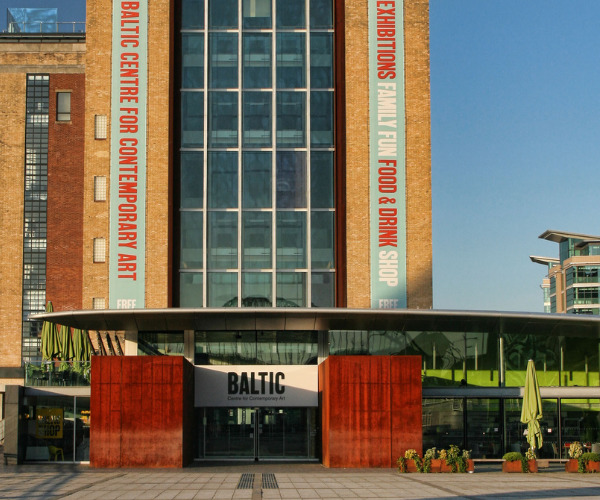
In 2020, the Poverty Proofing® team at Children North East worked with the Baltic Centre for Contemporary Art to listen to the experiences of their visitors, communities, staff, volunteers and trustees on how poverty impacts their engagement with the venue and to explore ways to remove barriers for those living in poverty. Located on the Quayside of the Tyne, where cities Gateshead and Newcastle meet, it has welcomed over eight million visitors and was the first venue outside London to host the prestigious Turner Prize. Two years on, our team sat down with Vicky Sturrs, the previous Head of Learning and Civic Engagement at Baltic to learn more about the impact the project had made for the Centre and its communities.
What have you seen change at Baltic since you embarked on the Poverty Proofing® journey?
“One of the main things that I saw change was staff understanding that working with people in poverty, and supporting people in poverty, and changing practice for people in poverty, was everybody’s responsibility. Initially expectation was that it would focus on events, the shop, the café – but when we got to the end of the process, it opened up things about space, about exhibitions, about what you programme. I don’t think we ever expected that this would impact what we did and our practice. It made the organisation more interesting, valued, engaging. That was a revelation to the organisation.
“What Poverty Proofing® did was give that advocacy to community. It gave the ammunition that was needed for a board to see that communities are struggling more and more and we have the power to change that, within our sphere of influence.”
What are your ‘Top Takeaways’ from the process?
It can inform valuable change across every corner of an organisation:
“It gave us takeaways to use in business plans, report writing, ACE funding… we used it in so many different ways. We talked about the training, and being part of that, as such a marker of what Baltic wanted to be. That can’t be understated.”
Be open to being challenged and changing your perceptions:
“There’s something on a personal level about the need to understand that that the perceived ‘good job’ you are doing is not always as accessible or inclusive as you hope or think. It made us have to look so much more widely. We had ‘go and see visits’ and some people didn’t make it past the front desk… and that was really valuable. What we thought was happening, in some cases, just wasn’t happening.”
How do you think the process has empowered people?
“Through the process I felt very separate from the communities that had been involved. It highlighted that there was a lot of people that wanted to give their opinion and we didn’t know them. We didn’t know that we hadn’t given them the opportunity. I hope that the process started that journey for Baltic. It made us think a lot about threshold crossing.”
What would you say to another organisation who was considering undergoing the Poverty Proofing® process?
“Approach Children North East in the process as being a critical friend. It’s a supportive process. No-one is running you up a flag pole to say you’re doing the wrong thing, it’s how do we action things together.
“Think really carefully about who your liaison is, what their position in the organisation is, and what their power to influence the organisation is, and what their capability to make change is. That individual might have to have a strength of will to pull the organisation up the hill.”
Poverty Proofing® is a concept developed at Children North East. For further information or to look at a bespoke process designed around the needs of your organisation please contact [email protected].
18th May 2026
30th April 2026
How Little Minds in Mind Helped One Mum Feel Like Herself Again
16th April 2026
Masquer‑Aid: Building Confidence, Community and Self‑Advocacy
1st April 2026
 In this article Lesley Barron, Poverty Proofing Co-ordinator at Children North East, explores the impact of travel and the Healthcare Travel Costs Scheme on how people access and experience healthcare services.
Through our Poverty Proofing® work in a range of healthcare settings, Children North East have been digging deep to unearth the barriers faced by millions of people who live in poverty, when attempting to access healthcare services. Our work has already identified several recurring themes in health inequalities, but one theme that presents itself over and over again, is the cost of travel to and from healthcare settings.
‘If you’re referred to hospital or other NHS premises for specialist NHS treatment or diagnostic tests by a doctor, dentist or another primary care health professional, you may be able to claim a refund of reasonable travel costs under the Healthcare Travel Costs Scheme (HTCS).’
This is the opening paragraph taken from the NHS Healthcare Travel Costs Scheme, which should be a ‘quick win’ for those struggling to afford healthcare travel costs. But is it?
A familiar story
Let me introduce you to Sam…
Sam is one of around 14.4 million people living below the poverty line in 2022 and her story is typical of many we hear when Poverty Proofing®.
Sam has an appointment to have an expired contraceptive removed and is in a lot of pain. She arrives 20 minutes late and is told she can’t be seen. The receptionist may think ‘serves her right, she should have been on time.’ However, what isn’t realised is that Sam relies on the Metro to get anywhere, and through no fault of her own, the Metro was delayed. Another assumption is that she could have phoned ahead to let them know she was running late. However, the reality is that Sam has no credit on her phone, and can’t top it up until her benefit payment is paid in three days.
Perhaps she just needs to speak to the receptionist, explain what’s happened to make her late, and persuade them to fit her in? The reality is that Sam feels incredibly uncomfortable talking to the receptionist, whom she feels looks down on her and can be very rude and unwelcoming towards her. Sam feels stigmatised and disrespected, and this negatively impacts on her confidence and self-esteem, and on her ability to articulate that she is actually in a lot of pain and really needs help. Many people in a similar situation could perhaps just ring in the morning to make another appointment. However, the urgency for Sam is more acute because remember, she’s got no credit on her phone. She also can’t afford to pay the Metro fare to come back another day. She would end up travelling without paying, risking prosecution and a hefty fine.
At every turn, Sam was faced with a barrier, preventing her from accessing the care she needed. This is not uncommon for the millions of people living below the poverty line. As Dr Laura Neilson (founder of Shared Health Foundation, Focused Care CIC and Hope Citadel CIC) says, “In areas of deprivation, the stories behind the stories are really important”.
We owe it to people like Sam to understand what the barriers are and to make changes in our structures and processes, on an organisational level, in order to make our healthcare system accessible to everyone.
Healthwatch UK (2019) revealed that 9/10 people consulted said a convenient way of getting to and from health services was important to them. Difficulties with transport were also identified as a common reason why patients miss appointments.
Common problems with the NHS Healthcare Travel Costs Scheme
“You used to be able to claim travel expenses. I think they make it so difficult and awful, people just don’t bother. Now there’s no petty cash. No petty cash but lots of petty rules.”
“If you’ve got somebody out in Northumberland and you send them an appointment for a face to face, and they’ve got no money, how are they going to get in?”
“It’s not uncommon to say to someone, ‘I’ve got an appointment for you’ and they say ‘I can’t come because I physically cannot get there’.”
This is a fairly typical response from staff when asked about the travel reimbursement scheme: “We don’t do travel expenses. It’s not discussed, we don’t reimburse travel.” However, some staff members from the same setting contradicted this, “Everything’s free, I think they can get travel costs back, I don’t know much about that though.”
Some patients have spoken to us about not using the claim forms that are available, due to the fear that they are taking away support from other families who may be worse off: “There is an expense attached to attend clinic because we use buses. You can claim this back I think but I don’t because I always think there’s someone worse off than me.”
A patient goes to the desk to claim their expenses from petty cash, only to be told that the petty cash tin isn’t kept here. It is kept on the hospital’s other site, three miles away on the other side of town. Poverty Premium at its best! The person who can’t afford to travel to hospital, has to make an extra journey in order to claim their travel costs back.
Following their appointment on Tuesday, a patient goes to the desk to claim their travel expenses from petty cash, only to be told that it’s not possible to claim this back today, because the key holder of the box only works on Thursdays and Fridays! The patient is asked to come back later in the week.
A patient goes to the desk to ask the receptionist how they can go about claiming their travel costs back. The receptionist is very friendly, says she will go and get the necessary form and asks the patient to have a seat. This helpful and enthusiastic response goes horribly wrong when the receptionist returns, waving the form in the air, whilst declaring to the whole (rather full) waiting room, “Here’s the form to claim your travel back!”. The poor patient turns a vivid shade of scarlet and is left feeling humiliated and embarrassed.
For potential claimants, there are too many hoops to jump through, which make the process too much of a rigmarole. NHS staff themselves are often unaware that the travel costs scheme even exists; or if they do know it exists, they are often confused about how it works. Also, being reimbursed assumes that the person can afford the cost of travelling to the setting in the first place. However, if people can’t afford the upfront cost of travel, they may fail to attend at all, leading to wasted appointments and huge unnecessary costs to the NHS. There must be things we can do better to help overcome this unnecessary barrier caused by the cost of travel.
What you can do to help
– Ask patients about travel: Can you afford it? Can you get here?
– Provide a travel pass/ticket up front for those with no resource at all
– Provide staff training about the travel scheme
– Improve staff awareness of poverty and its impact on patient health outcomes
– Explain the process clearly and openly and reassure patients that claiming what they are entitled to does not directly affect another person’s ability to claim, then more patients would feel able to access the financial help they need and are eligible for
– Ensure easy access to petty cash tin
– Make reimbursement available at time of appointment to reduce/avoid unnecessary trips
– Leaflets/signs/posters to raise patient awareness of scheme
– Advise everyone of the scheme, so as not to single out or stigmatise anyone
In conclusion
The NHS Healthcare Travel Costs Scheme is often seen to be a poorly-thought-out and executed system, yet it has the promise of so much more. Its profile must be raised and its existence made common knowledge. It needs to be simplified and streamlined in its systems and processes, with fewer hoops to jump through, and it must be broached with sensitivity by staff. Only then can it make a genuine attempt to alleviate just one of those many barriers faced by people in poverty.
Poverty Proofing® is a concept developed at Children North East. For further information or to look at a bespoke process designed around the needs of your organisation please contact [email protected].
18th May 2026
30th April 2026
How Little Minds in Mind Helped One Mum Feel Like Herself Again
16th April 2026
Masquer‑Aid: Building Confidence, Community and Self‑Advocacy
1st April 2026