

18th May 2026

In our latest guest blog, Grace Dunne, our Poverty Proofing Coordinator, explores how the school Harvest Festival period may impact children living in poverty and how schools can help them take part without guilt or stigma.
As autumn draws in, many schools are returning to their seasonal traditions: singing about fluffy cauliflowers, drying children’s soggy socks on radiators and gathering cans of beans for the school harvest festival collection.
In the past, these collections tended to be taken to a local church for distribution to those in the local community who may need them, or even delivered door to door by groups of pupils.
In 2021, of course, we have food banks, and many schools will be collecting donations for their local branch.
It can be a brilliant way for pupils to learn about charitable giving and fundraising, and build empathy for those facing difficult circumstances. It can also help pupils move beyond the sometimes extreme examples of poverty they see in fundraising campaigns and the media, and to understand how it is affecting those closer to home.
However, when 31% of children in England are living in poverty (nine in a class of 30), and one in five schools have set up food banks for their own communities, how can schools ensure that these collections avoid putting pressure on families at an already costly time of year and don’t stigmatise those pupils who are not able to donate?
In our Poverty Proofing® the School Day work, we’ve spoken to pupils who’ve expressed that they felt disappointed in themselves when they “forgot” to bring in a donation. We have also spoken to pupils who have been the recipients of food items their peers have brought in. Many pupils (and their parents) will forget to bring things in and bring them the next day instead, but it’s important to be aware that ‘forgetting’ donations can also be a way to avoid the embarrassment of not being able to contribute.
We’ve gathered some ideas for how to ensure that all pupils can get involved in your next foodbank collection…
Aim to make the donation process as anonymous as possible. This means avoiding asking for pupils to bring donations to the front of the class, or getting them to carry their donations to the school hall or church. Many schools choose to have a donation point in the school office or hall and have the collection going on for weeks rather than on one day, so it is not apparent to others if a child has not brought anything in.
Food banks are often in dire need of financial donations to pay for storage, collection and distribution. Cash also gives them the freedom to bulk purchase items that they know their clients need. A link could be added to the school website inviting families to donate what they can. As well as these donations being anonymous, this option might be easier for busy parents than remembering to pack cans in their children’s school bags. You may also be surprised to find that ‘pay as you feel’ collections often result in higher donations than those with a fixed amount.
Generosity and kindness are values that are widely promoted in schools. It can be difficult to find a balance where this is celebrated, but pupils should not be overly praised for the material contribution they and their families have made. It can be tempting to say to the whole class, “Wow, Emily’s family have sent us in 20 cans for the collection! Thank you so much Emily!”, but it’s important to consider the impact this may have on pupils who have not been able to contribute.
This could be a wonderful opportunity to demonstrate that everyone can give something, regardless of how much money or resources they and their family have. For example, pupils could be encouraged to make cards in class to accompany the donations. Older pupils could be supported to write letters to their MP about the importance of challenging poverty in their communities.
Often, children take part in charity initiatives in school without being fully aware of exactly what it is they’re raising funds for. It’s important that those living in poverty aren’t stereotyped when food banks are being described to pupils and that pupils are encouraged to empathise with, rather than show pity for, those who use food banks. People living in poverty should not be stereotyped or ‘othered’ by the language used. Pupils could be shown videos of interviews with food bank users to show that they are real people and not just statistics. For example, this great video from The Trussell Trust showing Professor Green visiting a food bank in Lewisham.
“It’s a No-Money Day” by Kate Milner is a beautiful picture book, which sensitively explores a mother and child’s visit to the food bank.
School staff need to remain aware that many of their pupils will already know about food banks, from their personal experience. It’s important that these pupils do not feel identified or stigmatised during class discussions. They should not feel that they need to share their own experience but, if they do want to, should be provided with support. It’s a good idea to remind pupils that poverty is a difficult topic to discuss and, if anything in the discussion upset them, they know where to seek support in school.
With a bit of planning, the annual school Harvest Festival collection can be an invaluable opportunity for pupils and staff to consider the impact of poverty in their communities and consider what can be done beyond packing up the parcels.
We would love to hear your thoughts and experiences on this subject via the Children North East Poverty Proofing® Twitter.
18th May 2026

30th April 2026
How Little Minds in Mind Helped One Mum Feel Like Herself Again

16th April 2026
Masquer‑Aid: Building Confidence, Community and Self‑Advocacy

1st April 2026
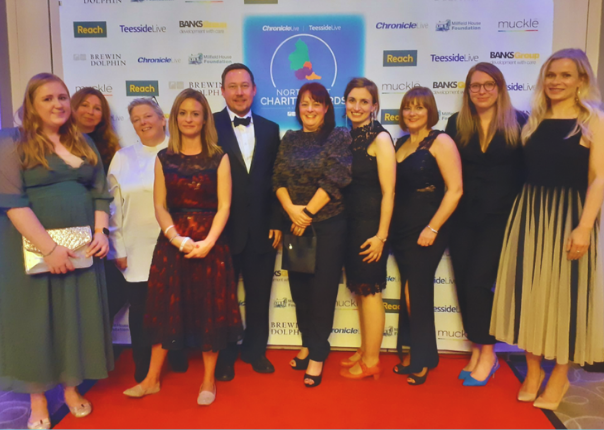
Children North East was proud to last night attend the North East Charity Awards. The annual awards were a poignant celebration after 18 months of disruption for our sector and its communities.
The evening, hosted by Reach plc at Ramside Hall in Durham, brought together almost 300 sector leaders, employees, volunteers and supporters under one roof.
It offered a welcome moment to reflect on our impact as individuals and as a collective, and an opportunity to see hear about the great work taking place across our region to improve lives and drive social change
Our team were also in attendance to celebrate a nomination in the ‘Outstanding Contribution to Social Change’ Award.
Leigh Elliott, Chief Executive of Children North East, comments, “We are proud to be making an impact on tens of thousands of babies, children and young people across the North East and beyond each year. The team make the scope and quality of our work possible and being included in this event is a tribute to every one of them.”
Children North East was recognised for its rapid response to the impact of the pandemic, which included quickly adapting our Poverty Proofing® programme for schools, and distributing almost 5,000 packages to families in need, including laptops for remote learning and creative play kits. It also acknowledged our role in promoting that the voices of children and young people are heard when it comes to decisions that impact them.
The category, sponsored by Millfield House Foundation, celebrates organisations that are ‘amplifying the voices of the people they represent and driving social change’. On the night, the Award went to Thrive Teesside, a fantastic organisation that trains and empowers individuals and communities to campaign for issues relating to equality.
Luke Bramhall, Head of Youth Services and Poverty Proofing, comments, “The events of the last 18 months have moved the experiences of young people in poverty up the public agenda and this recognition will help us advocate and act for change in this space.”
18th May 2026
30th April 2026
How Little Minds in Mind Helped One Mum Feel Like Herself Again
16th April 2026
Masquer‑Aid: Building Confidence, Community and Self‑Advocacy
1st April 2026

We are very excited to announce the winners of the Children North East calendar photography competition!
We were blown away by the number of people sharing their favourite snaps, receiving over 240 entries in response to our call out for pictures capturing Northern landscapes, landmarks and wildlife. From Farne Island puffins to scenes of North Sea beaches, we’ve enjoyed a wonderful and diverse collection of images representing our region, shared by amateur and professional photographers alike.
It was an incredibly difficult job choosing just 13 winners from the piles of pics, and we were happy to delegate the job to our crack team of judges. The FAB (Fantastic and Brilliant) Group, a group formed by young people with disabilities who meet at our Young People Services, were joined by our Chief Executive, Leigh Elliott; Denise Wray, Partnership and Community Coordinator at John Lewis & Partners; and photographer James Fortune.
Norma McKellar is our overall competition winner, taking the top spot with a vibrant picture of Newcastle’s Quayside at dusk. Robert Kenny took the runner up spot with a stunning picture of a Roe Buck in lush fields. Norma wins a £100 John Lewis voucher and Robert a £30 voucher, both donated by the Eldon Square store.
This year was the first time we have run a competition of this kind, and it looks unlikely to be the last. Judge Denise Wray commented, “An amazing set of images making it really difficult to choose! Whatever the result, this will be such a stunning calendar to mark the anniversary year.”
You can pre-order your copy of the Children North East calendar on our shop now.
Our team would like to say a huge thank you to everyone who took part in the competition and a massive well done to our winners… we hope you join again next year!
View our gallery of winning images below:

Tyne Making Waves, Norma McKellar

Roe Buck Six Points, Robert Kenny

Snowy Angel of the North, Emma Youd

Tynemouth Lighthouse, Paul Turner

Raby Castle, David Dodds

Jesmond Dene, Duncan Poole

Coast, Kelly Paterson

Bella on the Dunes, John Hartshorne

Farne Islands Puffin, Heather Parr

St Mary’s Lighthouse, David Bennett

After the Rain Washington, Sheila Brunger

Cheviot Hills from Hownam Law, Mark Keville

Snowy Mill Jesmond, John Field
18th May 2026
30th April 2026
How Little Minds in Mind Helped One Mum Feel Like Herself Again
16th April 2026
Masquer‑Aid: Building Confidence, Community and Self‑Advocacy
1st April 2026

Children North East are national founders and leaders of the Poverty Proofing initiative, and over the past ten years we have worked with schools and organisations across the UK to identify and overcome the barriers that children and young people from families with less financial resources face.
Now, we’re turning the tables and putting a spotlight on our own work, to ensure all our current structures and services meet the same high standards of inclusion we support others to meet. We believe that now is an important time to reassess, after the significant disruption and changes to the way we work that took place in the pandemic.
Our aim is to ensure that household income does not impact on people’s ability to work with us, access our services or get involved with the activities we run. We are committed to being accessible to citizens from all socioeconomic backgrounds.
As part of this process we are keen to hear what people (you!) have experienced of Children North East, and would appreciate it if you could complete the brief survey below to share your thoughts.
If you know anyone who might also be interested in completing the survey, please feel free to share it with them, as we’d love this to get as many responses as possible.
18th May 2026
30th April 2026
How Little Minds in Mind Helped One Mum Feel Like Herself Again
16th April 2026
Masquer‑Aid: Building Confidence, Community and Self‑Advocacy
1st April 2026
Over the past year we have been expanding this important work into cultural organisations, and we’re delighted to share that Children North East are currently working in partnership with Northern Stage in Newcastle to Poverty Proof their organisation.
Children North East are national founders and leaders of the Poverty Proofing initiative, and over the past ten years we have worked with schools and organisations to identify and overcome the barriers that children and young people from families with less financial resources face.

We are working with Northern Stage to ensure that household income does not impact on people’s ability to visit and get involved with the activities that Northern Stage runs. Overall, our aim is to help Northern Stage ensure that they are accessible to citizens from all socioeconomic backgrounds.
As part of this process we are keen to hear what people think of the theatre, and we would appreciate it if you could complete the brief survey below to share your thoughts.
If you know anyone who might also be interested in completing the survey, please feel free to share it with them, as we’d love this to get as many responses as possible.
Thank you so much!

18th May 2026
30th April 2026
How Little Minds in Mind Helped One Mum Feel Like Herself Again
16th April 2026
Masquer‑Aid: Building Confidence, Community and Self‑Advocacy
1st April 2026
This year, competitors in our famous Sandcastle Challenge swapped buckets and spades for crafting and cardboard. Read on to learn which schools have been crowned our 2021 winners…
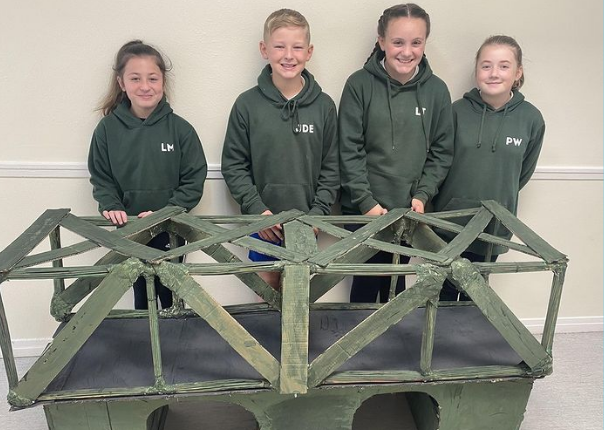
This year, a traditional Sandcastle Challenge beach event was out of the question, so we asked schoolchildren across the region to channel their inner engineers and build the best bridge they could think of. The challenge was a tribute to Newcastle’s iconic landmark, the Tyne Bridge.
We are pleased to share that three schools have been crowned our 2021 champion builders:
Winners were chosen by headline sponsors of the competition, Vistry Partnerships North East.
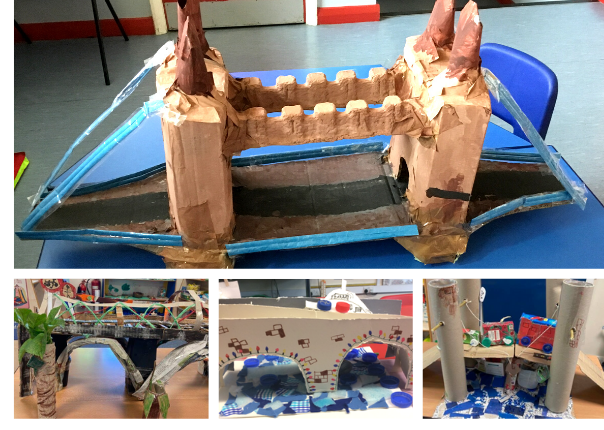
Challenge champions showcased their creativity and building skills.
In addition to earning a prize of £200 for their school, some of the children’s bridges will be put on display at Tynemouth Station from 22nd September to the end of 2021, where the creations will be viewed by thousands of residents and visitors each week.
The annual Challenge usually sees over 1,700 children descend onto Tynemouth beach to show off their building skills. However, last July it was unable to go head for the first time in its 25 year history, due to the pandemic. Wanting to keep the spirit of the competition alive, we instead collaborated with schools to offer an exciting alternative, and our team have been blown away by the creativity and ingenuity of the classroom built bridges. They were also impressed by the number of young people including recycling and care for the environment in their designs.
Students from Cotherstone Primary School shared how they tackled the brief, “We made an arch, treetop bridge because some of us wanted to make an arch bridge and some wanted to do a treetop design. The bridge is for bikes and people to walk on and enjoy. We made solar panels to light up the bridge at dusk and at midnight, if anyone wanted to do a midnight bridge walk! It was really good fun making the bridge and we are very proud!”
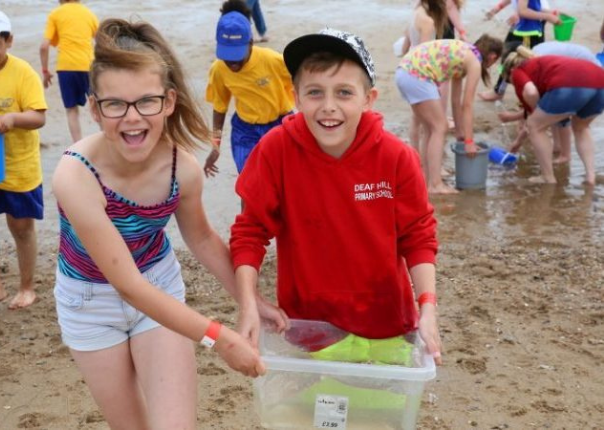
Children take part in the traditional Sandcastle Challenge on Tynemouth Beach.
With the Sandcastle Challenge likely to return to its beach home in 2022, this years’ competition will stand out as a unique and exciting milestone in its history.
If you would like to learn more about the 2022 Sandcastle Challenge or how to involved, contact us at [email protected].
18th May 2026
30th April 2026
How Little Minds in Mind Helped One Mum Feel Like Herself Again
16th April 2026
Masquer‑Aid: Building Confidence, Community and Self‑Advocacy
1st April 2026