

18th May 2026
Children North East is working with North Tyneside Cultural Education Partnership (NTCEP) on a new social prescribing initiative. It’s aimed at increasing connections between the education and cultural sectors as well as raising awareness of the cultural offer in the borough and supporting schools to use the Arts to meet their wider objectives. Eleven-year-old Holly is just one of the young people to have benefited from this partnership.
Having a sibling with a disability can be a positive experience, however there are times when it can also be quite stressful.
For Holly, 11, her five-year-old brother’s autism can mean her mum’s attention is sometimes taken up dealing with his challenging behaviour and this was particularly problematic during lockdown.
So when Holly was matched with a sessional worker from our Young People’s Service, it meant Holly could enjoy a bit of fun and relaxation and her mum, Megan, wasn’t worrying about focusing on her son and her anxious eight-year-old daughter to the detriment of Holly.
Molly, who began as a volunteer peer mentor with Children North East before getting paid work with our charity, quickly acquainted herself with Holly’s varied interests which encompass sharks, sketching and cooking up a storm in the kitchen!

“Holly was quite quiet at first, but we had a couple of meetings and the second time, she opened up and was really quite chatty. We got on really well,” Molly said.
“As well as doing art and cookery together, we did quizzes online. I made up little quizzes about sea life (Holly is really interested in marine biology) and we both made shark posters and told each other about our chosen sharks!”

Before restrictions were tightened again late last year, Molly and Holly were able to go for walks on the beach at Whitley Bay where Molly encouraged Holly to practise her drawing.

This picture of St Mary’s Lighthouse is one of her works of art. However as lockdown came back into force, Molly had to find creative ways to keep Holly interested that didn’t involve in-person activities. They began meeting over Zoom and decided to make a cookbook together.
Holly said:
“We came up with loads of ideas for things to bake – cupcakes, brownies and rocky road. It was really nice. I got a parcel delivered with all the cooking things in and a folder of the recipes. The rocky road was great – we shared it with my grandma and she took some to my great aunt who was shielding.”
Holly loves art and so Molly delivered a pack of arts and craft materials to her home so she could enjoy drawing, in between their cookery sessions.
 Mum, Megan, said:
“I massively appreciated Holly being involved in this, especially in lockdown. My son has autism and his behaviour can be challenging. It can consume a lot of time so to have something just for Holly, something special just for her, at a really hard time in my life and their lives, was fantastic.”
“Holly and Molly really gelled from the outset. All of the things Molly did weren’t just ‘on the day’ activities – there were the arts supplies which meant Holly could be absorbed in her drawing and the cookbook meant we could bake something together too. It really just helped to know Holly was looked after and having enjoyment at a time when there was very little to do.”
As for Molly, 22, who has left Children North East now to concentrate on her final year of a Psychology degree at Northumbria University, she says she got a great deal out of her sessional work.
 “I began as a volunteer peer mentor but then gained a paid post. It’s really rewarding. I think this project helped Holly quite a bit because she was able to chat and just have some time that was just concentrated on her. She’s a really lovely girl and understands that her sister and brother need that extra attention. I felt she really came out of her shell.”
18th May 2026

30th April 2026
How Little Minds in Mind Helped One Mum Feel Like Herself Again

16th April 2026
Masquer‑Aid: Building Confidence, Community and Self‑Advocacy

1st April 2026
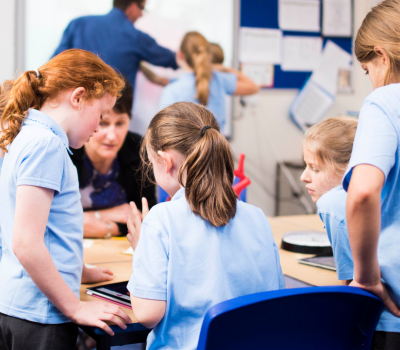
Governments, local authorities and schools must make a concerted joint effort to equip families for future home learning by fully addressing their digital needs, a survey of families in the last lockdown suggests.
A joint survey of 1,570 parents and 785 children by our charity and Child Poverty Action Group found 35 per cent of low-income families didn’t have the home learning equipment they needed in the last lockdown. Most commonly, they lacked devices such as a laptop or a tablet.*
 A quarter of pupils on free school meals said they had to share a device with other family members.
Parents described facing impossible choices around home learning because of scarce resources, higher bills, inadequate space and juggling schooling with their work. This ‘permanent battle’ caused stress and guilt for parents and often left less time to focus on learning. The lack of digital tools made it more challenging for pupils to participate in learning from home as they struggled to access online lessons and materials.
We believe that local lockdowns, contact tracing and household isolation mean some pupils will inevitably have to learn from home in the coming months, and so they should be properly equipped to do so.
Our joint survey found that:
Low-income parents reported being more concerned about money than last spring, and the vast majority (90 per cent) had spent more on bills with children at home. Many had faced higher return-to-schools costs in September compared to the previous year, and had spent more on uniforms, extra clothing for outdoor learning, stationery, face masks and hand gel.
Where schools had reduced costs – for example by relaxing uniform policies or loaning out digital devices – parents said it had made a positive difference.
The survey showed that free school meals were valued by families who receive them as they helped them make ends meet, both in normal times and through replacement options when schools were closed. Cash payments directly into parents’ bank accounts were the most favoured replacement option, with 75 per cent of families receiving direct payments saying this was working well or very well for them; this compared to just 40 per cent who said other methods like vouchers and food deliveries were working well. Many low-income families who were not eligible for free school meals said they would have benefited greatly from the extra help.
Based on these findings, CPAG and Children North East want to see:
Luke Bramhall, Poverty Proofing and Participation Service Manager at Children North East, said:
“The findings from the Cost of Learning in Lockdown report have been invaluable for us and for schools across the country in shaping their response to the latest lockdown and the pandemic as a whole. It is sadly no surprise that children caught in the grip of poverty are drowning as they continue to suffer from the digital and resources divide which has been highlighted by the Covid-19 crisis. We encourage schools to take these findings and consider how they can inform the great work they are doing to support the most vulnerable children in our society.”
Alison Garnham, Chief Executive of Child Poverty Action Group, added:
“School disruptions have had a big impact on family life, from finances to learning. The digital divide was exacerbated during school closures, but it didn’t start with lockdown and it won’t go away with pupils back in the classroom. We must bridge the gaps in resources so pupils can fully access their education – whether at school or at home.
We have seen some great examples of schools working alongside families to make learning during lockdown easier. However, the pandemic has hit hard and low-income families need far more financial support from government itself. By providing that support and reducing the cost of the school day, all children can have a chance at fulfilling their potential in life.”
Our Computers for Kids campaign is encouraging local businesses to donate to help buy devices for disadvantaged families. Computer company, Sage, recently made a £30,000 donation and urged other companies to follow suit.
18th May 2026
30th April 2026
How Little Minds in Mind Helped One Mum Feel Like Herself Again
16th April 2026
Masquer‑Aid: Building Confidence, Community and Self‑Advocacy
1st April 2026
A group of Bishop Auckland College students are the latest to add their voices to a major consultation Children North East is conducting in conjunction with Newcastle University.
 The VOICES project is finding out what the younger generation – whose lives are already affected by social and economic deprivation across the region – thinks about, needs and wants during this pandemic.
Lead researcher Professor Liz Todd explains:
“There is a serious knowledge gap in understanding the detailed needs of children and young people in poverty during this pandemic.
Living in poverty is hard and difficult at any time but the COVID-19 pandemic is throwing up new challenges for them – some of which we might not have even considered yet.”
“Often, important decisions about young people’s futures are made without asking them, so we want to address that. It is essential that young people’s voices are heard by policymakers and organisational leaders.”
The VOICES project covers the entire North East region, and is working with 1,000 young people in online focus groups delivered through schools, colleges and community groups. The youngsters are also asked to communicate their experience and needs in a format of their choice, such as writing, drawing or a photo. Some groups will work with artists to make their views heard through videos and comics.
During March, Cathryn Gathercole, from our Poverty Proofing and Participation team, along with her colleague, Andrew Thorp, gathered views at Bishop Auckland College, County Durham.
Students spoke about difficulty with sleeping patterns; transport to and from college and their frustration with lockdown and not seeing friends. But they also acknowledged the positives that have come out of Covid-19 restrictions, such as spending quality time with family and improved community spirit.
Concerns other children in the region have highlighted have included the safety of family members, not wanting to trouble parents/carers who are under pressure and frustration caused by how their lives have changed. One young person said, “My mam’s disabled, I worry I could hurt her by getting an education – I could bring something home.”
Another described how their world has shrunk. “Having to socialise online massively impacts your chance to make those shared experiences, you have nothing to talk about because you’ve been nowhere.”
A child described feeling unable to ask their parent for help with schoolwork. “I don’t get it, I can’t ask the teacher but I know she’s stressed so I said nowt.”
Luke Bramhall, Poverty Proofing and Participation Service Manager, Children North East, said: “Children North East is delighted to be working alongside Newcastle University on amplifying the voice of children and young people across our region. Children’s experiences of Covid should inform how we as a region, and in fact as a nation, should respond to the challenges of a post Covid-19 world.
“Some of the early findings indicate that children feel the virus has brought about significant irreversible change to their lives.
“The importance of robust consultation is paramount, providing a unique insight into this unprecedented time and the opportunity to disseminate this across multiple sectors, will lead to practical help for children and young people in the long-term.”
Policy leaders and practitioners working with children and young people will also be interviewed to investigate how organisations such as schools, statutory services, councils and youth groups are responding to the young living in poverty.
Researchers will also engage with regional and national leaders and practitioners through webinars so the views of children and young people can influence policy and practice. They will revisit these organisations to investigate if this has changed the way they work. Case studies of practice and policy change will be shared nationally as example of good practice.
The 12 month VOICES project is funded by the Economic and Social Research Council (ESRC), as part of UK Research and Innovation’s rapid response to Covid-19.
The VOICES website https://www.voicesproject.co.uk/ has more information for schools, colleges or community groups in the North East who would like to get involved. Contact [email protected] or [email protected].
18th May 2026
30th April 2026
How Little Minds in Mind Helped One Mum Feel Like Herself Again
16th April 2026
Masquer‑Aid: Building Confidence, Community and Self‑Advocacy
1st April 2026

As we celebrate the ninth International School Meals Day this year, I have been reflecting on the importance of food provision for families living in poverty, findings from our own Poverty Proofing the School Day programme and how schools can play a role in ensuring all children have access to healthy and nutritious food.
The benefits of access to a balanced meal during the school day are well evidenced, and our poverty proofing work has given extensive insight into how schools support their families with food provision. For example, uptake of school meals is most successful when children and parents have been involved in developing the school lunch menu, through taster days and opportunities to feedback on things such as portion sizes. Crucially, this also gives children and young people a voice in decision making that impacts them.
Lunchtime is also a vital opportunity for children and young people to socialise with their peers. Where schools allow pupils receiving school dinners to sit with their friends with a packed lunch, there tends to be high uptake of school dinners and, importantly free school meals, as pupils are not influenced by their peer’s lunch choices.
There are almost 93,000 children in receipt of free school meals in the North East, equating to 23.5% of pupils, making it the highest figure for English regions and compares with an England-wide average of 17.3%.
This leads me on to the importance of free school meal provision and how schools can ensure families are able to take up the support they are entitled to. Free school meals ensure children have access to a healthy meal at least once a day. This helps boost their learning, health and wellbeing whilst easing pressures on family budgets to cover other essential living costs. However, there is a lot of stigma associated with free school meals. This means, despite being entitled to a free school meal, many families do not take up this offer. To ensure families can benefit from this support, regular communication around free school meal provision is essential as family circumstances can change throughout the school year. Any communication must be poverty sensitive and use a range of methods such as newsletters, texts, social media and face to face.
Having a member of staff in school who can support families in applying for free school meals is also hugely beneficial and can help remove barriers to the application process.
The way in which the free school meal allowance is administered can also make access to food easier. For example, enabling pupils to spend their allowance at breakfast time or morning break gives children and young people flexibility and choice. This is particularly important for children who may not have been able to eat breakfast before coming to school. Finally, allowing unspent daily free school meal allowances to roll over allows students to use it on a day when they need a bit of extra food, and means they aren’t losing out if they attend extra-curricular activities during lunchtime.
So my ask to schools on this International School Meals Day is to reflect on your food provision policies and practices, celebrate what you are doing well and consider what opportunities there are to develop your practices further.
For more information and advice about how your school can address poverty in the classroom, we have recently published the ‘Turning the Page on Poverty’ resource in collaboration with the National Education Union and Child Poverty Action Group.
18th May 2026
30th April 2026
How Little Minds in Mind Helped One Mum Feel Like Herself Again
16th April 2026
Masquer‑Aid: Building Confidence, Community and Self‑Advocacy
1st April 2026
Let’s make sure we focus on the pleasure of reading, not the pressure to have the best costume say Georgina Burt and Grace Dunne from our Poverty Proofing and Participation Team.
As children in over 100 countries across the world celebrate World Book Day we salute and acknowledge the purpose and ethos of the charity ‘World Book Day.’ For 24 years, they have strived to ensure that every child across the country is provided with their own book to take home, with the mission of ‘encouraging children to explore the pleasures of books and reading’.
 While this mission is essential in our society and to be encouraged, we have found many challenges around the delivery of World Book Day within schools through our Poverty Proofing the School Day work.
Since last World Book Day, parents, children and teachers have all been under increased pressure as a result of the Covid-19 pandemic. After a stressful year of school closures and home schooling for many, families could be feeling the strain to come up with an imaginative costume for their children this World Book Day. For some families, however, the pressures will be not only creative but also financial.
Parents and children alike have expressed time and time again the pressure that having to provide a dressing up outfit for their child can have on household budgets, and the feeling of dejection and disappointment as some children always seem to miss out on the opportunity for dressing up.
Regularly we go into schools and see pictures of classes of children dressed up in outfits of their favourite book, while two or three children have to suffer the consequences of not having an outfit and just wearing their school uniform.
It would be easy to delight in the costumes that were on show, if we didn’t already know the stories behind the pictures that we’ve heard from the mouths of children:. ‘My parents are struggling with money’, ‘My mum didn’t have time’, ‘We didn’t get enough notice’, ‘I think that my parents forgot’.
Some parents have told us they aren’t going to send their children in on World Book Day as it costs too much money – a clear example of how costly school activities can impact upon children’s attendance and attainment. Let’s be honest – which parent really wants to send their child to school in uniform on a day when their classmates will be having fun dressing up?
While World Book Day should be an essential part of school life and celebrated in all its forms, we have to move away from the idea that it is all about dressing up. I know some children (and teachers!) really enjoy this, but we have to balance the benefits of dressing up with the negative impact this can have on some of our most disadvantaged children.
The solution can be simple, with many schools moving away from the dressing up ideas. How about:
This year’s theme of ‘Share a story’ is a beautifully simple one, focusing on the joy of reading together and coming back to the original focus of World Book Day. Schools could focus on this aspect of sharing by asking teachers to read their favourite stories and talk about why it is so special to them. Pupils in school could have a storytelling session with blankets and hot chocolate, or schools could send a ‘Sharing stories box’ home to pupils, including their World Book Day book and a sachet of hot chocolate each for them and their parent or carer to enjoy together.
While some schools opt to have a pyjama or onesie day instead, it’s important to consider how these items can also be expensive, and the pressure that children may feel under to have the most up to date and fashionable option.
We have to ensure that those children who do not have the money for dressing up outfits are not singled out, and some simple changes can eliminate another barrier that children with less financial backing can have in school.
The result of incorporating these changes has, on many occasions, been incredibly positive with some head teachers being thanked by parents for rethinking how World Book Day has been carried out. Coming up with a really imaginative idea (like dressing up a potato as a favourite character) can even gain a school positive press coverage.
So let’s think about the implications World Book Day sometimes has on disadvantaged children and the steps we can make within school to ensure that no child is missing out so that every child has equal access to the opportunity that this fantastic celebration presents.
For more information on ideas and opportunities for World Book Day then please do get in contact with us at Children North East at [email protected]
18th May 2026
30th April 2026
How Little Minds in Mind Helped One Mum Feel Like Herself Again
16th April 2026
Masquer‑Aid: Building Confidence, Community and Self‑Advocacy
1st April 2026
Children North East is working with Newcastle University on the VOICES project, gathering the viewpoints of children and young people in order to inform service delivery and build back better post pandemic. Here, one of our School Research and Delivery Practitioners, Gwen Dalziel, writes about the importance of our child-centred approach
As Children North East celebrates its 130th anniversary, our ability as an organisation to stay relevant remains. The Covid-19 pandemic has pushed us all into uncharted territory and into truly unprecedented times. Our children are experiencing huge changes to their everyday lives and are living part of their childhoods with restrictions we never had. But what exactly do children think and feel about those changes?
I am lucky enough to be involved in the VOICES project – an innovative and exciting piece of research Children North East is working on with our friends at Newcastle University that sets out to answer this question and, more importantly, in true Children North East style aims to ensure that children’s responses are listened to and acted upon.
 The research is a regionwide consultation to understand the challenges children and young people in the North East are facing as a result of Covid-19. We are contacting schools and youth organisations to ask for small groups of young people to act as focus groups and, via a short video call, answer some questions on how the pandemic has changed their lives and their opinions on the impact on their everyday lives. We are working right across the region and across the five to 18 years age range.
The research aims to provide schools, local authorities and services with information on how children have been affected by Covid-19 and give a unique understanding of what is currently important to young people.
This is a wonderful opportunity for young people in our part of the country to have their voices heard and inform the planning and adaptation of services post Covid, ensuring measures implemented are centred on their needs and concerns rather than on adult assumptions about how young people feel. This isn’t just a snapshot of a moment in time, it is providing a platform for young people’s voices and it’s ultimately about taking action.
For me, I am honoured that the young people I have spoken to so far have trusted me with their opinions, their fears and they’ve told me in no uncertain terms what has frustrated and upset them. This is an invaluable piece of research, not just for an insight into unprecedented times but, in keeping with the ethos of Children North East, this is going to be used practically to help children and young people as we emerge from the restrictions imposed on us.
Our research continues and any organisation wishing to be involved in this vital work, please contact us via [email protected]
Children North East celebrated our 130-year anniversary in 2022.
18th May 2026
30th April 2026
How Little Minds in Mind Helped One Mum Feel Like Herself Again
16th April 2026
Masquer‑Aid: Building Confidence, Community and Self‑Advocacy
1st April 2026