

18th May 2026
Whilst Christmas is a time of celebration for so many, for a number of our beneficiaries it can be a very difficult time of year, which will be amplified even further this year due to the hugely detrimental impact Covid is having on those in need in the region.
New for 2020, Children North East is applying to take part in the Big Give Christmas Challenge, the UK’s biggest online match funding campaign, to hopefully raise vital funds for our Hope for Christmas appeal.

As part of our application, we need businesses to make a promise of funding, called ‘Pledges’, which will be used as match funds to double online donations made to our charity during the campaign. Your commitment of funding might also help us to secure additional match funds via a Champion (sourced by the Big Give).
We are aiming to raise a total of £1,000 in pledges to take part in the Christmas Challenge. Would you consider making a pledge to help us reach our target?
If you would be willing to make a pledge to us, you can do so by clicking the pledge button below by the deadline of 5pm, Friday 4 September.
If you would be interested in getting involved in our Christmas Appeal in other ways outside of the Big Give, we’d love to discuss this with you. We have a number of ideas we’ll be sharing as we get closer to the festive season and would love your involvement in whichever way would work best for you.
18th May 2026

30th April 2026
How Little Minds in Mind Helped One Mum Feel Like Herself Again

16th April 2026
Masquer‑Aid: Building Confidence, Community and Self‑Advocacy
1st April 2026
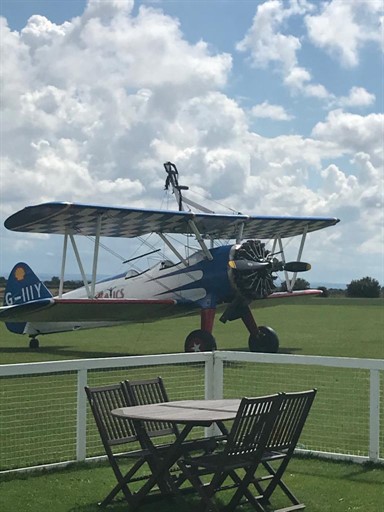
It was chocks away for Sunderland dad, Jim Farquhar, when he took to the skies for a daredevil wingwalk which raised more than £1,000 for Children North East.
Jim, 44, said he felt exhilarated and ‘free as a bird’ as the biplane he was strapped onto soared 500 feet into the air before diving to just 50 feet off the ground.
“You can ask the pilot to either take it easy or give you the full experience and I went for the full works,” said Jim, Chief Operating Officer for Nicholas Postgate Academy Trust in Middlesbrough.
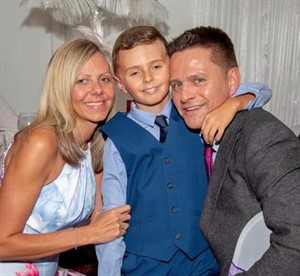
Jim, who lives with his wife, Adele and 11-year-old son, Harry, in Ryhope, Sunderland fancied doing a wingwalk for several years but it took the experience of lockdown to spur him on and tick it off his ‘bucket list’.
“I’d not committed to it before lockdown but part way through, I thought, ‘Right, given everything that’s going on, I’m going to make sure I take up a few of the things I want to do.’”
Jim hadn’t originally intended to do the wingwalk as a fundraiser but decided at the last minute to do it ‘for a good cause’.
“When I was looking for a charity I wanted something North East based and Children North East jumped out, particularly with my links to education. The impact they have on disadvantaged children in schools decided me to support them.”
Last year our Schools team worked with 17,751 primary and secondary pupils in schools around the North East and another 25,324 pupils in other areas of the country through our Poverty Proofing the School Day initiative. And during lockdown we’ve distributed more than 2,200 activity packs to children to help them do their school work at home.
Apart from doing a tandem sky dive 25 years earlier, Jim hadn’t done any other nail-biting adrenaline activities. “It’s nice every now and then to be outside your comfort zone and feel that fear and nervous anticipation,” Jim said. “It was nice to feel that again but whether I want to rush into anything else just now is another matter!”
Jim’s wife, Adele, might just be thankful for that. “She thought I was a bit crazy and I think a little bit worried but she just let me get on with it. It’s definitely not her cup of tea – if there’s any turbulence on a flight, she’s not a happy bunny!
“My son Harry couldn’t quite comprehend what I was doing until he saw the video and now he says I’m a superhero!”
Jim travelled to a private airfield in the Cotswolds to do the wingwalk with the world-renowned AeroSuperBatics display team.
“The only way I can describe wingwalking is that you feel like a bird. It’s absolutely amazing and the views are stunning.”
18th May 2026
30th April 2026
How Little Minds in Mind Helped One Mum Feel Like Herself Again
16th April 2026
Masquer‑Aid: Building Confidence, Community and Self‑Advocacy
1st April 2026
An online survey of 5,474 expectant mothers, new parents and parents of toddlers, undertaken during the pandemic, reveals almost seven in 10 found their ability to cope with their pregnancy or baby had been impacted as a result of COVID-19.
One quarter (25%) of parents reported concern about their relationship with their baby and one third (35%) said they’d like to get help with this.
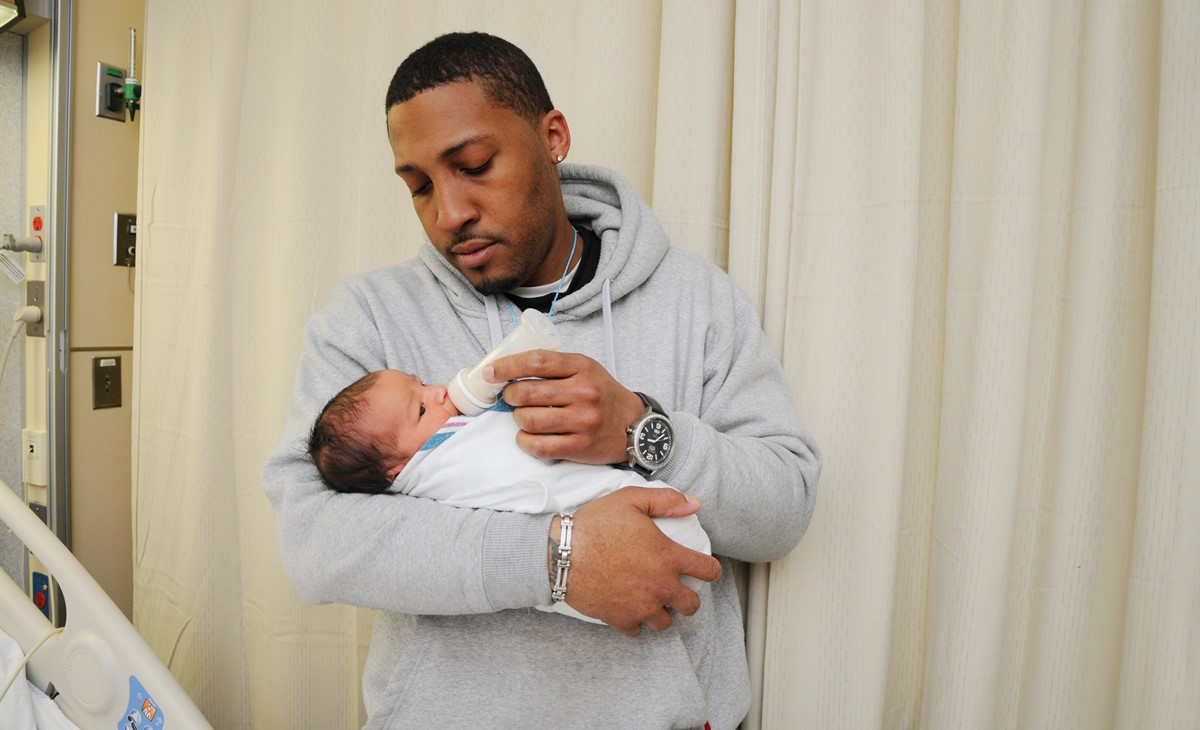 During lockdown here in Newcastle, NEWPIP , Children North East’s specialist parent-infant relationship team working with families, has seen pregnant women suffering heightened anxiety as a result of the Covid-19 outbreak.
Charity collective Best Beginnings, Home-Start UK and the Parent-Infant Foundation commissioned the online survey which highlights the chronic under-resourcing of services for families, the inequalities in babies’ early experiences and its worsening forecast due to the COVID-19 pandemic.
The three charities – who all work to improve outcomes for parents and children with a focus on the early years – warn that many families with lower incomes, young parents and those from Black, Asian and minority ethnic communities, will have been hit hardest by the pandemic.
The results highlight a range of issues facing parents, revealing the devastating impact on babies as well as their parents, from increased mental health concerns and difficult birthing experiences, to dads and other co-parents being excluded from the pregnancy journey and digital health appointments reported as leaving some women feeling exposed and humiliated. The ramifications of the lockdown have been detrimental, and could cast a long shadow going forward for parents and babies alike.

Evidence shows that the first 1,001 days of a child’s life, from pregnancy to age two lay the foundations for a happy and healthy life. The support and wellbeing of babies during this time is strongly linked to better outcomes later in life, including educational achievement, progress at work, physical and mental health. Around 2,000 babies are born in the UK every day which means over 200,000 babies were born between March 23 and July 4 – the most intense period of lockdown.
According to the survey, almost seven in 10 parents (68%) felt the changes brought about by COVID-19 were affecting their unborn baby, baby or young child – reporting an increase in babies crying, having tantrums and becoming more clingy during this time. The survey results indicated that a change in baby behaviour was twice as likely to be reported amongst those on the lowest incomes, with under-25s particularly affected, with over half (59%) noticing their babies becoming more clingy during lockdown.
One quarter (25%) of parents reported concern about their relationship with their baby and one third (35%) of these would like to get help with this. In Newcastle, NEWPIP, has been working with families during lockdown to support the relationship between parents and their babies.
The three organisations have come together to share their findings, following the recent report by the Children’s Commissioner, and the Government’s vow to undertake a new review into Early Years Health (led by Andrea Leadsom MP). And to urge the Government to act now to avoid a ‘post-COVID-19 lottery’ of British babies who do not get the support they need for a strong start in life. The three fiscal measures being asked for involve significant and ring-fenced funding to support the first 1,001 days, including:
18th May 2026
30th April 2026
How Little Minds in Mind Helped One Mum Feel Like Herself Again
16th April 2026
Masquer‑Aid: Building Confidence, Community and Self‑Advocacy
1st April 2026
May the Force be with you!

You’ve helped us hand out an amazing ONE THOUSAND activity packs to children around our region to keep them entertained during lockdown and beyond.
And to help us celebrate such an out of this world achievement, a squad of Star Wars costumers – including Darth Vader, Kylo Ren and a couple of Stormtroopers popped into Children North East HQ.
One of our volunteers, Julia Ruane, who’s been helping put the packs together even got to play an impromptu game of frisbee with Darth Vader (aka Mark Poulsen from the North East Legion, the Star Wars fundraisers).
Frisbees are amongst the thousands of donations that have flooded in for children along with stationery, books, felt tips and other craft materials that have gone into the packs that are being handed out to families throughout the North East.
Culture Bridge North East and Arts Council England are supporting the project as are other funding bodies, businesses, community groups and individuals.
Luke Bramhall, Schools Research and Delivery Manager for Children North East, said:
“We are over the moon with the incredible donations and support we have had in ensuring that families who are struggling the most with the impact of both the lockdown and financial insecurity can get to enjoy the activities and opportunities that these resource packs present.
We are delighted to have distributed a thousand packs, but are not wanting to stop there. With continued support we target hitting 5,000 packs, but to make that a reality please do get in touch to contribute stationery, craft kits or games.”
Anyone wishing to help can email Luke at [email protected]
18th May 2026
30th April 2026
How Little Minds in Mind Helped One Mum Feel Like Herself Again
16th April 2026
Masquer‑Aid: Building Confidence, Community and Self‑Advocacy
1st April 2026
We’re so grateful to everyone who joined in with our Emmerdale Quiz over Zoom on Sunday night. The hostess with the mostest, North East actress, Charlie Hardwick said she’d really enjoyed the experience.
“It was a lot of fun and quizmaster, Stuart, came up with some really good questions.”
Said Charlie, who played the character Val Pollard in the popular ITV soap.

Catriona Taylor, Head of Fundraising and Communications for Children North East, took part in the charity quiz along with members of her family. She said:
“We’re so grateful to Charlie, and to Stuart at Sounds Right Entertainment for putting together such a fantastic quiz full of Emmerdale trivia! With the show soon approaching its fiftieth anniversary, there was a super range of questions testing our knowledge on characters and story lines from over the years including the first family to run Emmerdale Farm, the plane crash that hit the village, recent marriages from the show, and lots more! And it was lovely to hear more about Charlie’s time playing the hugely popular character Val too.”
If you weren’t able to join the quiz on the night, it’s not too late to watch and answer questions in your own time from the comfort of your own home!
Simply follow the link here
18th May 2026
30th April 2026
How Little Minds in Mind Helped One Mum Feel Like Herself Again
16th April 2026
Masquer‑Aid: Building Confidence, Community and Self‑Advocacy
1st April 2026
There has been a lot of discussion lately about ‘getting back to normal’, or ‘the new normal’. As my period of furlough comes to an end and my return to work approaches, I’ve been thinking about what normality looked like for many families before the emergence of Covid-19 and more importantly whether or not returning to ‘normal’ is something that we should be striving for. I really do think it’s time to consider what we want our society to look like, and in some respects Covid-19 has provided us with this opportunity.
I guess the first thing to think about is: what does normal mean? What was life like for children and families in the UK before lockdown began? What was their ‘normal’? For some, it will have been a time of freedom, of opportunity and of choice; a time of regular visits to family and friends, days out, and trips to the shops. There will be a yearning to return to this way of life.
“However, for too many it is clear that even before the emergence of Covid-19 life was not like this at all. Statistics from the Department for Work and Pensions show that 4.2 million children in the UK are currently growing up in poverty, a situation which can only have been worsened by the economic impact of Covid-19.”
Furthermore, three million children in the UK were identified as being at risk of holiday hunger – not having enough to eat during the school holidays – and 700,000 children do not have proper internet access. For these families ‘normal’ is the perpetual, daily choice between whether to feed their children or have the heating on when it is cold outside. For these families, there is no yearning to return to some blissful, pre-Covid way of life. There is no wistful nostalgia about better times, only a potential return to the treading of water that for too many families comprises day-to-day life in the UK.
As we look at what we might wish to avoid returning to, we should also consider which aspects of lockdown life we would like to retain. Within education policy there have been steps in the right direction that must continue and that must be protected.
“For the first time there has been a Government led effort to ensure that all children have had enough to eat during the Easter and May school holidays, and we cannot return to a time where this is not seen as a priority.”
We have also seen the Government agreeing to provide laptops for some vulnerable students to access online learning, acknowledging the digital divide that is a barrier for many children and young people. Although there is a lot more work to be done, these small steps in the right direction must not be reversed. We cannot and should not want to return to a time of parents missing meals in order to feed their children and pupils missing out on learning opportunities and socialisation with friends because of a lack of internet access. The welfare of ‘disadvantaged children’ has been central to discussions in regard to wider school opening, and we need to ensure that the needs and welfare of these children remain at the heart of all policy making as we return to our usual way of life.
As a society that has shown extra care and compassion for each other at this difficult time, we must ensure this continues as we move to the ‘new normal’. At a time of phenomenally rapid invention and change, and with businesses, organisations and schools adapting constantly to new guidance, we have to keep asking ourselves the key question:
“What do we want to leave behind in the pre-Covid society, and what do we want to keep and take forward with us to ensure that all of our children grow up to be healthy and happy? The moment we stop asking that question is the moment we start to go back to ‘normal’ – a normal that for too many families and children is defined by hardship, hunger and heartbreaking poverty.”
18th May 2026
30th April 2026
How Little Minds in Mind Helped One Mum Feel Like Herself Again
16th April 2026
Masquer‑Aid: Building Confidence, Community and Self‑Advocacy
1st April 2026