

18th May 2026
This Challenge Poverty Week we would like share to you all about how poverty is affecting children in the North East, and the changes that need to be made at a nationwide policy level to ensure all babies, children and young people grow up happy and healthy.
We are hopeful that the new Child Poverty Taskforce will address the barriers facing millions of children nationwide, and that crucial welfare reforms will be made to eradicate child poverty. With 4.3 million children living in poverty in the UK, drastic action must be taken now.
We have seen evidence of numerous blind spots within our services, systems and structures which are keeping families in poverty and stopping them from getting support. From convoluted claims processes, stringent restrictions on those who qualify and lack of opportunity, these barriers are pushing families further and further in to poverty, with no to little support to lift them out.
67% of children living in poverty in the North East are in ‘working families’ where one or more of the parents are in stable employment, but the cost of living – as well as the hidden costs in day to day life – are making it impossible for them to thrive. Additional aspects like childcare, travel, and healthcare needs all compound to make it harder for people to lift themselves out of poverty.
This Challenge Poverty Week, I encourage you all to reconsider your definitions of poverty and break down the stigma attached. Only by addressing the root causes, uncovering the hidden barriers and tackling these issues will we be able to make sure every baby, child and young person has the happy, healthy start in life they deserve.
Since 2011, our Poverty Proofing® team have been working to understand poverty and how it affects people, and what can be done to to become poverty-informed, reduce stigma and break down barriers. This Challenge Poverty Week, they have created short films for each of our strands of work sharing their expertise, key insights and recommendations.
18th May 2026

30th April 2026
How Little Minds in Mind Helped One Mum Feel Like Herself Again

16th April 2026
Masquer‑Aid: Building Confidence, Community and Self‑Advocacy

1st April 2026

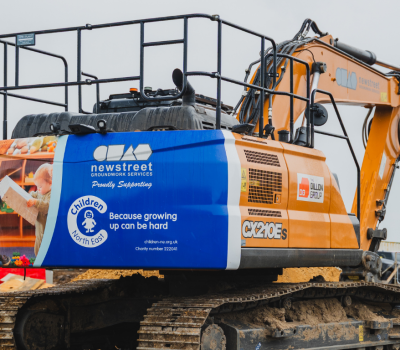
Continuing almost twenty years of support, Robertson Construction North East has donated the construction of a new outdoor covered play space for Newcastle-based kids charity Children North East.
Children North East creates “life-changing differences for babies, children and young people” and Robertson has been involved with the charity since 2007, particularly raising money for its annual Charity Ball and for many years sponsoring its Sandcastle Challenge event on South Shield Beach.
The charity came to long-term supporter Martin Westgate, Business Development Director, Robertson Construction North East as it needed help in transforming the outdoor area at its Cowgate Community Hub in the North West of Newcastle.
The Hub provides vital support to the local community but was limited in the use of its outdoor space as it lacked places for play to take place under cover.
Robertson Operations Manager Andrew Coleman organised the work on-site to construct the pergola, with support from Hewitson Limited for groundworks and materials from James Burrells Builders Merchants.
Work was completed over two weeks in July with the outdoor covered space now being used for activities such as dancing sessions for pre-schoolers, arts and crafts groups and support groups for local parents. The project also included the replacement of a shed to provide storage for outdoor play equipment, including bikes and scooters the kids previously couldn’t use regularly.

Martin Westgate said, “Children North East is a phenomenal organisation and Robertson has helped to raise tens of thousands of pounds for them over the years. When we heard that we could use our expertise to help make a difference to the Cowgate Community Hub, we were more than willing to help out. It’s a joy to see the space complete and being used by kids to enjoy outdoor play.”
Billie Jenkins Fundraising Manager for Children North East said, “Having this multi-use space will be transformative for the communities accessing Hub services, especially as many have limited access to outside play spaces. Children North East cannot thank those involved in the build enough for giving the children, young people and families this wonderful opportunity to get outside and closer to nature.“
The charity has chosen to name the space Martin’s Place, in recognition of Martin Westgate’s two decades of fundraising for the charity. A plaque sharing the name was revealed at an event opening the space attended by those who took part in the build and leaders of the contributing organisations.
Images show Martin Westgate Business Development Director, Robertson Construction North East with Children North East’s Events and Community Coordinator Joanne King at the opening of ‘Martin’s Place, as well as local children using the outdoor covered play space.
18th May 2026
30th April 2026
How Little Minds in Mind Helped One Mum Feel Like Herself Again
16th April 2026
Masquer‑Aid: Building Confidence, Community and Self‑Advocacy
1st April 2026

Children North East are excited to announce the opening of a new hub for children, young people and families in the heart of Gateshead in 2025!
This space has been designed to support residents of Gateshead with a range of services and activities, including:
Therapeutic Services: A new suite of therapy rooms will provide a safe, welcoming space for children and young people to receive therapeutic intervention, working through issues which may include anxiety, depression, bereavement and trauma brought about by abuse.
Youth and Support Groups: A range of groups will be run at the Hub, including peer support groups for neurodiverse and diabetic young people and other youth work activities.
Community Kitchen Space: An open kitchen will provides a space for cooking and dining activities to be delivered.
This project would not have been possible without the incredible generosity of The Clothworkers Foundation and Vistry.Group.

Therapeutic services will be delivered out of the Hub, which will include specialist sensory equipment.

The Hub will offer a space for youth and support groups to meet for a range of fun and educational activities.
About Children North East
With your help, we won’t stop until every baby, child and young person has the happy, healthy start in life they deserve.
Since 1891, Children North East have helped to transform the lives of babies, children, young people and families across our region.
In challenging circumstances, our teams are there to provide compassionate, expert support, often when there is no where else to turn for help.
18th May 2026
30th April 2026
How Little Minds in Mind Helped One Mum Feel Like Herself Again
16th April 2026
Masquer‑Aid: Building Confidence, Community and Self‑Advocacy
1st April 2026
The new child poverty taskforce is a long overdue commitment to taking the issue of child poverty seriously and has the potential to make life vastly better for millions of children.
However, it needs to take a holistic view of the problem and be willing to commit resources where they are needed to make a real impact in reducing child poverty.
From the frontline work of our pioneering Poverty Proofing® project, and our teams listening to the issues affecting babies, children and young people we work with, here are some of the things we want the Taskforce to take into consideration.
This is the most fundamental element of lifting families out of poverty, and there are two ways to do this – increase earnings from work, and reform the social security system. We know that we need both, and the taskforce needs to focus on:
‘No activity or planned activity should identify, exclude, treat differently or make assumptions about those babies, children, young people and families whose household income or resources are lower than others.’
This is the driving principle of our Poverty Proofing® work. A holistic Child Poverty Strategy needs to ensure that across the range of services and settings children, young people and families access, they don’t face exclusion or barriers to participation because of low-income.
We have been helping individual settings to identify and remove such barriers for over 10 years, and over this time we have built up a picture of common themes impacting how children are able to get an education, access healthcare, take part in opportunities for development and grow up happy and healthy.
We continue to hear regularly stories of school pupils feeling singled out for being eligible for Free School Meals, for example not being able to sit with their friends or having less choice over what they have to eat. We also know hundreds of thousands of families in poverty don’t qualify for free meals, and many struggle to manage dinner money debt or to provide healthy packed lunches. This policy needs to be properly reviewed so all children can eat well at school and no one faces stigma.
Low-income households are less likely to have access to a car and rely wholly on public transport. If this is unreliable, expensive, or doesn’t take them where they need to get to, it can make services virtually inaccessible. From the cost of bus fare being a barrier to school attendance, to health clinics held in locations away from major transport hubs, appointment times when buses don’t run frequently, long and complex journeys and resorting to expensive taxis, the issue of transport is a continual theme in our conversations with those on low incomes. It’s a barrier to families visiting cultural venues and having days out during school holidays, and a significant barrier to children taking part in sports, clubs and activities outside of school.
At local and regional levels, schools and multi-academy trusts, local authorities, health services and transport infrastructure bodies need to commit to and take action on ensuring children and young people in poverty can get to where they need to go. Moreover, national government must ensure they are held to account. Listening to young people locally to understand where they want and need to go, what barriers they face, and how they want to travel to develop solutions is critical.
Equipment is equally a recurring theme in barriers low-income families face. This includes having the right school uniform and all the hidden costs of school life, particularly at secondary school, with examples cited like computers at home, access to the internet to do homework, ingredients for Food Technology classes, sports kits and more. It all adds up, and those without the means to pay for these things fall behind in their studies and can’t take part in wider enrichment opportunities.
It’s also a problem for families managing health conditions; from having a compatible smartphone and internet access to manage diabetes, to the additional costs associated with a restricted diet and allergies, families on lower incomes are struggling to manage their health well. And that is without the wider aspirations of children – being able to afford football boots so they can play in the local junior league; uniform for the scouts or guides, learning to ride a bicycle.
All these exclusions make it harder for children in poverty to participate fully in society, and to thrive. Many of the solutions are found at place-based level. That’s why it needs to become part of the DNA of our schools, health providers and the wider breadth of organisations and opportunities families access – to listen to people they work with, understand barriers they face and take steps to remove them. This will ensure that a low income doesn’t equal a poorer childhood. Leadership at the national level is needed to drive this change. But this needs to be rooted in a commitment to listen to those with lived experience, and the organisations working with them, who understand the problems and can offer real solutions.
Let’s be clear – money is a huge part of the problem. Giving people the money they need to pay the bills, put food on the table and provide a decent standard of living for their children, in a society, which doesn’t penalise poverty at every turn, will solve a huge part of the crisis we are facing.
But the impact of poverty on many families is deep – poor mental health, fractured relationships, substance dependency, violence and abuse blight the lives of thousands of children, and they are messy to address. That’s why we can’t separate financial measures to tackle poverty from the wider social safety net we put around families to give them the best chance to thrive. Those safety nets have been decimated over the last decade, with help not available for many until it’s too late, and children have faced unnecessary trauma; even ending up in the care system.
The child poverty strategy can’t be separated from a holistic plan to ensure support structures around families. Family hubs, intensive family support, mental health provision, addictions services and youth work must be repaired to ensure children have not just the material resources to thrive, but also the safe, nurturing homes and relationships they need in order to grow up happy and healthy.
18th May 2026
30th April 2026
How Little Minds in Mind Helped One Mum Feel Like Herself Again
16th April 2026
Masquer‑Aid: Building Confidence, Community and Self‑Advocacy
1st April 2026
This summer we are providing activity packs to families and children nationwide. Each pack contains puzzles, educational worksheets and a chance to enter our Summer Holiday Colouring Competition! We know it can be difficult for parents and families to find cost effective ways to keep kids entertained this summer which is why we are providing these free of charge to anyone who requests them.

Tailored for children in KS1, KS2 and KS3, they are packed with literacy tasks, maths problems and puzzles, to keep kids engaged with learning during the summer break. Sometimes it can be for children to transition after the long summer break so these packs can help with keeping their minds engaged with learning and reduce back-to-school stresses. We have also included a list of other free and accessible resources for families to access online.
Colouring In tasks can help reduce anxiety, improve focus and concentration and hone fine-motor skills – as well as being fun and letting kids use their imagination! Inside each pack there’s a chance to enter our colouring in competition and win prizes for days out in Newcastle!
This giveaway has now been closed, but keep an eye out for our future promotions!
A thank you to our sponsor Irwin Mitchell for providing their printing services and making this possible.

18th May 2026
30th April 2026
How Little Minds in Mind Helped One Mum Feel Like Herself Again
16th April 2026
Masquer‑Aid: Building Confidence, Community and Self‑Advocacy
1st April 2026
Poverty Proofing© is a consultation method created by Children North East as a powerful tool to identify the barriers children living in poverty face, and to make recommendations on practice and policy to enable equal access to services and opportunities.
We believe systemic change should always be fuelled by the voices of those with lived experience, which is why we work directly with the families affected, faculty and leading experts to identify these barriers and find ways to overcome them. Our dedicated teams work with these voices to create bespoke plans, provide training on what poverty is and how it affects people, and encourage people to rethink and reframe how to tackle poverty.
18th May 2026
30th April 2026
How Little Minds in Mind Helped One Mum Feel Like Herself Again
16th April 2026
Masquer‑Aid: Building Confidence, Community and Self‑Advocacy
1st April 2026