

18th May 2026
Sports equipment packs are being sent to 230 vulnerable families across south west Durham thanks to a joint volunteer project by Bishop Auckland College and Children North East.
The packs, which include a football, space hopper, tennis game, Frisbee, skipping rope and urban chalks, are being given to young people who have suffered from social isolation as a result of Covid.
 They were designed and put together by staff from Children North East and 15 students from the college, and are being distributed by the North East Autism Society, Shildon Alive and the Solan Connor Fawcett Family Cancer Trust over the next few weeks.
The initiative is the first of three Youth Social Action volunteer projects that students at the college and Children North East are jointly working on, funded by #iwill (Step Up and Serve), National Lottery Fund, Department for Digital Culture Media and Sport, County Durham Community Foundation. The next will be a community family fun day in August.
Saffia Solomon, Participation Worker at Children North East, said: “We have been working with a group of young people from Bishop Auckland College, inspired by the #iwill Youth Social Action campaign.
“They designed and filled physical activity packs to send to 230 families impacted by the isolation of Covid-19 in Bishop Auckland, and selected three charities to benefit from a donation: North East Autism Society, Shildon Alive, and Solan Connor Fawcett.
“The group are continuing to positively impact their community, organising a family fun day in early August.”
Stacy Stoker, Early Years lecturer at the college, added: “This is a fantastic initiative which will benefit so many families who have been particularly affected by social isolation during the pandemic.
“I have been so impressed by the students who have taken part, showing so much empathy with the young people they are helping. We are looking forward now to planning for the family fun day in August.”
18th May 2026

30th April 2026
How Little Minds in Mind Helped One Mum Feel Like Herself Again

16th April 2026
Masquer‑Aid: Building Confidence, Community and Self‑Advocacy

1st April 2026
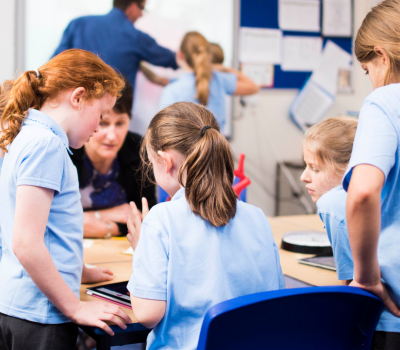
New free school meal figures have confirmed a multimillion-pound funding loss for the region’s schools.
In March, together with North East Child Poverty Commission and Schools North East, we wrote to the Secretary of State for Education, highlighting the potential impact an ‘administrative’ change to the way in which pupil premium funding is allocated would have for schools in the North East.
 The calculation for pupil premium has been changed by the Government so that it will now be based on the number
of pupils at each school eligible for free school meals (FSM) in October, rather than January, as has previously been
the case.
New figures published by the Department for Education confirm that there was an increase of 5,700 pupils in
receipt of Free School Meals across the North East between the school census of October 2020 and that of January 2021. This
means that schools in the region are facing a loss of up to £7.66 million in pupil premium funding as a result of the
Government’s change.
So the three organisations have written to the Education Secretary again today strongly urging him to reverse this decision, now that the scale of the funding loss for schools and pupils in the region is clear.
The new data also highlights the significant economic impact of Covid-19 on North East families, with almost 16,000
more pupils in the region becoming eligible for FSM between January 2020 and January 2021. This means almost
109,000 children and young people in our regions are now eligible to receive this support – 27.5% of all pupils, up
from a pre-pandemic 23.5% – the highest rate in the country, and joint steepest increase of anywhere in England.
Luke Bramhall, Poverty Proofing & Participation Service Manager at Children North East, said:
“Pupil premium is used by schools to provide extra teaching staff, breakfast clubs, additional resources like laptops
and tailored support for their most disadvantaged students – indeed, during the pandemic it has been used by
schools in the North East to provide support directly to struggling families.
“It is difficult to understand how removing almost £8 million of this funding from schools across our region – which has experienced some of the worst learning losses a result of Covid-19 – matches up with the pledge to build back better from the pandemic.”
Director of the North East Child Poverty Commission, Amanda Bailey, said:
“Schools in our region went into this pandemic already facing some of the highest rates of disadvantage in the
country and the new free school meal figures confirm just how starkly existing levels of hardship in the North East
have been exacerbated by Covid-19.
“If the Government is serious about levelling up areas like our region, it must put investing in children and young
people at the heart of its recovery plans – but it’s now clear that the decision to change the way pupil premium
funding is allocated totally undermines that commitment.”
Schools North East Director, Chris Zarraga, added:
“The North East is seeing significant Covid-related increases in poverty, including in schools not located in areas of
high deprivation, highlighted by the increase in the number of students eligible for pupil premium.
“School budgets are already suffering due to continuing outgoing costs of Covid safety measures, and the decision to use the October 2020 census data will have a serious detrimental impact on our students who have already suffered significant disruption over the last year. Any short-term savings made by using the October census will be more than offset by the longer-term economic losses to the region of not properly supporting our students to ‘recover’.”
18th May 2026
30th April 2026
How Little Minds in Mind Helped One Mum Feel Like Herself Again
16th April 2026
Masquer‑Aid: Building Confidence, Community and Self‑Advocacy
1st April 2026
An innovative new Children North East project which aims to build better mental health amongst young people using the virtual game, Minecraft, has received funding from Comic Relief and the Paul Hamlyn Foundation.
 The ‘Tech for Good’ project is the brainchild of one of our Young People’s Service counsellors, Paul Hedley, who saw that the game – which allows children to create a virtual version of almost anything they can imagine – from castles, to cities to their own house or school – could be a really useful way of delivering therapeutic counselling.
Paul said:
“Minecraft offers an open world for the client and therapist to explore and shape together as well as many possibilities for creative work and in game challenges. This project will run alongside our traditional counselling service, however it will not be a standard part of our service delivery.”
In the initial discovery phase, the views and ideas of young people will be sought and these will shape many aspects of the delivery which will also place safeguarding at the heart of the project.
The £38,000 plus funding will facilitate this initial planning stage when all virtual interaction will take place on secure servers owned by Children North East.
“Once these are operational, we will gradually roll out the service to suitable clients in early September,” Paul said. “Then the project will be fully evaluated to assess the value of using this platform to deliver therapeutic counselling in the future.”
Minecraft is proving particularly beneficial to children on the autism spectrum. For young people with autism, Minecraft provides a view on the world and the rules that frame it and teachers and autism specialists around the world report that when young people work in multiplayer mode, they figure out how to talk to each other and share ideas.
Children North East was one of only 20 out of 361 organisation who applied, to receive a grant through their digital development fund aimed at supporting charities to strengthen their services in light of the continued impact of Covid-19.
More than £1.3 million has been awarded as part of the new Tech for Good programme, ‘Build’, which was originally developed in response to the need for charities to use technology to explore different approaches to delivering better services.
Now, the Covid-19 pandemic has increased the drive for organisations to explore how digital and design capabilities can help transform or maximise their work in supporting vulnerable people even further.
The programme allows Children North East to explore this new approach to therapeutic counselling and will give us access to technical support from experts and advisors at CAST ( the Centre for the Acceleration of Social Technology).
Moira Sinclair, Chief Executive of Paul Hamlyn Foundation, said:
“Over the last year, so many organisations have transformed the way they work to continue to provide vital support amidst unprecedented challenges. As we begin to think about building back, digital development has a critical role to play. We hope that Build will provide these projects with time and space to experiment, to learn from one another and to realise effective digital solutions to help meet pressing social needs. Together with Comic Relief and CAST, we look forward to learning alongside those we support and sharing their work.”
Samir Patel, CEO of Comic Relief, said:
“We are pleased to be able to support 20 organisations with Tech for Good funding over the next year, to take a user-informed approach to the digital development of their services. We hope the learning that will emerge from this year’s diverse portfolio of funding will contribute to strengthening the social tech ecosystem in the longer term, empowering more organisations to use digital, design, and data and work together in new ways to increase their impact.”
Our Young People’s Service Manager, Ricky Murray, added:
“I’m really excited about this project and truly believe that it will be fully embraced by those who wouldn’t otherwise engage in therapeutic services.”
18th May 2026
30th April 2026
How Little Minds in Mind Helped One Mum Feel Like Herself Again
16th April 2026
Masquer‑Aid: Building Confidence, Community and Self‑Advocacy
1st April 2026
Today Children North East joins a cross-sector group of educationists, charities, business leaders, unions and young people in urging the Government to reconsider its pandemic recovery measures for children and young people, asking them to urgently boost investment.

One of the young people from our youth drop-in tells it like it is
In two separate letters to the Prime Minister, coordinated by Fair Education Alliance and the National Children’s Bureau, and signed by over 240 leaders from across business, education and the charity sectors, campaigners have again urged the Government to invest in their stated intention of levelling up and show real ambition for the recovery for children and young people.
While researchers estimate that £13.5bn is needed to help children recover from a year of disruption, isolation and anxiety, the Chancellor has committed to spend only one tenth of this amount.
Campaigners insist the pandemic has deepened the existing crisis in funding for the education of disadvantaged children. Alongside extra money for schools to spend on staff development and interventions for pupils, a wider investment in measures to address the impact of Covid-19 on children and young people, such as reversing rising child poverty, reducing waiting times for mental health help for children and young people, and investing in the services that protect children from abuse and neglect, is urgently needed.

Our own young people’s list
Alongside the letters, business leaders have highlighted that a strong education system and wider support for those in need of help is critical for future economic success:
Amanda Mackenzie OBE, Chief Executive of Business in the Community, said:
“The calls to action in these letters to the Prime Minster highlight essential issues that cannot go ignored. Business leaders share our view that the economic recovery and future prosperity of the UK rely on having a diverse, skilled and educated workforce, and that development starts with children. The signatories of these letters have shown a commitment to wanting investment in children’s future and we urge the Prime Minister to act before it’s too late.”
Experts are calling for the Government to set out a new and ambitious vision of childhood and education to support children, young people and their families to recover from the impact of COVID-19, with #ChildrenAtTheHeart.
Anna Feuchtwang, Chief Executive of the National Children’s Bureau, said:
The pandemic has affected every single child in the country, causing untold disruption to their education, development and welfare. Children with disabilities, those suffering from trauma, and the millions living in poverty have been hit the hardest. Yet the money promised to help their recovery falls far short, and sends the message to struggling families that they simply aren’t a priority for the Government. As well as making up lost ground in education, we have to fight for a better deal for our children, one that protects their mental health, secures them adequate support services, and overcomes the devastating effects of poverty. The breadth of organisations calling for government to realise this is too wide-reaching to ignore.
18th May 2026
30th April 2026
How Little Minds in Mind Helped One Mum Feel Like Herself Again
16th April 2026
Masquer‑Aid: Building Confidence, Community and Self‑Advocacy
1st April 2026
A team of footballers from Whitley Bay took on the 2000km run from the North East town to Barcelona in an epic lockdown virtual challenge.
The 13 footballers from Whitley Bay Sporting Club U12 Lionesses, along with their families and coaches, took three months to virtually run to Nou Camp, the famous home of Barcelona FC.
Coaches Lewis Crane and Kevin Thomas set the girls the challenge to keep them fit and motivated when the country went into its third full lockdown in January 2021. Kevin said, “It was a new thing for the girls, they usually train once a week and play matches once a week, so heading out for regular runs was something very different for them. It was a really good way for them to stay active and connected with their friends during lockdown”.
Each of the team logged their miles and finally broke the 2000km barrier on 11 April this year on the beach at Whitley Bay.

The team cross the finish line on the beach at Whitley Bay.
Kevin went on to say, “A few of the girls have really found running enjoyable and have carried on running regularly even though we’re back to being able to train.
I’m so proud of the team and how they continued to stay engaged with this challenge. Hopefully, we can take them to Barcelona for real one day, although we might take a shorter flight next time.”
The team have previously raised money for us with a New Year’s Day dip in January 2020, and chose to continue supporting us raising an amazing £569.00 to support babies, children and young people across the North East.
18th May 2026
30th April 2026
How Little Minds in Mind Helped One Mum Feel Like Herself Again
16th April 2026
Masquer‑Aid: Building Confidence, Community and Self‑Advocacy
1st April 2026
It’s Infant Mental Health Awareness Week and we are delighted to announce that the future of our unique specialist service, NEWPIP, has been assured thanks to players of People’s Postcode Lottery.
NEWPIP (Newcastle Parent Infant Partnership), which provides parent infant psychotherapy and therapeutic help to parents to support the development of a sensitive bond, was launched five years ago with financial backing from the Ministry of Housing Communities and Local Government, but just last month it almost had to close its doors after funding ran out.

Stacey Wilson and her baby Skye benefited from NEWPIP
Thankfully, support from players of People’s Postcode Lottery will ensure that core elements of the service can continue. Since players of the lottery began supporting the charity 12 years ago, Children North East has received just over £3.1m to aid its mission helping the region’s babies, children and young people grow up to be healthy and happy.
Chief Executive of Children North East, Leigh Elliott, said she was delighted to announce the additional award thanks to players of People’s Postcode Lottery ahead of Infant Mental Health Awareness Week which runs from 7-13 June.
“We are so grateful to players of People’s Postcode Lottery as we know from our beneficiaries that the COVID-19 pandemic has only exacerbated the mental health problems some expectant and new mothers are facing,” she said.
“In the last year alone NEWPIP has helped 277 families so this ongoing support is really valuable. The importance of developing a strong bond in the first 1001 days of a child’s life cannot be underestimated. Research shows that early intervention provided by specialist parent infant teams helps babies to experience nurturing early relationships and to start school best equipped to be able to make friends and learn. This increases the chances that they will achieve their potential in later life and contribute to society and the economy.”
Researchers at Newcastle University, who are part of the National Institute for Health Research (NIHR) Applied Research Collaboration (ARC) for the North East and North Cumbria have produced an independent report featuring the views of parents who have recently used the service. It concluded that the NEWPIP approach “supports parents to build a better bond with their baby and provide a safe space for parents to heal through their relationships.”
One mother told the University’s researchers how engaging with her NEWPIP therapist helped her:
“I just used to just sit on the sofa in a dressing gown in a little ball and then, by the end of it, I felt more back to myself.”
Another commented:
“It has really fundamentally changed how I parent” whilst another said NEWPIP “felt like quite a safe space to just say all those things which you shouldn’t feel as a mother…”
Stacey Wilson, mum to baby Skye, received support from NEWPIP during Lockdown last year and featured on BBC Radio 4’s File on Four programme about being pregnant during the pandemic.
She said she was pleased for other parents in similar positions that funding had been found to continue the NEWPIP service:
“I was anxious, once the pandemic hit, about leaving the house or even going to the local supermarket. Most of the weeks of pregnancy I spent at home and didn’t even venture out of the garden.
“NEWPIP was invaluable for me, it helped calm my anxiety with impending motherhood. Also, once Skye was born and a whole new set of worries set in, the service continued to provide me with mental health support along with other help like food parcels.
“Skye and I are great now. We are very in sync with one another and happy in each other’s company. We’re looking forward to celebrating Skye’s first birthday which will be on the 16th of June! The year has flown by so quickly.”
Most families in the UK live in areas where there is little support like this for babies and their care givers but in Newcastle, Children North East runs the only parent infant relationship team in our region, the nearest other projects being in Leeds and Bradford. NEWPIP also provides high quality training for health and other professionals working with babies in the region.
The Parent Infant Foundation, the national body supporting the development, growth and quality of specialised parent-infant relationship teams, welcomed the news that NEWPIP’s work can continue.
Sally Hogg, Head of Policy and Campaigning at the Parent-Infant Foundation said:
“This Infant Mental Health Awareness Week we are calling on everyone to include infants in children and young people’s mental health. Children and young people’s mental health should refer to the mental health of all children from 0-18 and beyond, but too often it is focused on older children.
There is a ‘baby blindspot’ and more needs to be done to address this gap in policy, funding and services for our youngest members of society.
“Specialist parent-infant teams and services such as Children North East’s NEWPIP can help fill this gap and offer vital, highly-skilled services to support babies’ emotional development. The Parent-Infant Foundation believes that all parent-infant services should form a core part of public service provision. Until that is the case though we are very grateful for other funders, such as The People’s Postcode Lottery, who are stepping up and helping to ensure that local families will continue to get this critical support in order to give them and their babies the very best start in life.”
18th May 2026
30th April 2026
How Little Minds in Mind Helped One Mum Feel Like Herself Again
16th April 2026
Masquer‑Aid: Building Confidence, Community and Self‑Advocacy
1st April 2026