

18th May 2026

Kavli Trust, owner of the famous Primula Cheese, have funded a £170,000 project to battle the impact of child poverty in our region.
Children North East will work in collaboration with sixty schools across the North East, to introduce Poverty Proofing® the School Day programme. The programme will work with pupils, families and staff to identify ways that children are missing out at school due to money and come up with solutions.
According to government data, 38% of North East children live in poverty. Children living in poverty are more likely to experience low attainment, bullying and go hungry during the school day.
Lorna Nicoll, Poverty Proofing the School Day Manager, explains, “School can be expensive. Uniforms, lunches and trips add up and we know that families, including many not eligible for free school meals, struggle to make ends meet or get into debt trying to keep up. We listen to pupils and the school community and then work with the school to come up with bespoke, creative ways to make things easier whether it’s second-hand uniform schemes, changing the times of clubs, ensuring activities don’t require materials or allowing kids to use their free school meal allowance across both break and lunch.”
Kavli Trust operates across four countries and has a strong presence in the North East, manufacturing its famous squeezy cheese in Gateshead. Every penny of profit Kavli brands such as Primula generates is invested in good causes, 70% within its operating countries, making £7.8m of charitable investment in 2021 alone.
The project is expected to directly benefit 8,400 pupils in first year and many more whose families are facing financial difficulty. Students attending the school in future years will also benefit.
Paul Lewney, Managing Director at Kavli UK, commented, “We are very proud to fund this important work improving the lives of children and families across the North East. For sixty years, all profits from Kavli brands, including Primula Cheese, have been used to support good causes making a difference to individuals in their local communities and to society as a whole. We look forward to seeing the positive impact this latest partnership creates.”
Leigh Elliott, Chief Executive at Children North East, said, “Kavli Trust’s generous support for our Poverty Proofing© work has made it possible to help schools create a school day in which every child can take part fully, regardless of their financial background. The funding could not come at a more important time as more families see their finances stretched by the rising cost-of-living.”
18th May 2026

30th April 2026
How Little Minds in Mind Helped One Mum Feel Like Herself Again

16th April 2026
Masquer‑Aid: Building Confidence, Community and Self‑Advocacy

1st April 2026
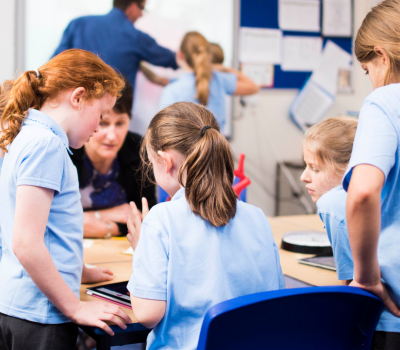

Life will never return to pre-pandemic normality for children and young people, says our new Voices report produced in collaboration with Newcastle University.
The report is the most comprehensive account so far of how every aspect of their lives was affected by Covid-19. It looks at their relationships, education, work, plans for the future and health and wellbeing.
Joint project lead Liz Todd, Professor of Educational Inclusion at Newcastle University said, “ Young people have been seriously and deeply impacted on by the pandemic. All aspects of their lives have been affected. There is no return to how things were before – but there is lots that people can do.”
The VOICES team spoke to 1,780 children, aged five to 18 from across the North East of England. Most of them came from some of the country’s most deprived areas and they described their experiences in words and in drawings.
Joint project lead Luke Bramhall, Head of Youth Services and Poverty Proofing at Children North East, said: “The pandemic made a profound impact on children and young people across the UK. Through the report, we are able to better understand and respond to the lasting needs of that generation, from support with mental health to dealing with missed education milestones. Our hope is that the voices shared in its pages will be heard and those working with children and young people can take action to support them.”
Children said they missed their friends, worried about family and missed everyday experiences such as going to the shops. One child said: “I cried worrying if people I loved were going to die.”
Learning remotely was challenging for many youngsters, either as a result a lack of technology at home, or just trying to learn in a home full of people. Sometimes schools did not send children enough work. One child said: “I hated online school.”
When schools returned, the children valued seeing friends, being in contact with teachers and the structure of the school day. But ongoing Covid-19 restrictions could make school difficult. There was a lot of anxiety about exams and going to university. “ When we went out to play, no-one wanted to play,” said one pupil. “We weren’t able to touch and all we could do was sit on a bench.”
Health and wellbeing were profoundly affected, with a lot of youngsters being far less physically active than before and their mental health suffering . “ bored realy bord realy realy realy bord and I am just sitting in the house all day,” said one child . Another said: “Doesn’t feel like a life.”
Inequality also had a big impact on how young people experienced the pandemic. Some families whose circumstances had changed because of Covid-19 reported eating less and walking more. Some children didn’t have access to digital devices and suffered from a lack of space in their home. Many young people were grateful for services provided by community centres, schools and youth organisations which arranged activities and resources for disadvantaged families.
Digital devices were a valuable tool, helping young people to stay in touch with their friends through games and social media. However, not every experience was positive. “It affected me – I got addicted – (it’s) now become part of my life,” said a child. Another said: “I spend 18+ hours a day online.” And adults didn’t understand how important digital activities are to children now. “Adults don’t understand how much we rely on it (Wi-Fi/internet). They don’t understand why we need it so much, but we do.”
While many youngsters were saddened at not being able to participate in their favourite activities, others learned new skills such as knitting, cooking and decorating.
The researchers have called for measures including free access to digital devices and broadband for children and young people, fair access to public transport, further research into the long-term impact of Covid-19 on children and young people, and a digital curriculum or schools and colleagues.
Professor Todd called upon policy makers and people in positions of power to listen to make changes. “Many people don’t have the time we had to really listen to so many young people from such a wide age range and across a whole region of England in this way,” she said. “But they do have time to act. Our recommendations all need to be achieved and they can be achieved in full by those running services and those making policy.”
She added: “When people read our report they are surprised about how much children notice and how much they think about everything that’s going on in the world. They’re also surprised by how much children care about their friends, families, their communities and the world around them. This is why our report matters.”
Luke Bramhall, said: “We hope this report will encourage action for those across the UK to empathise with the lasting impact the pandemic had on young people across the UK and act to help them to overcome it.”
Read the Voices Project Summary report >
Read the Voices Project Full report >
18th May 2026
30th April 2026
How Little Minds in Mind Helped One Mum Feel Like Herself Again
16th April 2026
Masquer‑Aid: Building Confidence, Community and Self‑Advocacy
1st April 2026

This week we celebrate World Mental Health Day with a special launch from our counselling team.
A new ‘Shelf Help’ library has been installed at our Youth Services site on the Westgate Road. The library will give children, young people and their families the chance to dip into or borrow books that support them to understand and manage different aspects of mental health.
The novel idea was dreamt up and delivered by the counselling team, with Meera Vedhara being appointed the official librarian.
The library already boasts an exciting range of useful, inspiring and specialist books handpicked by the team for a range of ages and subjects, including anxiety, managing stress, dealing with trauma, neurodivergence and grief, even on how our brains works.
The team hope to grow the collection over time and that the libraries place within the waiting area of the service will encourage both people accessing support and visitors to explore its shelves and find something helpful or encouraging.

Meera commented, “It’s been really exciting seeing the books arrive over the last few weeks. Our hope is that the library will become a valuable part of people’s experience with Children North East. Sometimes understanding more about your experiences can help you find different ways to help yourself and to feel less alone along the journey.”
World Mental Health Day is an international day for global mental health education, awareness and advocacy against social stigma. It’s a chance to talk about mental health in general, how we need to look after it, and how important it is to talk about things and get help if you are struggling.
Claire Austin, Clinical Coordinator at Children North East, commented, “The library is a space to offer books that may not be as accessible and give ideas to allow more open communication and understanding to better understand the problems faced by young people. These are the books we love, use and feel underpin our work and if parents can take some of that home and offer that away from counselling then we can only hope complexities lessen and emotional understanding is gained.”
If you have any books or resources relating to mental health which you would like to donate to the library, get in touch with Meera at [email protected].
18th May 2026
30th April 2026
How Little Minds in Mind Helped One Mum Feel Like Herself Again
16th April 2026
Masquer‑Aid: Building Confidence, Community and Self‑Advocacy
1st April 2026

Meeting Ellie Brockhurst, you quickly get the sense that she is thoughtful and passionate about her work. When we met, she had just finished a long day supporting one of our summer activities for young people and had a shift at her part-time job ahead, but she’s still animated about what drives her.
“One reason I think the work is important is to give disadvantaged young people more opportunities and experiences. For example, the young people today… it might be the only thing they’ve done all summer. Some of them only know their families and face challenges within their family life or as a result of that limited experience. Taking part in today might show them a new opportunity or ambition they didn’t know they had. Maybe in the future that will encourage them to go to college or pursue a career the didn’t know about.”
We’re here to talk about a special moment. In the Spring, Ellie was nominated by our Young People’s Service Project Co-ordinator, Teresa Bromilow to attend the Lord-Lieutenant’s Garden Party, a celebration of volunteers and carers hosted at Alnwick Gardens.
“I didn’t know anything about it until a beautiful invite arrived in the post and Teresa told me she had nominated me. It was really exciting.”
She adds, “Teresa knows everyone! She’s been doing this a long time and really understands.”

The event was a celebration of individuals going the extra mile for their communities and the people in them. Hosted by The Duchess of Northumberland, in her role as Lord-Lieutenant, guests were treated to speakers sharing the inspiring work of local charities, an afternoon tea, live music and the opportunity to enjoy the famous gardens.
“The event was sponsored by Greggs. It felt odd to be at a posh sit-down meal with plates of Steak Bakes being served, but me and Teresa had a laugh. It was a lovely place.”
Ellie started her volunteering role during the pandemic, enrolling as a peer mentor in her first year of studying a Forensic Psychology degree. Starting in the pandemic, at first all her mentoring was online. She has since worked with 3 “and a half” young people aged 11 to 16. For one young carer, she provided someone to talk to and share Tiktok dances with in the isolation of lockdown, another mentoring relationship saw regular dog walks turn into work experience with a local pet shop.
She has now joined Children North East as an employee, taking on a Sessional Worker role as she gears up for a Masters.
“My volunteering has given me interesting experience of working with diverse needs. Good experience. I also feel the impact it’s had on families, for those young people going out once a week really can mean the world. For some young people, if they didn’t have that contact with Children North East after they finish school, they’d lose that safety net.”
When Teresa shared why she nominated Ellie you can see why the organisers couldn’t say no, “Ellie has been an incredible support to Children North East in her volunteer role. She started in a very difficult period of the lockdown, providing support to vulnerable young people facing some very new challenges. She is an amazing peer mentor and very dedicated in her approach to working with young people. I was very proud to be able to nominate her for this opportunity.”
The Duchess of Northumberland commented on the event, “I hear so many moving stories of the things people do, for the benefit of others less fortunate, some working for charities, many just doing their own thing, frequently unnoticed, giving help where it is needed most. This is our way of saying ‘thank you’ to them for the really valuable work they do.”
18th May 2026
30th April 2026
How Little Minds in Mind Helped One Mum Feel Like Herself Again
16th April 2026
Masquer‑Aid: Building Confidence, Community and Self‑Advocacy
1st April 2026

An event full of sunshine and smiles, as we took over 70 children and teenagers on the trip to Cullercoats beach, for a much-needed day of fun in what has been a difficult summer for many families.
It was a special moment, harking back to the trip which started it all for us 131 years ago, when founders John Lunn and John Watson took children from the inner city on a trip to Tynemouth beach to help their health.

Yesterday’s event was attended by groups from our different services, from families with little ones to youth groups. Splashing in the sea, beach volleyball, sandcastle competitions and an ice cream for everyone, fun in the sun was the goal. Some of the children on the trip had never been on a visit to the beach before, with one mum sharing it was only her second time.
Jibran, aged 15, said, “It’s been really fun. Normally I would come to the beach a lot, but I’ve been put into foster care so I haven’t been able to do anything like this. I’m really happy I got invited to come. I’ve enjoyed digging holes, building sandcastles and going in the water.”
One mum, Samah, said “We’ve really enjoyed it. It’s better than staying in and doing nothing. The children have really enjoyed it, they’ve got to play and meet each other. It’s really beneficial.”

The trip was made possible by many of the charities 60 different services collaborating, including teams delivering youth work, domestic abuse recovery, family support, mentoring, counselling and community activities.
Mandy Brown, Deputy Head of Families and Parenting, commented, “The beach trip came about as an idea because it links us back to where we first started as a charity. We have some families and young people who have never been to the beach. It’s important to provide opportunities like this, the beach is on our doorstep and there are people who have still never been. It’s difficult to share in words what it might mean for a family who have never had that experience of coming here before today.”


18th May 2026
30th April 2026
How Little Minds in Mind Helped One Mum Feel Like Herself Again
16th April 2026
Masquer‑Aid: Building Confidence, Community and Self‑Advocacy
1st April 2026

Uniforms, trips, school lunches, PE kits, pencils and pens, dress down days and other school costs can be difficult to afford for low-income families. When children and young people can’t take part in opportunities because of cost, they miss out and feel excluded, and it is harder for them to learn, achieve and be happy at school. The Cost of the School Day calendar aims to help schools identify possible cost barriers during the academic year and think about some alternatives to make sure all children and young people can fully participate in education.
Throughout the calendar, we’ve included ideas and good practice examples from schools across England, Scotland and Wales who have taken part in the Cost of the School Day project. Importantly, we know that schools can have the most impact by listening to children.
You can flip through the calendar below, and download it using the download button. We recommend printing it on A3 paper to get enough space to add your own events and important dates to it.
To find out more about investigating the school day from the perspective of children and young people, please contact our team on [email protected]. If you find this calendar useful, you might also benefit from our other free resources.
18th May 2026
30th April 2026
How Little Minds in Mind Helped One Mum Feel Like Herself Again
16th April 2026
Masquer‑Aid: Building Confidence, Community and Self‑Advocacy
1st April 2026