

18th May 2026

In our latest team guest blog, Participation Worker Quinn Stanger shares his experience of joining Children North East.
Starting a new role at a new organisation is always a challenge, regardless of how confident and extrovert you are. However, I have to say my first two weeks have been pleasantly relaxed and welcoming, whilst absorbing a lot of information.
On my first day, I was excited to get started. Despite understanding my job title and role was Participation Worker, I knew little of what my day-to-day tasks would comprise. My line manager, like all the staff, was welcoming, warm and friendly. We discussed many different aspects of the current Poverty Proofing and Participation Team, focussing on the two projects I’d split my week between.
Utilising my previous experience of Youth Work and Social Action, I have been given the lead on an #iwill Social Action project. This is based within a school environment, incorporating the mentoring model, which the Youth Team delivers. Also, very excitingly, I have the challenge of working on a Poverty Truth Commission. Coming on board to short term (2 year) projects once they’ve started was a challenge: getting up to speed with the process and intricacies of both took some time. Thankfully, the whole team bounce off each other, reflect together and share examples of pieces of work that may be relevant.
I was excited that the two projects were a mix of local and regional focusses, with one having a national relevance. It soon became evident that the inequality of poverty was a driving factor for many of the projects within the team. Children North East is currently undergoing Poverty Proofing® itself as an organisation. In my first week, I sat in on training with staff from across the charity, covering aspects of what it means to be ‘Poverty Proofed’. Having studied inequalities, intersectionality and subsequent effects on children, young people and families, I was surprised at my passionate response to the statistics and videos shown during the training (yes, I did cry). Particularly Seen and Heard, a social action project from some high school students in Scotland to raise awareness and tackle the stigma associated with poverty. This was an excellent start to my work on the Poverty Truth Commission, which aims to give a voice to those with lived experience of poverty.
As with all inductions to a new organisation, I had policies to read (sometimes the list seemed never-ending) and mandatory training. Likewise, I had one-to-ones with my new team members to get to know them whilst absorbing the myriad of current, past, and future projects. I was keen to hear the differing backgrounds of the team and the skills and abilities each member brings. Furthermore, I had meetings scheduled with all of the Senior Management Team, to which I was pleasantly surprised. I hadn’t quite grasped the size and scale of the charity I had become a part of, which surprised me that time is given to meet (sometimes virtually) with new employees, providing space to understand senior leaders’ roles and ask direct questions.
Overwhelming, I have garnered the passion and drive that the team, and the individuals employed, have toward ensuring the voices of babies, children, young people and families are heard locally, regionally and nationally. Equally, the respect and compassion the charity as a whole shows toward their staff. I look forward to working, developing and flourishing in my new environment.
18th May 2026

30th April 2026
How Little Minds in Mind Helped One Mum Feel Like Herself Again

16th April 2026
Masquer‑Aid: Building Confidence, Community and Self‑Advocacy

1st April 2026
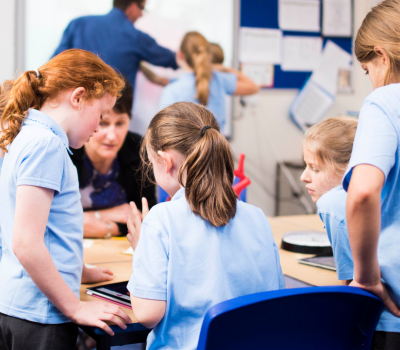

In our latest guest blog, Grace Dunne, our Poverty Proofing Coordinator, explores how the school Harvest Festival period may impact children living in poverty and how schools can help them take part without guilt or stigma.
As autumn draws in, many schools are returning to their seasonal traditions: singing about fluffy cauliflowers, drying children’s soggy socks on radiators and gathering cans of beans for the school harvest festival collection.
In the past, these collections tended to be taken to a local church for distribution to those in the local community who may need them, or even delivered door to door by groups of pupils.
In 2021, of course, we have food banks, and many schools will be collecting donations for their local branch.
It can be a brilliant way for pupils to learn about charitable giving and fundraising, and build empathy for those facing difficult circumstances. It can also help pupils move beyond the sometimes extreme examples of poverty they see in fundraising campaigns and the media, and to understand how it is affecting those closer to home.
However, when 31% of children in England are living in poverty (nine in a class of 30), and one in five schools have set up food banks for their own communities, how can schools ensure that these collections avoid putting pressure on families at an already costly time of year and don’t stigmatise those pupils who are not able to donate?
In our Poverty Proofing® the School Day work, we’ve spoken to pupils who’ve expressed that they felt disappointed in themselves when they “forgot” to bring in a donation. We have also spoken to pupils who have been the recipients of food items their peers have brought in. Many pupils (and their parents) will forget to bring things in and bring them the next day instead, but it’s important to be aware that ‘forgetting’ donations can also be a way to avoid the embarrassment of not being able to contribute.
We’ve gathered some ideas for how to ensure that all pupils can get involved in your next foodbank collection…
Aim to make the donation process as anonymous as possible. This means avoiding asking for pupils to bring donations to the front of the class, or getting them to carry their donations to the school hall or church. Many schools choose to have a donation point in the school office or hall and have the collection going on for weeks rather than on one day, so it is not apparent to others if a child has not brought anything in.
Food banks are often in dire need of financial donations to pay for storage, collection and distribution. Cash also gives them the freedom to bulk purchase items that they know their clients need. A link could be added to the school website inviting families to donate what they can. As well as these donations being anonymous, this option might be easier for busy parents than remembering to pack cans in their children’s school bags. You may also be surprised to find that ‘pay as you feel’ collections often result in higher donations than those with a fixed amount.
Generosity and kindness are values that are widely promoted in schools. It can be difficult to find a balance where this is celebrated, but pupils should not be overly praised for the material contribution they and their families have made. It can be tempting to say to the whole class, “Wow, Emily’s family have sent us in 20 cans for the collection! Thank you so much Emily!”, but it’s important to consider the impact this may have on pupils who have not been able to contribute.
This could be a wonderful opportunity to demonstrate that everyone can give something, regardless of how much money or resources they and their family have. For example, pupils could be encouraged to make cards in class to accompany the donations. Older pupils could be supported to write letters to their MP about the importance of challenging poverty in their communities.
Often, children take part in charity initiatives in school without being fully aware of exactly what it is they’re raising funds for. It’s important that those living in poverty aren’t stereotyped when food banks are being described to pupils and that pupils are encouraged to empathise with, rather than show pity for, those who use food banks. People living in poverty should not be stereotyped or ‘othered’ by the language used. Pupils could be shown videos of interviews with food bank users to show that they are real people and not just statistics. For example, this great video from The Trussell Trust showing Professor Green visiting a food bank in Lewisham.
“It’s a No-Money Day” by Kate Milner is a beautiful picture book, which sensitively explores a mother and child’s visit to the food bank.
School staff need to remain aware that many of their pupils will already know about food banks, from their personal experience. It’s important that these pupils do not feel identified or stigmatised during class discussions. They should not feel that they need to share their own experience but, if they do want to, should be provided with support. It’s a good idea to remind pupils that poverty is a difficult topic to discuss and, if anything in the discussion upset them, they know where to seek support in school.
With a bit of planning, the annual school Harvest Festival collection can be an invaluable opportunity for pupils and staff to consider the impact of poverty in their communities and consider what can be done beyond packing up the parcels.
We would love to hear your thoughts and experiences on this subject via the Children North East Poverty Proofing® Twitter.
18th May 2026
30th April 2026
How Little Minds in Mind Helped One Mum Feel Like Herself Again
16th April 2026
Masquer‑Aid: Building Confidence, Community and Self‑Advocacy
1st April 2026
Jon Burton and Ryan Gibson of Unified Films in South Shields are the guys behind our 130th anniversary film, You’re Not Alone and as Jon explains in this blog, it couldn’t have been a more appropriate project to be involved in since both have just become new dads…

Ryan with three-month-old Reuben (left) and Jon with Jude, nine months
Reading the words of our friend and past-collaborator, the poet, Scott Tyrrell, Ryan and I looked at each other and telepathically knew that ‘You’re Not Alone’ was going to have to be bigger and bolder than anything we’d done in order to do the poem justice. It went on to be the most ambitious film we’ve created, with four different concurrent stories running over different time periods, featuring between 20-30 actors and extras in multiple locations.
Our scheduling and paternity leave also left us with relatively little time to achieve all of this, with just over a month being the window for all stages of production. Gulp. So yes, the process of making the film has been challenging but also rewarding and enjoyable in equal measure.
The high stakes, scant time windows and demands of the production set the stage for a uniquely ‘unified’ experience, with every crew and cast member going above and beyond what was required of them to make things happen, which has been truly humbling, and quite honestly, a downright amazing feat of community in action.
The good-natured ethos of Children North East seemed to be reflected in the attitudes of those who came forward to offer help to the film. Whatever we needed, there would be someone there to offer it up, many of whom citing their reasons for inconveniencing themselves as, ‘It’s for the children’, very much adding credence to the idea that we’re a region that cares deeply for its kids.
We truly do live in a region that isn’t afraid to offer a helping hand, and we seem to share an unspoken, instinctual drive to protect and care for our children. And we were proud to be North Easterners to begin with…
The production has also possessed a sort of surrogate family vibe. With many of the actors being children, there’s been a sense of joy, exuberance (and chaos!) on the set, as well as a nurturing energy which appropriately reflects the charity that we’re trying to depict. The children, might I add, teaching us as much as we’ve taught them, rewarding our patience and presence with the spontaneous wonder that only children can really provide.

Ryan behind the camera on Roker Beach
Ryan and I have also just had baby boys, so once again the timing couldn’t have been more appropriate, with chaos, joy and steep learning curves being the run of the day at the minute in any case! It seems synchronistic to us that, at a time when we’re learning to care for our children, this project came along that would show us just how much that theme runs deep, and that family can be something more than what you would expect.
Where we sit now, at the very end of the journey with this project, Ryan and I confidently concur that it has in many ways been the epitome of why we do what we do. We like to tell stories that inspire, and there are few examples out there as appropriate to that as the story of Children North East. We truly hope everyone enjoys the film as much as we’ve enjoyed making it, and feels deeply the pride from knowing that our region (and the dedicated staff of Children North East), chooses to take vulnerable children and parents by the hand and assure them, ‘You are not alone’.
Children North East celebrated our 130-year anniversary in 2022.
18th May 2026
30th April 2026
How Little Minds in Mind Helped One Mum Feel Like Herself Again
16th April 2026
Masquer‑Aid: Building Confidence, Community and Self‑Advocacy
1st April 2026
As Operations Director at Children North East, Michele Deans is very involved in what is going on with the fundraising team and was very excited earlier in the year when we launched a Hadrian’s Wall Virtual Challenge as part of our 130th anniversary celebrations. In this blog, she tells us how because she has enjoyed ‘walking the Wall’ so much, she’s decided to do the length of it all over again!
Walking was a big part of my life growing up. We didn’t have a car and limited public transport in the area I grew up meant that I had to walk the five mile round-trip to school daily. This never bothered me, but as I got older, got a job and learned how to drive, walking took the back seat and I must admit, even short walking journeys were taken by car.
 But all that was to change in December 2019 when we adopted a gorgeous and excitable little Westie with lots of energy that we named Dolly (she is as feisty as Dolly Parton). Suddenly I had to walk, a lot, and I began to enjoy it! When lockdown came in March 2020, I found that at the end of the day, walking around our local park was part of my routine and this has continued, except the walks have got longer, more challenging and I have felt my physical health improving and of course my mental health has been boosted too.
The virtual Hadrian’s Wall Challenge presented me with focus and I have loved every minute of it and the little trips we have taken. There were a couple of reasons why I wanted to do this, first and foremost, I am passionate and committed to the work that we do and wanted to get involved in something I knew I could do and that I knew friends and family would sponsor me for. Also, I knew my little pal ‘Dolly’ would become my companion on my virtual Hadrian’s Wall walks.
On March 1, I signed up to the fundraising app ‘GivePenny’ and the activity tracking app Strava (to make sure I could keep an accurate record of my kilometres) and I started my long walks. By mid-May I had completed the walking challenge – 130 kilometers – but I wasn’t quite finished. I thought a real challenge for me was to walk there and back, so to date I have completed 244 kilometers and I am pretty sure I will get to 260 by the weekend.
 By mid-May when the weather started to improve, we took off to other areas of the North East, completing long walks from Craster to Dustanburgh, in Northumberland along with more miles around Seahouses and Bamburgh and Barnard Castle in Teesdale. Then last weekend we took off to Twice Brewed, near Haydon Bridge, to walk some of the actual Hadrian’s Wall itself.
The simplicity of GivePenny has been brilliant and, as I suspected, family and friends have been generous. In fact I am about to reach £200 in donations which will go in some way to supporting our services.
 And I’m not planning to stop now….I am looking to find another walking challenge to keep me going. I’d recommend the Challenge to anyone of moderate fitness – you can clock up the miles however you want to, in your local neighbourhood, or if you have access to transport, it’s a good excuse to get out and enjoy our beautiful countryside. In fact, while you’re out there, you could even take some photographs and enter the Children North East 2022 Calendar Competition!
Children North East celebrated our 130-year anniversary in 2022.
18th May 2026
30th April 2026
How Little Minds in Mind Helped One Mum Feel Like Herself Again
16th April 2026
Masquer‑Aid: Building Confidence, Community and Self‑Advocacy
1st April 2026

Jane and Amy today
How were you referred to our NEWPIP Service Jane?
I was referred by my health visitor as I’d had prenatal depression and she saw that I was still very down after Amy was born. Furthermore, they recognised I also needed some help bonding with Amy. I already had an 11-month-old baby boy at the time and I felt I needed to talk to someone.
What kind of help did you get from the Service?
Peter Toolan, my therapist, firstly came to my house and did a numbered questionnaire on how I was feeling and that gave him something to work on. He was a very friendly and approachable man who never made me feel like I had to talk or be a certain way, he just listened. He was always so comforting! He was also brilliant at interacting with Amy. Peter really seemed to care and made the session that much easier.

Amy just had her third birthday
Your interactions with Amy were filmed as part of your therapy, how did that feel?
I was very nervous when Peter first mentioned it and I didn’t know how to be but it made absolute sense when I saw the videos afterwards. The first one we did was quite early on. I remember I was talking and singing with Amy, but I hadn’t realised that she wasn’t responding to me and kept moving her head away – maybe feeling my feelings. It helped me understand that I wanted to put more energy into singing and interacting with her, and within a couple of weeks, at the next session, she was laughing with me and looking at me. This was only seen by being videoed and was a brilliant tool to be used!
How would you describe your state of mind/relationship with your baby before engaging with NEWPIP?
I was looking after her physical needs but emotionally I wasn’t. I would sit for hours mentally exhausted, crying for ages, which wasn’t healthy for her. I didn’t know how to break the cycle and enjoy my baby.
How would you describe your relationship today?
She’s my little angel! She was three years old at the beginning of June (it’s gone by very quickly)! She’s such a happy, delightful, intelligent little girl. She loves to sing and dance, and we are forever laughing together. We both love each other so much!
What would you say to other new parents who might be struggling? Would you recommend NEWPIP?
I’d tell them to please seek help. It’s so good just to talk to someone! Everything will get easier, and it’s all a phase. You will also sleep again! I’d also remind them to look after themselves as it’s not easy! I would highly recommend NEWPIP. They saved not only the bond with my daughter but also my life!
What do you think Amy would say, if she had the words, about how things are now?
She would tell me how happy she is, and how she loves seeing her mummy being happy! She loves mummy taking her to dance classes and swimming and going on special mum and daughter dates. Also, she would want me to forever forgive myself because the way I was feeling, it wasn’t my fault

Amy’s happy and confident
How important do you think it is that Infant Mental Health Services are properly funded? Do you think infant mental health is as recognised as older children’s and adult mental health?
It’s so very important, but it’s such a postcode lottery if you’re going to be offered any help. I remember other people saying, ‘You just need to cry…’ But it’s so misunderstood. It’s not that easy! There should be advertising on maternity wards with numbers you can call. They make you so aware of what to look out for with the baby’s health, but never the mum or the relationship with the baby. I know the importance of early relationships is not as well known (I certainly hadn’t thought about it before) but without some support it can have terrible consequences! I wish I could shout about the amazing work of NEWPIP from the rooftops because they can and will save many lives!
18th May 2026
30th April 2026
How Little Minds in Mind Helped One Mum Feel Like Herself Again
16th April 2026
Masquer‑Aid: Building Confidence, Community and Self‑Advocacy
1st April 2026
Gwen Dalziel, a School Research and Delivery Practitioner with our Poverty Proofing and Participation Service, reflects on the latest shocking child poverty statistics:
We are greeted today by new concerning statistics showing the extent of child poverty. The statistics released for the financial year 19/20 show a significant increase in levels of poverty and are a stark reminder of the inequalities faced by many families.
Today 30 per cent of children in the UK are living in poverty. There were 4.3 million children living in poverty in the UK in 2019-20.
 I feel so sad to see this. A concise and unavoidable summary of our failure to create equality, security and comfort for all. It is really important that we take the time to face up to these statistics. Too often politicians, certain sections of the media and society in general try to brush away these numbers by feeding us misinformation about poverty having solely behavioural causes and this is simply not the case.
Three quarters (75 per cent) of children living in poverty in 2019/20 were in households with at least one working adult – up from two thirds (67%) in 2014/15. This is everyone’s issue and if the pandemic has taught us anything it is that no one is immune.
North East England shows the greatest growth in child poverty over the past five years and has risen by a third, taking it from below the UK average to the second highest of any region. This clearly demonstrates the value of our Poverty Proofing work. I feel proud that we strive to mitigate the effects of poverty and unfortunately the demand for expertise will continue to rise.
We also need to read these statistics with caution and remember two key factors. Firstly, the poverty line has been moved, the median has gone down. This means that the income level at which a family can be considered in poverty has reduced. While it is harder to fall below the poverty threshold, there is still an increase, masking potentially much higher rates. Secondly these statistics are pre-pandemic. We have yet to see the devastating effect of the Covid crisis reflected in the statistics. Sobering thoughts that point to much higher, concealed levels of poverty and a trend that is set to continue.
There needs to be a response. I implore us all to do whatever we can, and in whatever capacity, to try and reverse this trend. Our expertise allows us to advise schools and organisations about best practice to alleviate the disparity experienced by those in poverty but what we really need is to eradicate the structural causes, to create a fairer system for our children. A great example would be not to revoke the £20 Universal Credit uplift. Let’s forge forward and ensure our children’s life chances, access to education and opportunities are not influenced by circumstances outside their control.
18th May 2026
30th April 2026
How Little Minds in Mind Helped One Mum Feel Like Herself Again
16th April 2026
Masquer‑Aid: Building Confidence, Community and Self‑Advocacy
1st April 2026