

18th May 2026

Every year, Children North East reaches thousands of babies, children, young people and families across the North East and beyond… Our ‘Week in the Life’ blog series shines a spotlight on some of the amazing people who help make that impact possible, from practitioners working in the heart of communities to teams behind the scenes keeping the lights on.
In this edition, we meet Quinn Stanger, who moved roles within Children North East to Project Coordinator for SEND and Short Breaks Peer Mentoring services. The work he does is wide-ranging from training volunteer Peer Mentors to working with the young people receiving peer support. Let’s learn more…
What’s the first thing you’re doing on Monday morning?
Catching up with my fellow Coordinator, Sarah Bell, usually kicks off a Monday morning, allowing us to review the current status of referrals and matches whilst highlighting the priorities for the week. Fortnightly we also have a Short Breaks mini-team meeting, including the two youth workers providing additional support for the projects. Following these meetings, the week’s work begins in earnest, catching up on emails and new referrals, reviewing 1-2-1 mentor sessions for the week and looking at the myriad of internal and external meetings in my calendar that week. We’re so busy now that I have to ensure I schedule time for lunch!
What does a typical day look like for you?
Firstly, there is no typical day! With our projects spanning North East and North Cumbria, with so many moving parts, staff must be flexible and adaptable to current situations.
My work can be split into two parts: the young people referred to our service and the volunteer mentors. Once received, a referral for a young person involves an initial enquiry with the referrer to gather further information and an update on the young person’s situation.
Following we then organise an initial assessment with the young person in the family home; this allows us to get to know the young person, their strengths and areas they’d like to improve, in turn, allowing us to develop goals that can be worked on with the mentor. All our work is person-centred, led by the young person and all about THEM!
Whilst the initial work with the young person is being carried out, in the background, Coordinators recruit, interview and carry out background checks on the volunteer mentors.
All our mentors receive accredited training through ONE Awards and are intensively supported throughout their engagement with Children North East.
Coordinators then have a RAM (Referrals Allocation Meeting) to discuss mentors ready to match and which young person would be a good match. We try to match on hobbies and interests; however, sometimes it’s a gut instinct they’ll get on! There are strict procedures in place to support the 1-2-1 sessions between mentors and young people; a significant part of my week is supporting these sessions from afar, ensuring the safety of all involved.
In addition to my work on Peer Mentoring, I have recently been involved in several projects supporting young people identifying or questioning as LGTBQ+. We have a long-established group in Gateshead, PLUS, which I’m proud to have some involvement with; the young people attending are amazing and make me think about the world in every session.
To recruit mentors, we regularly attend events; I’ve been coordinated Children North East’s presence at Northern Pride in Newcastle this summer. Plenty of challenges present themselves in attending these events, and I love our teamwork approach to ensuring we deliver! I was really excited to have been be part of the Pride Parade with PLUS members and support our presence in the Family and Youth Zone this year, a first for Children North East.

I have also been involved in a piece of work delivered as an across-service team around Identity, Acceptance and Inclusion within the school environment. This exciting project has highlighted a need for increased awareness and support for young people exploring their identity (including gender and sexuality), particularly within education. Watch this space for more developments…
What most excites you about your role as a Project Coordinator?
The progress and development of the individuals and families we work with makes all the hard work worthwhile. For example, seeing a young person develop their communication skills, so they can express their wishes and opinions, to hearing that a young person has grown their independence by becoming able to access public transport alone. Discussing with mentors how they have developed individually and what they take away personally from volunteering. When you see a young person explore and discover their own identity, having space to be comfortable with themselves, to then share that positively with their families is so heartwarming, I feel honour in having played a small part in their lives.
What did you do before you Children North East?
It’s a been long and winding road to Children North East. Initially, I aspired to be a Medical Officer in the Royal Navy, attending Medical School at a Scottish University. However, my mental health laid to rest those plans, and I’ve been back in the North East after three years in Scotland. Having delved into pharmacy and retail management, I then spent several years learning to live with Bipolar Disorder. Volunteering within youth work, I got my drive back and have been progressing within the field ever since. This year I finally finished a degree, although not the one I’d anticipated when I started it 18 years ago!
What do you enjoy outside of work?
Being surrounded by friends and family keeps me going. Whether it’s hosting dinner parties, long walks in the country or somewhere in the sun by the pool! I’m known within work for having travelled to a number of Eurovision host cities to get involved with celebrations; I’m very interested to see where 2023 will take us! I also need a new hobby to fill the time I’ve spent studying over the last two years!
18th May 2026

30th April 2026
How Little Minds in Mind Helped One Mum Feel Like Herself Again

16th April 2026
Masquer‑Aid: Building Confidence, Community and Self‑Advocacy

1st April 2026
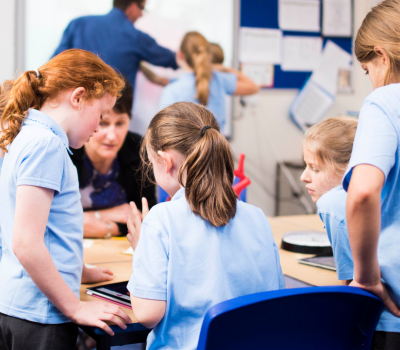

Children North East was proud this weekend to be recognised as part of the national Third Sector Awards. Despite not taking home the prize in our category, the night was a poignant celebration of a sector providing a lifeline to millions in a very difficult year.
Sharing the inspiring work of individuals, organisations, grassroots groups and partnerships, it put a spotlight on the collective impact of our sector and the essential services it provides to our communities across the UK.
Alongside partners Child Poverty Action Group, we were shortlisted for the Charity Partnership of the Year Award for Cost of the School of the School Day, which battles the impact of child poverty on pupils and their families.
We were shortlisted us alongside nationally recognised organisations, including Samaritans, Mind, Hospice UK and Shout. Citizens Advice and The Trussell Trust won on the night, with their ground-breaking Help through Hardship helpline project, that rapidly responded when traditional services started to close during covid to provide foodbank referrals and now supports people living in poverty to maximise their income.
Leigh Elliott, Chief Executive comments, “We are incredibly proud to have been nominated alongside such esteemed charities for this national award for our work on Cost of the School Day with our brilliant partners Child Poverty Action Group. The project has improved the lives of 100,000s of UK pupils by supporting schools to mitigate financial barriers to participation. Today’s celebration was a wonderful acknowledgment of the hard work and innovation of the teams that made this impact possible.”
Children North East continues its Poverty Proofing work across the North East and around the UK, including having funding secured to work with 150 schools across the region in the 2022 to 2023 school year.
18th May 2026
30th April 2026
How Little Minds in Mind Helped One Mum Feel Like Herself Again
16th April 2026
Masquer‑Aid: Building Confidence, Community and Self‑Advocacy
1st April 2026

“One aspect of the audit that surprised us was how much pupils remembered difficult moments. As teachers, we are mindful of things like asking about holidays and birthdays… but sometimes we just don’t know what we don’t know. Hearing from the children their experiences and how they were sometimes affected for a long time was really eye-opening.”
Gemma Robertson is the Headteacher of Greenfields Community Primary School, located in the village of Wideopen. Serving 300 pupils, the school is close to the idyll of the Big Nature Water Reserve and green space, but also faces the challenge of being on the fringes of a sprawling city.
Greenfields is in a catchment area that Gemma has seen slowly changing under the pressures of cost of living and Covid. Taking part in a Poverty Proofing Audit was a way to ensure the school was continually developing its approach to meet pupil and family needs. She explains, “We know some parents will be struggling more than usual or maybe struggling for the first time under current financial pressures. We always want to explore how we can do better and are really keen to ensure no family feels they have to ‘keep up’. The audit also took the pressure off staff by giving us insights to act on.”
Greenfields already has a history of innovation when it comes to reducing inequality to remove barriers for pupils living in poverty.
“As a Leadership Team we’ve been conscious of the ideas behind poverty proofing for a while, partly because we all have diverse experiences that include working in schools in very disadvantaged areas.”
Their ideas have included simple fixes, “We’re very strict with party invites. It’s not just about people being left out from one birthday, when they see invites being shared some children may feel embarrassed that their family could not afford a birthday party.”
Where they have been trailblazers is in breaking down barriers to enrichment activities. “We used Pupil Premium money to buy sets of KS1 and KS2 bikes. Riding a bike is a valuable life skill but we know not all parents can afford a bike. Every year group has ‘bike week’ to use the bikes for activities and students who don’t know how to ride a bike have the opportunity to learn with one of our teachers in the gym at break time. We’re very proud this year that every one of our nursery children can ride with stabilizers!”
Trips are also a key area for Gemma and the team. “We work very hard to limit the cost of trips. We’ve stepped away from third-party providers and challenged ourselves to write a new rulebook. We’ve tested different times of year, new locations and activities and, because coaches are a significant cost, utilising public transport – more of a challenge when we are served by only one bus route!”
Given so much work was already going into removing barriers for pupils, how was the Poverty Proofing ® audit received?
“We found it really good. We knew it would be really good. The team made it easy to engage the staff. This type of process always raises the concern that staff will fear being judged, but the Children North East team came in and really clearly explained the process.
“The pupils also really enjoyed it. They loved meeting new people and talking about themselves. I think especially since Covid we haven’t had many visitors so it was nice for us to see them engaging with people from outside the school.”
Greenfields’ audit will be used to inform changes when school starts up again in September, with some work already beginning.
“We are looking at our curriculum and thinking about diversity. This process has really helped us reflect on how we include a child’s financial background in that. Are we instilling our values that no one should be left behind in our pupils?”
“My message to schools considering going through the process is that it is a really positive thing. They don’t come in and rip apart what exists, they support you to listen to the pupils and reflect on how you can make things better for children and families. It’s a conversation.”
18th May 2026
30th April 2026
How Little Minds in Mind Helped One Mum Feel Like Herself Again
16th April 2026
Masquer‑Aid: Building Confidence, Community and Self‑Advocacy
1st April 2026

Our Poverty Proofing® service supports healthcare settings to minimise the impact of poverty on patient outcomes by listening to the experiences of their patients, staff and stakeholders on how their daily experiences intersect with poverty. But what does that mean in practice?
We interviewed Boris Landea, Administrator at Cruddas GP Park Surgery to share his experience of the process and how it has influenced his practice to view and tackle poverty differently.
I found the training really informative and eye-opening when we were talking about our catchment area.
What were your first thoughts about Poverty Proofing® when you found out it would be happening at Cruddas Park GP Surgery?
My first thought was it would be an amazing help for our practice just because of where our practice sits. It’s what our community needs. Poverty is the root of a lot of social care problems and we need better awareness. When the training happened I didn’t know what would be said so I loved the fact we were sitting in groups and chatting amongst ourselves. It was very interesting to see poverty awareness in both admin staff and GPs because we have different backgrounds, and how it is that we define poverty. It was good to work amongst people that weren’t just alike.
Phase one of the process is Poverty Proofing® training, which you have completed. How did you find the training and what stood out for you the most?
The training was just flowing, and you took questions all the time. I found the training really informative and eye-opening when we were talking about our catchment area and where we sit in the country. What was the most interesting is how poverty can come across. Poverty can be financial poverty, social poverty, and so there are different ways to look it. This is something I really discovered and was made aware of. Knowing that we can do something within the practice, the purpose being to see how we work and see how we can address poverty at first it feels like it’s going to be a mammoth task, because it’s another project on top of our work, but it’s a priority because it’s at the core of a lot of our patient’s problems.
It can always seem hard to see new projects come along, but Poverty Proofing® has been brought to us in a bitesize way.
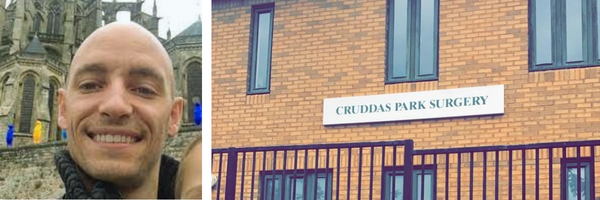
Boris works at Cruddas Park GP Surgery in Newcastle’s West End
What role do you see playing in addressing health inequalities?
So, I think we can be an example for other practices because we’re taking on this project. We are lucky to have admin and healthcare staff who are on board so I think we can make a difference if we work through it together. The main thing is to be an example for other practices, something to aim for; to show that we can work in parallel, raising poverty awareness and the practiced work of a GP practice working alongside each other. It doesn’t have to be either or. Poverty is to be incorporated into our day-to-day life.
What would you say to another organisation who was considering undergoing the Poverty Proofing© process?
That they shouldn’t be scared of it. The training makes it seem like it can be achievable. It can always seem hard to see new projects come along, but Poverty Proofing® has been brought to us in a bitesize way. Don’t be scared, give it a go.
If you want to learn more about our Poverty Proofing Services for healthcare settings or how they can help you achieve your goals for inclusive, accessible healthcare, get in touch via our contact form.
18th May 2026
30th April 2026
How Little Minds in Mind Helped One Mum Feel Like Herself Again
16th April 2026
Masquer‑Aid: Building Confidence, Community and Self‑Advocacy
1st April 2026
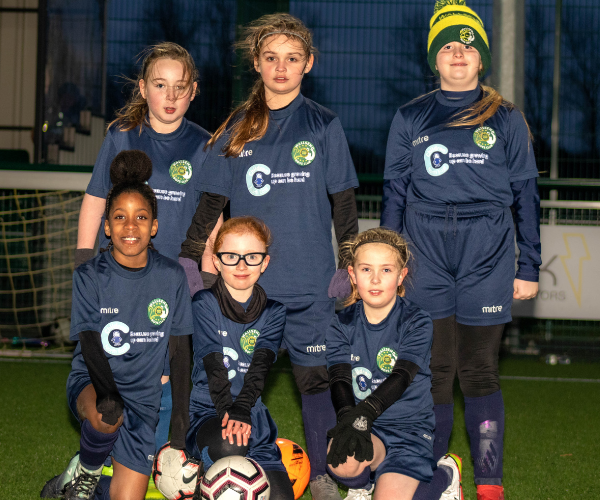 Kitted in their Children North East Kit, the Wallsend Boys Club Under 9’s Girls team warm up to take on an evening of training before their matches on Saturdays. The team has chosen to play wearing Children North East’s logo wanting to help raise awareness about the positive effects of our work! We went along to a session to see what being part of this football club means to the girls.
Manager, Crya Carne, explains that she works with girls from the age of three all the way up to women’s team. The Under 9 team all worked their way up from the development squad and wear the Children North East logo with pride.
‘Football helped them transition back to normal life after lockdown.’
 It was well documented that the pandemic took a toll on young people’s mental health and wellbeing. The Under 9s Squad Manager shared that after lockdown many children had lost interest in hobbies ‘but after being back playing football for a few weeks I could see their interest was back, they wanted to see people, make friends and go out and play football’. This is why it’s key to recognise the importance of keeping active and socialising!
‘You can see their confidence has improved!’
The team come together to train, improve and win matches! ‘In terms of football they’re all massively developing and really enjoying it. The younger ones can be quite shy but after a couple of weeks of just playing with the team they become really chatty!’. The team spirit was in the air all evening, highlighting the positive effect sports has both mentally and physically.
‘Everyone’s running round with their friends with has a smile on their face.’
 Sarah has been coaching the team for nearly a year, ‘My daughter plays and she classes these (the Under 9’s teammates) as her best friends’. The sense of community and friendship both on and off the pitch displays how much of an impact team sport has on young people. They train every Tuesday and Thursday for their Saturday matches, with more and more girls joining the team after lockdown! It provides the opportunity for friendship, staying active and perusing a passion.
Whilst the aim is good fun, ‘We’re (the coaches) quite competitive and so are the girls! ’ we can vouch that the girls always do their best and take home the trophy, just like the England squad, which we think is something to shout about.

18th May 2026
30th April 2026
How Little Minds in Mind Helped One Mum Feel Like Herself Again
16th April 2026
Masquer‑Aid: Building Confidence, Community and Self‑Advocacy
1st April 2026

In our latest guest blog, Robyn Andrews shares what she gets up to in her role as Youth Worker, from peer mentor pairing to adventure playgrounds!
“There is a get stuck in mentality surrounded by an open and honest team.”
Arriving at Children North East is warm and inviting. In a new job there is usually a certain amount of anxiety which can make you feel slightly awkward and uncomfortable but I can honestly say that there is none of this at the organisation. Instead, there is a get stuck in mentality surrounded by an open and honest team.
My new role is that of Youth Worker and I’m involved in a variety of projects across the region which keeps my role engaging, varied and challenging – just the way I like it.
My first day in the job I was introduced to my new Youth Group, an inclusive space in Blyth where neurodiverse young people meet to have a safe and fun space to socialise. Since then, we have had some fantastic sessions and some even better trips! For me, this has been experiencing Children North East at its roots, a charity built from offering young people the chance to have a break and experience new things.
A highlight of my time here came a few weeks after my first session, we took a trip to Sunderland to watch Beauty and The Beast at the theatre – a first for many in the group! And more recently, to make the most of the fair weather, we have been to an adventure playground (A young person has since said to me “Can we not go every week?”).
“We are also empowering our young people to develop stronger relationships, form their identities and give them the opportunity to build confidence.”
Another large part of my role is a Short Breaks project where I work to match young people with SEND to peer mentors and map activities for these pairings to do across the North East. I am also privileged enough to mentor some of these young people myself; often the best part of my week is seeing the shining smile on their faces.
Youth Work is entirely focused around the participation of the young people we work with. It is essential that the projects we offer are tailored to the wants of these young people and using their thoughts and views shapes the way we as an organisation see the world. The value that our sessions add works both ways, not only is it a privilege to promote the voices of these young people but we are also empowering our young people to develop stronger relationships, form their identities and give them the opportunity to build the confidence they need to make impactful differences in our communities.
I’d like to round off by saying that working in the charity sector is a joy and giving back to place in which I live is fulfilling in ways that other roles just cannot compare. My advice to those who wish to pursue similar careers or join us would be to work hard and get involved in as much as you can. The more experience you can get of working with people and young people the better, you are never sure what the day will throw at you so the more practice you have dealing with the unexpected will serve you well!
But most importantly: if you are passionate, excited, respectful, and most of all kind… I can assure you, you will do just fine!
18th May 2026
30th April 2026
How Little Minds in Mind Helped One Mum Feel Like Herself Again
16th April 2026
Masquer‑Aid: Building Confidence, Community and Self‑Advocacy
1st April 2026