

18th May 2026

We are excited to announce the successful funding of a new project which will research and pilot ways for children and young people from refugee and asylum-seeking backgrounds to engage with and access counselling. The project aims to increase understanding of the barriers faced by displaced young people to participate in therapeutic support.
The project will be delivered in partnership with North East Solidarity and Training (N.E.S.T.), a student-led project from Newcastle University Students’ Union that aims to educate, empower and integrate members of the forced migration community in the North East.
The research has been made possible thanks to funding from British Association for Counselling and Psychotherapy (BACP). It will also allow the team to deliver a pilot programme of 1-2-1 counselling services, group sessions and resources to refugee and asylum-seeking young people who are facing the challenges of rebuilding their lives, integrating into new communities and overcoming trauma.
Those accessing the pilot programme, which will begin in early 2023, will also benefit from N.E.S.T’s expert understanding of the support landscape and be helped to access further opportunities.
The project is currently engaging young people to work with and already has a group keen to support the project, which includes young people from Ukraine, Syria and Afghanistan who have been recently displaced from their home countries by war.
Jeremy Bacon, Third Sector Lead at BACP comments: “This pilot grant scheme, part of our priority strategic focus on improving equality, diversity and inclusion in the counselling professions, is a new initiative for BACP.
“It’s provided opportunities to reach out and engage with organisational members interested in improving access to therapy for people from marginalised and racialised community backgrounds.
“BACP is pleased to be funding this work to improve understanding of structural and cultural barriers to psychological support and provide evidence in support of increasing access to therapy.”
The team intends to pilot approaches to promote access to mental health support services among young members of refugee and asylum-seeking communities by utilising listening to those with lived experience of forced displacement and the experience of youth-led N.E.S.T., as well as tools such as translation technology to develop new support materials.
Luke Bramhall, Head of Youth Services and Poverty Proofing at Children North East comments, “We understand the complexities attached to lived experiences and cultural norms of the refugee and asylum-seeking community, and we want to be able to adapt the ways our counselling service works to increase its reach into this community.
“We respect the depth of work delivered by N.E.S.T within our community to ensure the best possible outcomes for those who are at the most vulnerable points of their lives.
“N.E.S.T is recognised for its outstanding collaborative working approach and resilience to inform and facilitate meaningful change, and this project is an opportunity to bring together our organisations’ expertise to add value to both.”
The project will run until May 2023.
18th May 2026

30th April 2026
How Little Minds in Mind Helped One Mum Feel Like Herself Again

16th April 2026
Masquer‑Aid: Building Confidence, Community and Self‑Advocacy

1st April 2026


In our latest blog, CEO Leigh Elliott calls on the Government to urgently tackle the inequality within Free School Meals eligibility, as new data reveals families in need are being left behind.
This week, new data has been shared by Department for Education (DfE) offering a stark insight into how the current free school meals offer is increasingly not fit for purpose.
The Department’s annual census of Schools, pupils and their characteristics contained shocking insight into the growth of child poverty across the UK and the urgent need for change to pupil premium eligibility to ensure it meets the needs of families facing financial hardship.
Many UK families face a cost of living crisis. Inflation of living costs currently stands at 9%, with expectations it will continue to rise; far ahead of the average, much lower wage growth of 4%. Those receiving Universal Credit are in a worse position, with families with the lowest incomes facing 11% inflation, whilst receiving only a 3.1% increase in benefits.
This rapid increase in the cost of living is pushing many families on lower incomes into financial crisis and poverty. Others are experiencing short-term financial shocks that leave them battling to make ends meet. Whatever the foundation for their situation, no parent should need to decide whether to heat or feed their family or skip meals to ensure their child is fed.
The new DfE data reveals that there has been a 10% increase in eligibility for free school meals in the past year, but this growth is the tip of the iceberg, hiding the true picture of need. For example, the latest data shows that 29% of North East children are eligible for free school meals, yet we know that even before the pandemic and cost of living crisis 37% of North East children lived in poverty. Both sets of data have been collated and published by our government, so why does their current free school meals provision not meet the needs they have identified?
Our Cost of the School Day England partners, Child Poverty Action Group estimate across the UK 800,000 pupils are missing out on free school meals, one-in-three of all children living in poverty. This scale is shocking.
In February this year, we called on Ministers to level up the current free school meals offer and ‘put the inadequacies of the free school meals system in England right’.
Joining forces with the North East Child Poverty Commission (NECPC), Schools North East and Child Poverty Action Group, we asked the government to extend the free school meal offer to all families in receipt of benefits and introduce automatic registration for free schools, to increase uptake among eligible families.
With the rapidly changing landscape of costs for families, it is now more important than ever to make these changes. The government must give children and families on the edge of crisis and the long-term impacts of poverty the same support as their peers. We call on the government to act now or risk a ‘lost generation’ of young people left to live with the impact on their health, education and opportunity to thrive.
18th May 2026
30th April 2026
How Little Minds in Mind Helped One Mum Feel Like Herself Again
16th April 2026
Masquer‑Aid: Building Confidence, Community and Self‑Advocacy
1st April 2026

Students from Bishop Auckland College shows that communities can be strengthened by taking time to come together to play!
The young women joined forces to organise a Community Fun Day for local residents with children aged up to five. From outside play to craft time to a hearty lunch, there was something for every child to enjoy, whilst parents and carers meet other families in their area.
One parent, commented, “It was such a lovely positive environment from the moment we walked in. It was nice to talk to the girls and staff too.”

The students put a huge amount of work into creating and delivering a fun day for everyone, from organising the activities to getting the word out to families. Regular sessions to learn, share and put into motion their plans.
Feedback from parents included, “It was a great opportunity for the girls to put into practice what they have learned. From what I observed, it also seemed to be a chance for them to relive their own younger years, and this enthusiasm reflected in how the children engaged with them.”
Social action, a force for good – for all
#iwill defines Youth Social Action as the activities that young people do to make a positive difference to others or the environment.
Why does the #iwill Social Action matter? #iwill started because young people from low-income backgrounds were less likely to access the benefits that taking part in social action offers and, in turn, their communities were missing our on their incredible talent, energy, passion and ideas.

The UK-wide #iwill Social Action movement collaborates with organisations like Children North East to hear young people’s ideas for supporting their community – like the Bishop Auckland Event – and empowering them to make it happen.
Sarah Robson, Participation Manager at Children North East, comments, “Giving young people the opportunity to shape the world they live in is an incredibly powerful way to empower young people. The #iwill Social Action movement, who Children North East have a strong, collaborative partnership with, connects young people into their communities and grows their confidence to take social action.”
Not the end…
We are excited to share our Bishop Auckland Social Action project has secured funding to continue its great work from the The National Lottery Community Fund!
Initiated by 15 young people we are working with, the latest 12-month youth-led project will work with 50+ young people who will plan, design and lead four social action projects. Watch this space to see what they achieve over the next year.

18th May 2026
30th April 2026
How Little Minds in Mind Helped One Mum Feel Like Herself Again
16th April 2026
Masquer‑Aid: Building Confidence, Community and Self‑Advocacy
1st April 2026
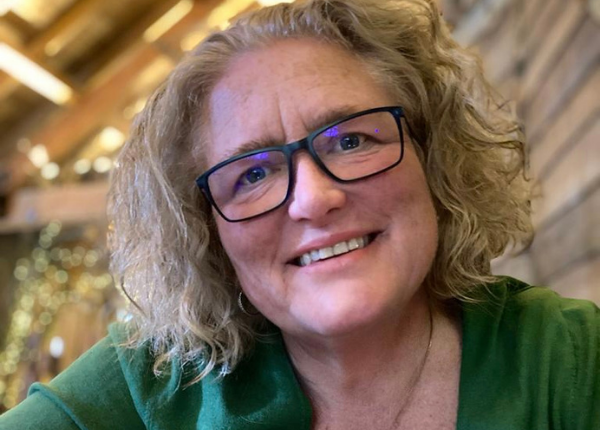
Every year, Children North East reaches thousands of babies, children, young people and families across the North East and beyond… Our ‘Week in the Life’ blog series shines a spotlight on some of the amazing people who help make that impact possible, from practitioners working in the heart of communities to teams behind the scenes keeping the lights on.
In this edition, we meet Julia Ruane, who joined us as a volunteer at the Cowgate Centre and last year took on the role of Family Support Worker. The work she does is wide-ranging, from delivering fun activities for the little ones to supporting families going through our specialist Domestic Abuse Recovery and Education programme (DARE). Let’s learn more…
What’s the first thing you’re doing on Monday morning?
The first thing I do is a run around of the centre. It’s a chance to catch up with everyone who’s in that day, get updates on their life and what’s happening… but also to tidy. When you have this many children coming through there is always a runaway puzzle piece or teddy and I like to find some order, even if it’s only for a moment. Then it’s getting started with emails and texts from the families I’m working with.
What does a typical day look like for you?
You have to plan but it never goes to plan! Some days I’ll be based in the centre supporting the families coming through, but often I’m focused on my casework.
I currently have two families I’m working closely with, who are faced with a number of challenges. The work is wide-ranging and you really have to respond to things as they come up. One day I might be supporting someone with limited English (after living away so long l seem to find it easy to communicate with people from different cultures and languages) to apply for a passport, sometimes it might be going with them to a meeting with the school or job centre or social services to ensure they’re supported through processes.
In the school holidays, my attention is on the DARE programme, working intensively with young people who have experienced domestic abuse. I work with the teens specifically, delivering sessions on subjects like feeling safe and managing negative emotions, but my main focus is getting them to open up about what they’ve experienced so they can start processing the trauma.
What most excites you about your role as a Family Support Worker?
That’s easy. When something clicks with support and you get to see families smiling and opening up. When you see the children smile, it means the world. Also, sometimes I can sense I’m the right person for a family, you find a way to communicate really well and often I get the impression they haven’t had that before from family services. Someone texted me the other day saying “Thank you for letting me be me”. I can’t explain what a fabulous feeling that was. I feel lucky to be able to help.
What did you do before you Children North East?
Where do I start? I was supposed to have retired ten years ago! I’ve had a life full of adventures. I lived in the Middle East for a long time when I was younger. I was a parent and worked different jobs. It was a great life. I’d always find myself in unexpected but interesting situations… I once ended up having dinner with Patrick Swayze!
I’ve also always had something going on to help people in my community. When I lived in an area with a lot of abandoned dogs it was rehoming them. Then there was a period where I was connecting young people and families to free furniture when they were in need. I can’t leave a problem alone if I see an opportunity to help!
What do enjoy outside of work?
Spending time with the family is always number one. When we can find the time in everyone’s busy lives, we come together to have a Sunday Lunch… those are the best moments. I also love meeting up with the girls I grew up with and travelling – but to faraway places, for example, I recently went to Japan. For my 50th I did Chicago with the girls, THAT was a good time!
Learn more about Julia’s work in our DARE Programme case study, which shares information about what happens on the DARE programme and insight from some of the team who deliver it (including Julia!).
18th May 2026
30th April 2026
How Little Minds in Mind Helped One Mum Feel Like Herself Again
16th April 2026
Masquer‑Aid: Building Confidence, Community and Self‑Advocacy
1st April 2026

It’s Easter half-term at Cowgate Centre, a space usually filled with the comings and goings of babies, children and their families. Today is much calmer though; the centre is unusually quiet with term-time activities on pause. It is in this peaceful space the DARE programme is delivered.
DARE stands for Domestic Abuse Recovery and Education. Every school holiday (apart from Christmas), Children North East deliver this unique programme, supporting children and young people who have experienced or observed domestic abuse.
“The connection the children make with each other is incredibly important. They see they are not alone, there can be support and understanding from people within their age group.”
Those who have experienced domestic abuse are not alone. Children’s charity Barnardo’s estimates that 800,000 in the UK are impacted by domestic abuse [1], thought to be the tip of the iceberg. The Domestic Abuse Act 2021, recognised for the first time in UK law, that children under the age of 18 years who observe abuse and its effects, are essentially victims themselves.
“The whole programme is about giving children a voice about the things that have happened to them and witnessed,” shares Kwanele Bhebhe, Domestic Abuse Coordinator at Children North East and one of the DARE delivery team.
“Children are given a safe space to process trauma and confusion from past experiences. They should leave understanding that this shouldn’t happen to them again and know what to do if it does.”
Parents and children attend together, working in groups organised by age but coming together regularly to check-in and share. The groups take part in different sessions that are both reflective and practical. For example, one session explores what it means to feel safe and also has the young people create a safety plan for what to do if they feel in danger.
Along with processing difficult experiences, it can provide an opportunity to rebuild family relationships. Each day everyone on the programme has lunch together.
When asked what her experience of delivering the programme has been, Family Coordinator Nicola Newman shares, “It’s really powerful when you feel you have been able to support a family to communicate and have those challenging conversations about how they experienced the abuse. Giving a young person a voice can also help adults keep them safe in the future.”
Kwanele adds, “One thing we often find is that parents who are victims of abuse recognise that their sense of what a normal relationship looks like has been changed by the previously abusive relationship. They want to ‘reset’ that view – to protect their children and promote an understanding of healthy relationships to them. The DARE programme can support them to work towards that goal and speak honestly to their child about it.”
The DARE team have a wide range of experience and resources to draw on in their support, coming from a range of therapeutic and social work backgrounds, allowing them to provide support tailored to the specific needs of the families they are working with.
Julia Ruane, Family Support Worker shares, “The connection the children make with each other is incredibly important. They see they are not alone, there can be support and understanding from people within their age group.”
“When you see a child finally start to let their walls down and engage more when they break a smile… that’s what keeps me doing this work.”
Kwanele adds, “That often happens after they recognise they have been hurt and their parent recognises they have been hurt. That moment is important because it represents a step towards a better, more protected future.”
Learn more about the DARE programme and if it could support your family, or someone you know, on the Children North East website.
If you are in immediate danger as a result of domestic abuse, call 999.
National Domestic Abuse Helpline: 0808 2000 247
If you urgently need to talk to someone about domestic abuse, including support to stay safe, the National Domestic Abuse Helpline is open 24 hours a day. It is a free, confidential service which won’t appear on phone records and can provide interpreters if required.
[1] https://www.barnardos.org.uk/domestic-abuse
18th May 2026
30th April 2026
How Little Minds in Mind Helped One Mum Feel Like Herself Again
16th April 2026
Masquer‑Aid: Building Confidence, Community and Self‑Advocacy
1st April 2026

We’ve joined forces with Streetwise to launch a significant new package of sexual health services across Newcastle championing the health and wellbeing of young people.
Thanks to funding from Newcastle City Council, we will deliver a wide range of services supporting young people with their sexual health, with a focus on healthcare, wellbeing and healthy relationships.
Aiming to reach over 4,000 young people each year for the next three years, traditional services focused on physical health, such as access to contraception and STI checks, will be combined with free confidential advice and support on challenges such as Period Poverty, respect and consent, and staying safe.
The funding is also enabling the us to work with communities on the things that matter most to them, such as hosting sessions for LGBTQ+ young people or those living with a disability. An ‘On the Go’ mobile service will also be on hand throughout the years for booking by any organisation working with young people who could benefit.
Together, the partnership has have over 30 years’ experience delivering sexual health services across the region and work with tens of thousands of young people each year through their wider services, which include youth groups, counselling and domestic abuse support.
Leigh Elliott, Chief Executive, at Children North East, comments, “This funding will make a difference to thousands of young people. Access to free, non-judgemental sexual health services is important for empowering them to stay safe and make informed decisions about their physical and mental health when it comes to relationships. We are very excited to partner with Streetwise who have been doing great work in this space for many years.”
Mandy Coppin, CEO at Streetwise comments, “Following on from two years of lockdown we are extremely excited to be relaunching our sexual health service delivery across the city, providing accessible and welcoming relationship and sexual health support, advice and information 5 days per week, working in partnership with Children North East and NHS New Croft Centre”
18th May 2026
30th April 2026
How Little Minds in Mind Helped One Mum Feel Like Herself Again
16th April 2026
Masquer‑Aid: Building Confidence, Community and Self‑Advocacy
1st April 2026