

18th May 2026

Young people from across our community had a ROARing good time at a performance of Beauty and the Beast last month thanks to the Sunderland Empire inviting a forty strong group to ‘Be Our Guest’ and enjoy a visit to the theatre.
As the possibility of a storm teased outside, inside our Graingerville Youth Services building the excitement was also rising. Transport was checked and princess themed clothing was donned (including Belle socks in the case of our Project Coordinator Teresa).
Josef, one of the young people who joined, shared his experience. He commented, “It felt really special because I have only been once before and it was a long time ago. One day I want to dance on the stage with them”.
For many, the trip offered a moment of fun and celebration after the weight of lockdowns, for others a chance for a new experience.
“I enjoyed it, it made me feel happy. It was funny and made me laugh lots. I would like to go again, it was my first time. I had never been to the theatre before”, commented Marketa. Another young attendee shared, “I have never been to a theatre show before. I hope I get to go again”.
But what about the show? Feedback included, “This show was amazing. It’s the best thing I have ever seen in my life!”, “I loved listening to the music and the orchestra they were amazing”, and, saying what we were all thinking, “They did crazy backflips in the show. I wish I could do that!”.
Children North East are grateful for the generosity of the Sunderland Empire for making this trip possible and giving us the chance to share a different experience with the young people we work with. As one of the attendees shared, “The Sunderland Empire was warming and welcoming”. We couldn’t agree more…
P.S. We’ve hidden the name of three Beauty and the Beast songs in this story, can you find them?
18th May 2026

30th April 2026
How Little Minds in Mind Helped One Mum Feel Like Herself Again

16th April 2026
Masquer‑Aid: Building Confidence, Community and Self‑Advocacy

1st April 2026
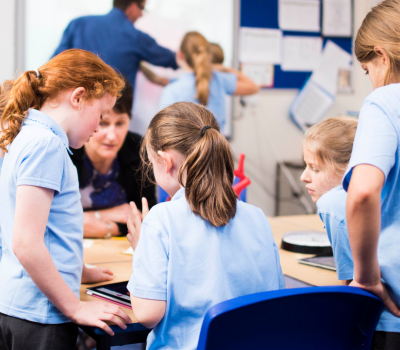
 Our Poverty Proofing team are proud to have joined forces with Child Poverty Action Group’s The Cost of the School Day and The Children’s Society to share some advice and guidance to schools on school uniform provision and the government’s new statutory guidance on making school uniforms more affordable for families.
The Government has published new statutory guidance on school uniform provision which seeks to make it more affordable for families. The guidance will include measures on second-hand uniforms, schools’ arrangements with suppliers and ensuring parents have access to clear information about uniform policies. Schools need to follow this guidance and make the changes before the new school year in September 2022
With some adjustments to policies and practices, schools can take the pressure of school uniform costs of children and their families.
“It should be a community thing… we all give back the ones we don’t need and the school could repair and wash them and give them back out… the children should all feel included and feel the same.” – Reception and Year 4 parent
If you’re a school, you can download copy of school uniform provision our tips and advice pdf via the links below:
Want to learn more about Poverty Proofing approaches? Read our Cost of the School Day: Pupils Perspectives Report
The UK Cost of the School Day project works with schools and local authorities in England, Scotland and Wales to ensure that all children, regardless of financial background, can take part and be happy at school.
The Cost of the School Day in England: Pupils’ Perspectives is a report focusing on our research so far in England. It highlights some of the positive work being carried out by schools to ensure that opportunities are affordable and inclusive, while also drawing attention to the multitude of ways that pupils from low-income families face exclusion and stigma.
18th May 2026
30th April 2026
How Little Minds in Mind Helped One Mum Feel Like Herself Again
16th April 2026
Masquer‑Aid: Building Confidence, Community and Self‑Advocacy
1st April 2026

Children North East are pleased to share the appointment of the new Head of Games, Ted. E. Bear.
The Head of Games role has been created to support the organisation to work towards our purpose, that all babies, children and young people are given the opportunity to grow up healthy and happy, in innovative and thoughtful new ways.
Ted will work with the CEO and the Families and Parenting leadership team to implement pioneering approaches to games, including:
– Increasing the portfolio of moves utilised in Boogie Bairn sessions so dancers can achieve the higher Boogie Woogie Accreditation
– Taking on the role of Giggles Ambassador, ensuring all opportunities for giggles generate maximum ROI
Ted brings a raft of experience to the role, having previously worked with respected games specialists Lego, Mary Poppins and Santa, the latter with whom he oversaw the launch of a new digital department during the 90’s tech boom.
Ted commented, “It’s great to be joining Children North East, an organisation that shares my ethos that games are for everyone, no matter what their background. I hope to bring the most fun, most giggly, most silly games to babies, children, young people and their families across the region and beyond.”
18th May 2026
30th April 2026
How Little Minds in Mind Helped One Mum Feel Like Herself Again
16th April 2026
Masquer‑Aid: Building Confidence, Community and Self‑Advocacy
1st April 2026
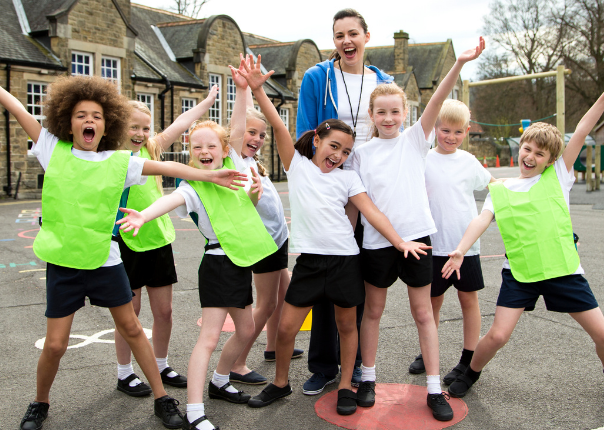
In the week when our report, The Cost of Having Fun at School was published in partnership with Child Poverty Action Group, Francesca Hogg, Poverty Proofing Practice Advisor at Children North East gives her insight on schools can deliver fun without financial burden.
We often see social media strewn with joyous pictures of pupils adorning their World Book Day costumes, their scary Halloween outfits or their festive Christmas jumpers.
But have you ever thought about the costs and resources required for these fun events, and the worry they can cause children and their families?
My role as Poverty Proofing Practice Adviser gives me an understanding of the common themes across the Poverty Proofing the School Day and UK Cost of the School Day projects. One of the things children and their families tell us time and again is that fun events at school can be a barrier to fully participating in school life.
While schools aim to provide enriching experiences through activities like charity days, dress-up days and cultural celebrations, these can be a source of anxiety and financial pressure. They can also be stigmatising for children who have no choice but to wear their school uniform while watching their peers compare outfits with one another.
“It’s about adopting a different point of view – one that includes all the children in your school.”
Asking for the odd charity donation here and there may not seem like much, but the requests mount up over the year with non-uniform days, charity merchandise, food for Christmas parties and Eid celebrations, costumes for Nativity plays, spending money for the school disco, and on and on. That’s before we even consider other school costs families have to meet for uniforms, trips and resources.
The young people we have spoken to have reflected on some of the costs of fun events, with many telling us they didn’t think they were always worth it:
“I maybe spent about £200 on stuff for prom. It wasn’t worth it for the event because it wasn’t that great.” (Pupil, age 16)
It’s clear from our research with young people and families that we need to consider how to mark special occasions differently, ensuring students enjoy them without burdening families with expenses. From my experience, I know that young people have lots of creative solutions, so I’d urge schools to consult with their pupils on how to make their fun events more inclusive.
Our Cost of Having Fun at School report has practical recommendations, showing that it’s possible to include these events in the school year in a way that makes no child feel left out or different. Schools don’t need to make costly or drastic changes: it’s about adopting a different point of view – one that includes all the children in your school, regardless of their financial background.
It’s time to start listening to the voices and experiences of children and young people and putting them at the heart of our policies and practices, so all children can experience the joy school can bring.
18th May 2026
30th April 2026
How Little Minds in Mind Helped One Mum Feel Like Herself Again
16th April 2026
Masquer‑Aid: Building Confidence, Community and Self‑Advocacy
1st April 2026

For many children, events, celebrations and special activities are some of the things they remember most about their time at school. We know that many pupils look forward to these activities and gain a lot from them, and that’s why they are an important part of the school year. However, for some children, these days and events draw attention to their families’ financial circumstances, and are a frequent and unwelcome reminder that, unlike their peers, they are not able to join in with all the opportunities school has to offer.
The Cost of Having Fun at School captures the experiences of pupils and parents with school fun. The quotes and experiences are taken from our work with schools across England, Scotland and Wales through our UK Cost of the School Day project, in partnership with Child Poverty Action Group. It highlights what we’ve heard from focus groups with over 8,000 pupils as well as the views of parents and carers.
The key findings in the report are:
We’ve also gathered ideas and suggestions from pupils and families about how events can be made more inclusive, and we’ve learned from good practice in schools. This paper highlights these insights and provides practical recommendations for schools, parent bodies and charities to ensure all children can make the most of the school day.
We’ve created an abridged version of this report for charities that are reflecting on their own approach to engaging pupils in their work and fundraising in schools.
18th May 2026
30th April 2026
How Little Minds in Mind Helped One Mum Feel Like Herself Again
16th April 2026
Masquer‑Aid: Building Confidence, Community and Self‑Advocacy
1st April 2026

We all know the cost of living is going up, and this is going to hardest hit those already living in poverty in the North East. Children North East is joining with partners across the country to ask the government to ensure the benefits system protects the poorest in our communities by introducing a benefits uplift in line with inflation.
The UK is facing the fastest rising cost of living in decades, and many of us are feeling the pinch, or noticing the increase in the cost of a weekly shop. Some of us might be cutting back on treats, not getting that takeaway, or considering cancelling Netflix to make our budget stretch further.
However, with 37% of children in the North East already growing up in families living below the poverty line[i], for many of us, those choices are much harder.
The removal of the £20 per week Universal Credit uplift in October means thousands of families have already had to shave a significant amount off their budgets, and now face yet another real-terms cut, with government’s proposed 3.1% uprating of benefits in April falling well below the actual inflation rate of 7%. This is the equivalent difference of families losing £570 per year in income[ii].
If all babies, children and young people are to be able to grow up happy and healthy, we need to ensure families can afford the basics so they are warm, well fed and have the chance to thrive. However, we know that already this is not the case:
In practice, this means babies living in cold homes because families cannot afford to heat their houses properly, leading to an increased risk of complications from respiratory illness[vii], and it means children have an inadequate diet, leading to obesity and oral health problems because of eating more low-cost, high-sugar food[viii]. If families cannot afford to meet their basic needs, their children’s health is at risk, and this increases pressure on our health system.
We see this impact in education too, as the experience of growing up in poverty impacts on children’s ability to engage fully with school and the opportunities on offer. Our recent joint report with Child Poverty Action Group[ix], which involved speaking to 4,500 pupils in primary and secondary schools in England, has highlighted children living in poverty experience exclusion and stigma because of poverty:
“You don’t know they will have a cost when you choose your GCSEs” (Year 10 pupil on cost of materials for Design and Technology courses)
“I don’t want to make my mum feel bad cos she can’t buy lots of stuff, so I don’t ask her” (Year 4 pupil)
“I beg my mum to get new things, but I know how stressed she is, then I get stressed” (Year 6 pupil)
In the light of this wealth of evidence, it is utterly unthinkable that the government would now consider hitting these same families with further real terms cut to their income, the second in 6 months. That is why Children North East is standing alongside a collective of organisations from across the country; including the Joseph Rowntree Foundation, Trussell Trust and Child Poverty Action Group to call for immediate action to ensure from April families get a fair settlement reflective of the reality of inflation.
You can support us by sharing this campaign on social media – watch out for our content over the coming days, which you can re-share. You can also write to your MP through the website www.writetothem.com your own message or using our handy template.
In these difficult times, we need to come together, and we need to hold our leaders to account to ensure that everyone is able to afford the basics, to ensure babies, children and young people are able to grow up happy and healthy.
[i] Facts & figures – North East Child Poverty Commission | Every child deserves an equal chance in life. (nechildpoverty.org.uk)
[ii] Nothing left to cut back: rising living costs and universal credit | CPAG
[iii] Rising energy bills to ‘devastate’ poorest families, adding to harmful legacy for millions of children sinking deeper into poverty | JRF
[iv] UK Poverty 2022: The essential guide to understanding poverty in the UK | JRF
[v] New data shows food insecurity major challenge to levelling up agenda | Food Foundation
[vi] Impact-Report-2021-final-web.pdf (trusselltrust.org)
[vii] the-health-impacts-of-cold-homes-and-fuel-poverty.pdf (instituteofhealthequity.org)
[viii] Reducing Social and Health Inequalities.pdf (bradford.gov.uk)
[ix] Cost of the School Day England: Pupil’s Perspectives (children-ne.org.uk)
18th May 2026
30th April 2026
How Little Minds in Mind Helped One Mum Feel Like Herself Again
16th April 2026
Masquer‑Aid: Building Confidence, Community and Self‑Advocacy
1st April 2026