

18th May 2026

For many children, events, celebrations and special activities are some of the things they remember most about their time at school. We know that many pupils look forward to these activities and gain a lot from them, and that’s why they are an important part of the school year. However, for some children, these days and events draw attention to their families’ financial circumstances, and are a frequent and unwelcome reminder that, unlike their peers, they are not able to join in with all the opportunities school has to offer.
The Cost of Having Fun at School captures the experiences of pupils and parents with school fun. The quotes and experiences are taken from our work with schools across England, Scotland and Wales through our UK Cost of the School Day project, in partnership with Child Poverty Action Group. It highlights what we’ve heard from focus groups with over 8,000 pupils as well as the views of parents and carers.
The key findings in the report are:
We’ve also gathered ideas and suggestions from pupils and families about how events can be made more inclusive, and we’ve learned from good practice in schools. This paper highlights these insights and provides practical recommendations for schools, parent bodies and charities to ensure all children can make the most of the school day.
We’ve created an abridged version of this report for charities that are reflecting on their own approach to engaging pupils in their work and fundraising in schools.
18th May 2026

30th April 2026
How Little Minds in Mind Helped One Mum Feel Like Herself Again

16th April 2026
Masquer‑Aid: Building Confidence, Community and Self‑Advocacy

1st April 2026

Pulling up to the third petrol station in six hours, Stephen Hannah and his cycling partner, Paul Hume, hoped that this time they would be able to find some shelter to go with their hot drinks.
As expert bike riders, they knew the 320-mile endurance challenge they had set themselves would throw some surprises at them, but not this.
Stephen, who is Head of Year 9 at Jarrow School, planned the cycle ride to recreate the infamous 1936 Jarrow March, hoping to both raise money for our charity, and awareness about the impact of poverty on young people.
Yet, what had been predicted as a quiet period between two red weather warnings, turned into an epic feat of endurance lasting over 24 hours.
“When we started at 4pm, we felt lucky to see such great conditions,” explains Stephen, “The sky was bright and clear, the wind was behind us and we were making great time.”
“Then over time, we found the nature threw everything it could at us. At 10pm we had to deal with two punctures, then as we got back into the ride the torrential rain came.”
It would be another two hours of riding in high winds, frozen rains and 1-degree temperatures until they found somewhere to grab a hot drink and short break. Another eight until they reached a Starbucks where they could sit back, dry their clothes and reflect on how to progress. At this point, they had covered over 160 miles and were halfway to their goal.
“A lot of people think that to get to the finish line of endurance challenges your ‘sportsmanship’ will motivate you to the finish line. In reality, it’s more your problem-solving skills that get you there and keep you safe.
“You have to stay level-headed and ask the important questions. When is the next safe end to the challenge? What can we fix now? If I get to breaking point, will I ever want to ride a bike again?”

In the end, the duo decided that reaching 24 hours was the perfect milestone to safely end the challenge, during which the pair totalled over 250 miles.
“The funny ending to our epic adventure was that one of my friends happened to be passing Wetherby Services where we had finished, so we were able to hitch a very quick lift!”
Stephen hopes that in addition to the £1,100 raised so far, his journey will share a positive message for the young people resonate with the young people he works with.
“I think there is a valuable lesson that might resonate with teenagers. There is a lot of pressure on young men in particular to “man up” and not appear to be vulnerable at all. We were experienced, we did everything right, but we still had to make the sensible decision to stay safe rather than be heroes. For example, I have a 10-month-old baby at home, I was choosing to be a good parent and partner by staying safe, not showing weakness.
“Cycling together we were stronger, but only if we admitted when things were difficult.”
Lucy, Stephen’s wife, said, “I am very proud of my husband Stephen and his impressive levels of resilience. He is always looking for ways to raise money for excellent causes and is passionate about the welfare of young people. He is not afraid to put himself out there by pushing himself to his limits. I truly admire his strength of character.”
Stephen chose Children North East because of they work they do across the region supporting young people impacted by poverty, the impact of which he sees often in his work.
“Right now 37% of children in the North East live in poverty. That can make a huge impact on their confidence, opportunities and daily experience. Children North East do great work with young people in schools and in their communities to change this.”
You can make a donation to Stephen’s fundraiser at www.justgiving.com/fundraising/pedalforcause and follow his Pedal for Cause Twitter (@pedalforcause) to stay in touch with future fundraising endurance challenges.
18th May 2026
30th April 2026
How Little Minds in Mind Helped One Mum Feel Like Herself Again
16th April 2026
Masquer‑Aid: Building Confidence, Community and Self‑Advocacy
1st April 2026

The UK Cost of the School Day project works with schools and local authorities in England, Scotland and Wales to ensure that all children, regardless of financial background, can take part and be happy at school.
The Cost of the School Day in England: Pupils’ Perspectives is a report focusing on our research so far in England. It highlights some of the positive work being carried out by schools to ensure that opportunities are affordable and inclusive, while also drawing attention to the multitude of ways that pupils from low-income families face exclusion and stigma.
We, along with our partners Child Poverty Action Group, hope that by listening to the issues identified by children and young people, readers of this report will take action to bring about greater equity of experience and opportunity within our education system.
Curriculum and learning: Pupils experiencing poverty in England are financially excluded from full participation in a wide range of school subjects and activities, including PE, music, swimming and art and design.
Stigma: Day-to-day practices in English schools often unintentionally draw attention to family incomes and make children feel embarrassed and different. These include expensive uniform policies, non-uniform days and requirements to bring in material possessions like pencil cases.
School fun: Families are borrowing money to pay for school activities like school trips, not wanting children to lose out on these valuable learning opportunities.
School food: Policies and practices relating to food in school often mean that children experiencing poverty don’t have the same options as their peers at lunchtime.
1. Provide adequate funding to schools to ensure all curriculum-related costs are removed for pupils and all children have the resources and tools they need to fully participate in school activities both at home and at school.
2. Provide local authorities with additional funding and a statutory responsibility to help families with school costs through targeted initiatives such as school clothing grants and subsidies for trips. Initiatives like this already exist in all other UK nations.
3. Provide universal free school meals to school-aged children in England so that all pupils have equitable access to food while at school.
4. Provide a statutory framework, strategy and additional ring-fenced funding so schools in England can provide programmes, activities and services that go beyond the core function of classroom education, such as breakfast and after-school clubs.
1. Plan all teaching, events and activities with affordability and accessibility in mind. Wherever possible, remove or minimise charging for school-related activities.
2. Explore and review current school costs. Take a holistic view of the school year and determine the cost of full participation in school life.
3. Ensure that all staff, including non-teaching staff, are aware of the nature, causes, extent and impact of poverty and how to reduce the stigma that children can face in school.
4. Provide meaningful opportunities for pupils and families to give feedback on their experience of school with a focus on school costs.
18th May 2026
30th April 2026
How Little Minds in Mind Helped One Mum Feel Like Herself Again
16th April 2026
Masquer‑Aid: Building Confidence, Community and Self‑Advocacy
1st April 2026

Could you cycle 320 miles? To put it into perspective, 320 miles is slightly longer than the length of the Grand Canyon (and that’s big!) or FOUR TIMES as long as Hadrian’s Wall. 320 miles is also the distance of the 1936 Jarrow March, which saw unemployed North East residents protest by walking from the South Shield’s town to Westminster, demanding new opportunities for work and a pathway out of the poverty they faced.
The Jarrow March has inspired Stephen Hannah, Head of Year Nine at Jarrow School, to recreate its route in an epic fundraising challenge for Children North East. Drawing a line between the power of a community to challenge poverty seen in 1936, and his experiences of the barriers faced by many young people from low-income families today, he will embark on a cycle ride from London to Jarrow at 4pm, 23rd February. Oh, and did we mention he is doing it all in one go?
In advance of his journey, we spoke to Stephen about what’s motivated him to take this ride of a lifetime…
Cycling 320 miles in one go is an epic adventure to take on! What made you choose this challenge?
I hope to show that with a lot of determination and resilience, you can achieve what you set out to do – just like the crusaders back in 1936. Working at Jarrow School gives me a special connection to the town, and I wanted to do something positive for the local community.
What is the significance of recreating the infamous Jarrow March for the challenge?
The Jarrow March of 1936 was an important historic event which is well remembered in the town. The plight of the crusaders resonates with the local people of Jarrow. During the Depression of the 1930s, many people in Jarrow suffered heavily and there was a high amount of unemployment. The people of Jarrow did not take this lightly, deciding to challenge the government by carrying out this march. Their determination showed the spirit of Jarrow that still exists today. My journey is a mark of respect for those who carried out this march, whilst trying to raise awareness and money for people in the North East who still may be affected by hardships similar to those back in 1936.
We are incredibly grateful you have chosen to fundraise on behalf of Children North East, what made you choose our charity?
Currently, there are 11 in a classroom of 30 are growing up in poverty in our region and Children North East are working very hard to decrease this number. Working with both children and their families, knowing the specific intervention being implemented specifically in our region is just one of the reasons why I chose Children North East. Working in a school I get to see first hand what a small level of intervention can do in supporting our young people.
How have you prepared for the ride?
I have ensured key training sessions have remained consistent in my routine each week, alongside a lot of planning and logistics for the challenge. I am very lucky to have an amazing wife who helps with this routine, without it impacting too much on our young family, as a new Father. This is something that will most definitely help keep my mind strong during the challenge.
Planning both the route and equipment takes a lot of time, especially to get the balance of carrying enough food, water and equipment. The route has also taken a lot of attention as we will be passing a lot of cities and riding at both peak times and through the night.
Although this is the longest challenge I will have done (hoping to do) I have taken on a number of endurance challenges previously, which helps give an understanding of what is required of both body and mind.
How will you keep yourself motivated?
Most people ask how I keep myself motivated and just simply knowing the purpose of the ride and significant impact it could have in raising awareness of Children North East is more than enough. However, I am breaking this challenge down into smaller chunks which will hopefully be more manageable mentally. For example, I have set each 100mile as a target so I gain that sense of achievement throughout, knowing I am a third of the way through each time. During these check point I will be speaking with my family which will help keep me motivated to get home quicker.
What do enjoy about working with young people?
It is difficult to sum up the reasons why I enjoy working with young people, as this could be a very long answer. Ultimately, working each day to ensure our young people are presented with as many options and possibilities in life as possible. One main area I try to focus on each day is being a consistent figure for the young people I work with, helping them gain a positive mindset and morals as they leave school.
In your experience, what challenges do you think young people of today face?
Our young people are some of the most resilient individuals which I have ever met. Continually facing challenges from friends, family and society, there are a lot of young people feeling very overwhelmed looking into their future. Due to a number of different factors, resulting in families facing a lot of poverty and deprevation in our region, our young people are having to grow up far too early. This results in the stress of the family household being picked up by the young people and are missing out on life as a youngster
How can people support you on your challenge?
Helping spread the amazing work of Children North East, and any donations would be amazing. No matter how big or small. Throughout the event we will be giving live updates through Twitter ( @pedalforcause and @childrenNE). A follow and share through these channels would be greatly appreciated. Donations can be made by following the donation link at www.pedalforcause.co.uk.
18th May 2026
30th April 2026
How Little Minds in Mind Helped One Mum Feel Like Herself Again
16th April 2026
Masquer‑Aid: Building Confidence, Community and Self‑Advocacy
1st April 2026

Children North East are part of a coalition of organisations committed to tackling the effects of poverty and inequality on children and young people urging the Government to ensure a new National Food Strategy ‘levels up’ free school meals for thousands of pupils across the North East.
We have joined forces with the North East Child Poverty Commission (NECPC), Schools North East and Child Poverty Action Group (CPAG) to warn Ministers that – despite pledges to level up all parts of the country – the current free school meals system is leaving children in England ‘well behind’ their counterparts in the rest of the UK.
Writing to the Secretaries of State for Education and for the Environment, we have called on the Government to seize the opportunity of a forthcoming Food Strategy White Paper to ‘put the inadequacies of the free school meals system in England right’.
Our joint letter – copied to all North East MPs – highlights the findings of The Cost of Missing Lunchtime: A briefing on free school meals in the North East, which was published last year by NECPC, Children North East and CPAG. This analysis estimated that:
In 2013 the Government introduced a temporary measure, making all families in receipt of Universal Credit eligible for free school meals. This was designed to protect families from losing out on entitlements during the initial stages of the roll-out. However, since 1st April 2018 families have had to have an income of less than £7,400 before benefits to be eligible.
Amanda Bailey, NECPC Director, explains: “Whilst our region has the highest proportion of pupils eligible for free school meals, our research makes clear that there are still many thousands of North East children and young people living in poverty who do not qualify for this vital support because the current threshold is simply far too low. ‘It’s not right that they are missing out on support to receive a hot, balanced meal each day with all the many proven benefits of this”.
We are therefore urging the Government to ensure that the new National Food Strategy, expected in the Spring:
Leigh Elliott, Chief Executive at Children North East, say: “At a time when child poverty is rising alongside soaring living costs – and growing numbers of families are struggling to make ends meet – expanding the reach of free school meals would make a massive difference to tens of thousands of pupils in the North East, and many more across the rest of England. ‘This would be a really tangible and effective way of supporting low-income families – the majority of whom are in work – whilst benefiting their children’s health and education”.
Chris Zarraga, Director of Schools North East, adds: “As well as extending the reach of free school meals, the Government must make better use of the data it has to automatically enrol all pupils eligible for this support. At the moment, schools across our region are missing out on millions of pounds of vital pupil premium funding, despite the huge efforts they – and local councils – make to register eligible pupils. A bit of joinedup thinking across Government would avoid this unnecessary use of valuable resources and reap huge benefits for schools and families across the North East”.
Sara Ogilvie, CPAG’s Director of policy, rights and advocacy, also comments: “The Government has committed to level up all parts of the country, but the reality is that children and families in England are being left well behind their counterparts in the rest of the UK with universal free school meals being rolled out in primary schools in Wales and Scotland and a free school meals review underway in Northern Ireland. The current free school meals system in England is clearly inadequate, but the new National Food Strategy provides the Government with a really important opportunity to put this right. They must seize it.”
A copy of the letter:


Notes: 1. A copy of the joint letter from the North East Child Poverty Commission, Children North East, Schools North East and CPAG to the Secretary of State for Education and Secretary of State for the Environment, Food and Rural Affairs is attached. 2. In May 2021, the North East Child Poverty Commission, Children North East and CPAG jointly published The Cost of Missing Lunchtime: A briefing on free school meals in the North East. They have subsequently worked with Schools North East to share the findings of this work, which was based on October 2020 school census data. 3. In July 2021, Henry Dimbleby published his final recommendations for a National Food Strategy following an independent review undertaken at the Government’s request. The Government has committed to publish a formal response in the form of a White Paper, which is expected in Spring 2022.
18th May 2026
30th April 2026
How Little Minds in Mind Helped One Mum Feel Like Herself Again
16th April 2026
Masquer‑Aid: Building Confidence, Community and Self‑Advocacy
1st April 2026
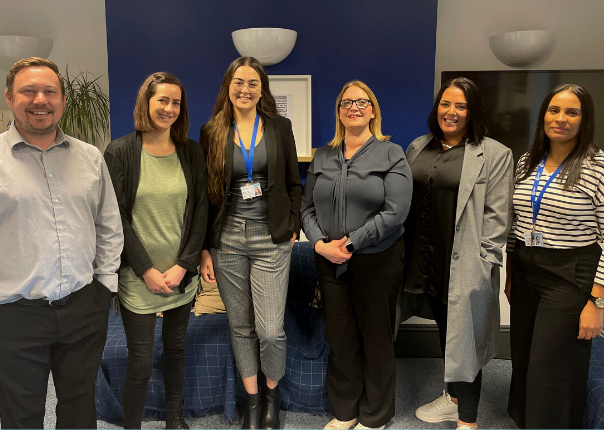
The new year is often thought of as a time of change: a time for new habits, new projects, new goals.
For 2022, our Youth Services and Poverty Proofing Team is embracing change, with a newly structured management team in place that pairs familiar faces with exciting additions.
Under the leadership of Head of Service Luke Bramhall and Deputy Head of Service Rachel Leslie, the five-strong management team will develop and grow our existing provision for young people across the North East in new and innovative ways, pursue the continued impact of Poverty Proofing the School Day and expand the Poverty Proofing offer into other sectors with need.
In this article, we meet the team and learn about their plans for the year ahead…
Leading the Poverty Proofing the School Day Team, Lorna has spent four years on the frontline of Children North East’s work challenging the barriers and stigma students from low-income backgrounds experience within their education. She brings diverse experience of working in schools as a Primary Teacher, School Governor and Senior Leader.
What will you and your team be up to in 2022?
With child poverty deepening our work has never been more relevant, nor more in demand. We continue to work with schools and organisations throughout the North East and the rest of the UK in order to identify and eradicate barriers to learning, participation and engagement. In addition to individual schools, we are working closely with delivery partners and connecting to broader issues such as public health outcomes. We are also heavily involved in Child Poverty Action Group’s Cost of the School Day project and informing national debate on issues such as Free School Meals, uniforms and access to learning.
What are you most excited about in the next year?
We have a great opportunity to extend our work further to ensure the best possible outcomes for children. Our team, one of whom is based in the West Midlands, is dynamic, knowledgeable, and passionate about social justice, and this will only push the work forward with increasing momentum. We have created a new ‘mini-audit’ for schools that have already been Poverty Proofed and workshops to raise awareness in children. We will also be focusing on highlighting the impact of our work via our new and improved website – watch this space!
Working on youth-focused projects within Children North East for nearly nine years, Naomi oversees our range of projects supporting young people from 11 to 25 years old. In the past, her successes include delivering and developing our mentoring projects and establishing groups, such as the FAB Group for young people with SEND.
What will you and your team be up to in 2022?
The Youth Team will continue to provide excellent work and intervention for young people aged 11 to 25 years. We are looking to develop some new and exciting projects, regenerate the allotment to make this a more usable space for Young People’s Services as a whole. In addition, I want to develop upon our existing offer to continue to have a positive impact for young people accessing the service.
What are you most excited about in the next year?
I am really excited to implement some innovative ways of working with young people, to ensure our offer is diverse, accessible and provides a good variation to young people. It is really exciting to go into the New Year with some great ideas and opportunities which will enable us to continue supporting young people in the best way possible.
What motivates you?
For me, being able to make an impact and a positive difference within young people’s lives is what motivates me, that is ultimately why we do what we do. Having seen this first-hand in my previous role at Children North East and now within my role as Youth Team Manager supporting a great staff team to deliver vital work provides reward and continued motivation.
Sarah first worked with Children North East in 2015, coordinating our Youth Link peer mentoring project. In her new role as Participation Team Manager, she oversees the delivery of our participation focused interventions and consultations, which currently include the North of Tyne Poverty Truth Commission, SEND consultation and the Child Health and Wellbeing Network Youth Advisory Board.
What will you and your team be up to in 2022?
2022 is going to be a year of growth and development. We can’t wait to work collaboratively with the four other teams contributing to the wider Children North East strategy.
What are you most excited about in the next year?
The diversity of the work we are delivering and further opportunities to lift the voices of children and young people.
What motivates you?
I am motivated by people. Listening to the lived experiences of children, young people and adults living in the North East, and utilising their knowledge and insight to inform positive change. Equally, I am always in awe of the professionals we meet and work with on a daily basis, both within Children North East and through external agencies.
We are in a privileged position where we have an abundance of opportunities to communicate and network with the most passionate, dedicated, creative and diverse people here in our region and beyond. I believe through participation, consultation and collaborative working we can continue the fabulous work that has been happening up to now and beyond. I can’t wait to see further exciting opportunities develop and grow over the next year.
Leaving her role as Head of Personal Development Coaching at Newcastle Sixth Form to join us in June, Saffia is responsible for supporting the growth and development of Youth Services and Poverty Proofing and Neurodiversity work, including developing our Poverty Proofing offer for Health and Cultural settings and spearheading new projects.
What will you and your team be up to in 2022?
Our wonderful Development Team will be continuing to coordinate and run our neurodiversity groups and 1:1 support, and we’ll be Poverty Proofing a number of health, culture, leisure and services from the North East to the West Midlands.
What are you most excited about in the next year?
I’m most excited to see how our team will work together to share knowledge and expertise for the benefit of the wider organisation and absorbing the worldview of Warwickshire!
What motivates you?
My amazing team, and the passion and dedication they demonstrate in raising awareness of poverty, inequality, and making a difference to young people who experience neurodiversity.
Adele recently joined Children’s North East with a background in policy writing and project management within government. She works alongside an experienced team of counsellors to provide support for children and young people across the region. In her new role, Adele oversees the delivery of counselling services for young people aged 9 to 25 under a number of programmes such as Support for Victims of Crime and NHS Mental Health Provision.
What will you and your team be up to in 2022?
As demand for our service continues to increase, the team will be working to provide a consistent high level of support and counselling to the children and young people across the region. We will be looking to grow and develop our service. This year will see the launch of an innovative counselling project utilising Minecraft that I will be helping to develop.
What are you most excited about in the next year?
I’m most excited about working with our dedicated team of experienced counsellors to strengthen our offer and widen our reach across the region. Together we will be looking to make stronger links with schools and community venues, making our service even more accessible.
What motivates you?
Knowing that as a team we are all striving to offer a high-quality service that gives true value to the young people across the region. On a personal level seeing first-hand the impact that our services can have on young people’s mental health and wellbeing has been really rewarding. I’m motivated knowing that our team can in some way make a positive difference to young people’s lives.
Picture left to right: Luke Bramhall, Naomi Hope, Saffia Solomon, Rachel Leslie, Sarah Robson, Adele Wimshurst
18th May 2026
30th April 2026
How Little Minds in Mind Helped One Mum Feel Like Herself Again
16th April 2026
Masquer‑Aid: Building Confidence, Community and Self‑Advocacy
1st April 2026