



18th May 2026

Swimming is a life skill, but despite the government backing swimming lessons for all, the reality is many children leave school not meeting the benchmark for competent swimming. In our latest blog, Ellie Liddle, Poverty Proofing Co-Ordinator, explores the barriers some families can face accessing adequate swimming services. Prior to joining the team in November, Ellie was Head of Design & Technology in Secondary Education and boasts 16 years of experience as a teacher. She has a passion for swimming, starting her career in a Saturday job as Pool Lifeguard and, more recently, taking part in the 2019 two-mile open water Great North Swim in Lake Windermere.
Since 1994, swimming and water safety have been a statutory part of the National Curriculum for Physical Education in England. All primary schools must provide swimming and water safety lessons in either Key Stage One or Two. This means every child leaving primary school should be able to swim a distance of at least 25 meters confidently and competently as well as having the knowledge and skills to perform safe self-rescue in different types of water based circumstances.
Swimming is a low impact cardio workout. It helps to develop strong bones and muscles, as well as encouraging flexibility and coordination. Swimming enables children to burn off excess energy and fat. This can help them to sleep, which in turn can help them being more ready for their school day and aid with their learning¹.
Swimming is not only a life skill for children but it can also help them to develop skills such as perseverance as it encourages them to keep working at something until they succeed, providing them with a sense of accomplishment which helps to build self-confidence².
Statistics previously published by Swim England show that swimming helps to save the health services money every year as it can reduce stress, relieve tension and can help to prevent and treat a number of physical and mental health conditions. With the rising concerns of poor mental health in children and young people as well as rising obesity levels in children it would be acceptable to think that swimming is an excellent form of exercise that is accessible to everyone. Sadly, this is not the case.
With council cuts over the past years, many pools have closed or have been sold to private companies who have increased the costs of swimming. Many parents say that they don’t take their children swimming due to the cost, they don’t have time to teach them or that they aren’t confident in water themselves.
According to research into ‘swimming and water safety in schools’ by Swim England, almost one in four children cannot swim the required 25 meters when they leave primary school and it is thought that by 2025-2026 this figure will rise to three in five pupils. The ability to swim this distance is affected by both family location and affluence. Children and young people from more affluent backgrounds have a much greater chance at being active as they are more likely to be able to afford physical activities and therefore have more access to sport opportunities. Only 45% of children and young people going to school in the most deprived areas of the country can swim 25 meters compared to 76% in the least deprived areas. 25% of Year 6 children are unable to swim 25 meters unaided. In low-income families this rises to nearly 50%.
The Covid Pandemic has obviously played its part in this with pools being closed for much of 2020, but many schools say that these statistics are due to a lack of funding within education; the costs involved with swimming are too high. All schools receive a Sports Premium payment from the government to improve the quality and access of Physical Education, but this has to be used for all areas of PE and across all year groups meaning that often there isn’t enough left for swimming. Schools also have to pay for the hire of the pool, the swimming instructors, (a class of 30 children would need 2 or 3 instructors depending on the level of ability of the children) and at least one pool life guard. Due to location most schools have to hire transport to take their pupils to and from their lessons.
Many parents say that they don’t take their children swimming due to the cost
In our Poverty Proofing® the School Day work we often see that schools ask families for a voluntary contribution to help to fund swimming lessons but this something that many families understandably struggle with, but without this contribution schools simply wouldn’t be able to afford to take their pupils swimming. An added expenditure for families is the cost of swimming costumes, towels and swimming accessories like goggles and swimming hats. Many families, especially those who live in poverty will not have this equipment as access to swimming outside of school isn’t an affordable activity.
We have even heard of some schools hiring a ‘Pop Up Pool’ in which a temporary heated swimming pool and marquee is set up on the school site and is supplied with a swimming teacher, lifeguard and safety equipment. In this way the whole school can benefit from several lessons over a set period of time.
It is a scary reality that drowning is one of the most common causes of accidental death in the UK and is the third highest cause of death in children in this country. School might be the only time that some children get the chance to go swimming and learn these vital lifesaving skills.³
Is it not time that ALL children get the support they need to help them learn to swim?
18th May 2026

30th April 2026
How Little Minds in Mind Helped One Mum Feel Like Herself Again

16th April 2026
Masquer‑Aid: Building Confidence, Community and Self‑Advocacy

1st April 2026


Today is Time to Talk Day, the UK’s biggest mental health conversation!
Did you know that one in four of us will experience a mental health problem in any given year?
Here at Children North East, we believe in the importance of speaking up and reaching out when it comes to looking after your mental health. We share the values of the Time to Talk movement that open conversation can reduce stigma, create supportive communities and empower people to seek support.
To mark Time to Talk Day, we’re highlighting some of the support available through Children North East where a conversation about mental health can be life-changing…
Little Minds in Mind
Becoming a parent or caregiver is often thought of as one of the happiest experiences of our lives. However, we know the reality can be much more complicated, even overwhelming. Little Minds in Mind (previously NEWPIP) is a service for parents and caregivers who are experiencing difficulties in their relationship with their baby, during pregnancy or after their baby is born.
Cara Sydney accessed the service when she found herself battling depression just after her baby was born. She explains her experience of that first conversation asking for help, “I remember feeling worried and thinking, ‘What if they think I’m a bad mam?’ But actually, me seeking help meant the opposite, it showed I wanted to be the best mam I could be.” You can read her full story on our website.
Learn more about our Little Minds in Mind programme, or hear more about how the service has worked with new parents and caregivers overcoming challenges in this Mental Health Week case study.
BU
Our BU programme is delivered in schools. It’s there to provide a safe space for children and young people facing struggling to manage their emotions or facing difficulties with confidence, self-esteem or friendships. The programme explores self-care, relationships and managing negative feelings.
In the story of one participant, Abbie, small steps such as sharing how she was feeling through drawing and hearing the message of ‘it’s OK not to feel OK’ helped her grow the confidence to seek support from her school councillor. Her story shows that the big conversations are made possible by the small ones… making Time to Talk today can help people when it really matters. You can read her full story on our website.
Learn more about our BU programme and other mental health support within schools.

Melva
MELVA is a fun and accessible creative intervention, supporting children and the adults in their lives to talk openly about – and better understand – their mental health, emotions and wellbeing.
Available as a game, play and film to schools and families, it follows the exciting story of adventurer Melva Mapletree, sharing tips and techniques for managing negative thoughts and feelings along the way.
There is a lot that makes Melva special, but if we’re talking mental health, we need to mention “worrits”, the name for worries in the MELVA world. If worries belong to adults, “worrits” belong to children and give them a way to start a conversation about mental health in their own language… something less scary than using the other “W” word.
One young participant explains, “I learned that you should listen to people and don’t be scared to share your feelings and worrits.”
Learn more about Melva via its website or read our case study about our experience of partnering with the innovative intervention in our blog, Melva: The hero every child needs.

Sexual Health Support
The Sexual Health services team create safe, confidential spaces in which to explore the emotional side of sexual health alongside traditional physical health support, tackling themes as broad as healthy relationships, protecting your mental health, pornography and sexual exploitation.
The team are on hand to help young people pursue safe choices as they encounter new emotional experiences, from STI and pregnancy testing, helping them choose the right contraception, and supporting decision-making during pregnancy. One young person explains, “She [the sexual health team member] explained really well, gave us time to ask questions and was very nice to me and my boyfriend”.
Learn more about our Sexual Health services or explore their impact in our case study.
Counselling for young victims of crime
Did you know young people are disproportionately likely to be victims of crime? Often this experience can impact their mental health, incurring anger, denial or depression. Sometimes they may not even know they have been victimised. This impact can make it an incredibly difficult experience to speak about.
We offer a special counselling service for 11 to 25 year olds who have been a victim of crime, covering areas as diverse as domestic abuse, sexual violence or hate crime.
If you think this support could help you, we hope the experience of one young person might encourage you to reach out… “In all honesty, you have moved me both emotionally and mentally from such a dark frightening place to a much happier stable place.”
Learn more about our counselling support for young victims of crime.
Time to Talk is a national campaign run by Mind and Rethink Mental Health, both organisations have great mental health-related advice, information and support resources available on their websites.
If you are experiencing a mental health crisis or emergency, you can get immediate support from the NSH Mental Health helpline on 0800 652 2861. Or, if you would like to speak to someone confidentially, call 116 123 to talk to Samaritans, or email: [email protected] for a reply within 24 hours.
18th May 2026
30th April 2026
How Little Minds in Mind Helped One Mum Feel Like Herself Again
16th April 2026
Masquer‑Aid: Building Confidence, Community and Self‑Advocacy
1st April 2026
The new year is often thought of as a time of change: a time for new habits, new projects, new goals.
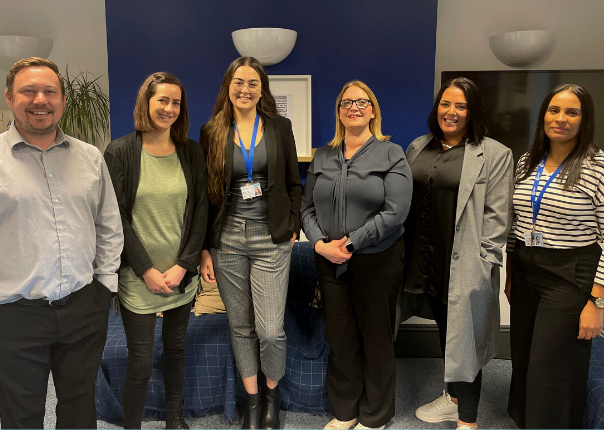
For 2022, our Youth Services and Poverty Proofing Team is embracing change, with a newly structured management team in place that pairs familiar faces with exciting additions.
Under the leadership of Head of Service Luke Bramhall and Deputy Head of Service Rachel Leslie, the five-strong management team will develop and grow our existing provision for young people across the North East in new and innovative ways, pursue the continued impact of Poverty Proofing the School Day and expand the Poverty Proofing offer into other sectors with need.
In this article, we meet the team and learn about their plans for the year ahead…
Leading the Poverty Proofing the School Day Team, Lorna has spent four years on the frontline of Children North East’s work challenging the barriers and stigma students from low-income backgrounds experience within their education. She brings diverse experience of working in schools as a Primary Teacher, School Governor and Senior Leader.
What will you and your team be up to in 2022?
With child poverty deepening our work has never been more relevant, nor more in demand. We continue to work with schools and organisations throughout the North East and the rest of the UK in order to identify and eradicate barriers to learning, participation and engagement. In addition to individual schools, we are working closely with delivery partners and connecting to broader issues such as public health outcomes. We are also heavily involved in Child Poverty Action Group’s Cost of the School Day project and informing national debate on issues such as Free School Meals, uniforms and access to learning.
What are you most excited about in the next year?
We have a great opportunity to extend our work further to ensure the best possible outcomes for children. Our team, one of whom is based in the West Midlands, is dynamic, knowledgeable, and passionate about social justice, and this will only push the work forward with increasing momentum. We have created a new ‘mini-audit’ for schools that have already been Poverty Proofed and workshops to raise awareness in children. We will also be focusing on highlighting the impact of our work via our new and improved website – watch this space!
Working on youth-focused projects within Children North East for nearly nine years, Naomi oversees our range of projects supporting young people from 11 to 25 years old. In the past, her successes include delivering and developing our mentoring projects and establishing groups, such as the FAB Group for young people with SEND.
What will you and your team be up to in 2022?
The Youth Team will continue to provide excellent work and intervention for young people aged 11 to 25 years. We are looking to develop some new and exciting projects, regenerate the allotment to make this a more usable space for Young People’s Services as a whole. In addition, I want to develop upon our existing offer to continue to have a positive impact for young people accessing the service.
What are you most excited about in the next year?
I am really excited to implement some innovative ways of working with young people, to ensure our offer is diverse, accessible and provides a good variation to young people. It is really exciting to go into the New Year with some great ideas and opportunities which will enable us to continue supporting young people in the best way possible.
What motivates you?
For me, being able to make an impact and a positive difference within young people’s lives is what motivates me, that is ultimately why we do what we do. Having seen this first-hand in my previous role at Children North East and now within my role as Youth Team Manager supporting a great staff team to deliver vital work provides reward and continued motivation.
Sarah first worked with Children North East in 2015, coordinating our Youth Link peer mentoring project. In her new role as Participation Team Manager, she oversees the delivery of our participation focused interventions and consultations, which currently include the North of Tyne Poverty Truth Commission, SEND consultation and the Child Health and Wellbeing Network Youth Advisory Board.
What will you and your team be up to in 2022?
2022 is going to be a year of growth and development. We can’t wait to work collaboratively with the four other teams contributing to the wider Children North East strategy.
What are you most excited about in the next year?
The diversity of the work we are delivering and further opportunities to lift the voices of children and young people.
What motivates you?
I am motivated by people. Listening to the lived experiences of children, young people and adults living in the North East, and utilising their knowledge and insight to inform positive change. Equally, I am always in awe of the professionals we meet and work with on a daily basis, both within Children North East and through external agencies.
We are in a privileged position where we have an abundance of opportunities to communicate and network with the most passionate, dedicated, creative and diverse people here in our region and beyond. I believe through participation, consultation and collaborative working we can continue the fabulous work that has been happening up to now and beyond. I can’t wait to see further exciting opportunities develop and grow over the next year.
Leaving her role as Head of Personal Development Coaching at Newcastle Sixth Form to join us in June, Saffia is responsible for supporting the growth and development of Youth Services and Poverty Proofing and Neurodiversity work, including developing our Poverty Proofing offer for Health and Cultural settings and spearheading new projects.
What will you and your team be up to in 2022?
Our wonderful Development Team will be continuing to coordinate and run our neurodiversity groups and 1:1 support, and we’ll be Poverty Proofing a number of health, culture, leisure and services from the North East to the West Midlands.
What are you most excited about in the next year?
I’m most excited to see how our team will work together to share knowledge and expertise for the benefit of the wider organisation and absorbing the worldview of Warwickshire!
What motivates you?
My amazing team, and the passion and dedication they demonstrate in raising awareness of poverty, inequality, and making a difference to young people who experience neurodiversity.
Adele recently joined Children’s North East with a background in policy writing and project management within government. She works alongside an experienced team of counsellors to provide support for children and young people across the region. In her new role, Adele oversees the delivery of counselling services for young people aged 9 to 25 under a number of programmes such as Support for Victims of Crime and NHS Mental Health Provision.
What will you and your team be up to in 2022?
As demand for our service continues to increase, the team will be working to provide a consistent high level of support and counselling to the children and young people across the region. We will be looking to grow and develop our service. This year will see the launch of an innovative counselling project utilising Minecraft that I will be helping to develop.
What are you most excited about in the next year?
I’m most excited about working with our dedicated team of experienced counsellors to strengthen our offer and widen our reach across the region. Together we will be looking to make stronger links with schools and community venues, making our service even more accessible.
What motivates you?
Knowing that as a team we are all striving to offer a high-quality service that gives true value to the young people across the region. On a personal level seeing first-hand the impact that our services can have on young people’s mental health and wellbeing has been really rewarding. I’m motivated knowing that our team can in some way make a positive difference to young people’s lives.
Picture left to right: Luke Bramhall, Naomi Hope, Saffia Solomon, Rachel Leslie, Sarah Robson, Adele Wimshurst
18th May 2026
30th April 2026
How Little Minds in Mind Helped One Mum Feel Like Herself Again
16th April 2026
Masquer‑Aid: Building Confidence, Community and Self‑Advocacy
1st April 2026

Every year, Children North East reaches thousands of babies, children, young people and families across the North East and beyond… Our new ‘Week in the Life’ blog series will shine a spotlight on some of the amazing people who help make that impact possible, from practitioners working in the heart of communities to teams behind the scenes keeping the lights on.
In our first ‘Week in the Life’, we meet Claudia Pearson, who joined Children North East last year as Business & Funding Development Officer. Claudia helps us find the funding, resources and partners to make big ideas into reality. Let’s learn more…
What’s the first thing you’re doing on Monday morning?
I normally make my ‘to-do’ list on the Friday before (as much as is possible anyway) so the first thing I do come Monday morning is review what’s on for that week and what my priorities are.
What does a typical day look like for you?
This can vary quite a lot as my weeks are structured around different funding deadlines and some weeks are much busier than others. When there is a deadline I spend my time working with managers to pull together project ideas and then as this progresses I review project applications/proposals and advise on what could be changed to strengthen the submission. Other times I am researching new funding opportunities and adding suitable ones to our funding pipeline.
What most excites you about your role?
I love being in a position where I get to see first-hand how ideas are developed to respond to those most in need and more importantly, to be able to contribute to making sure we have the funding to be able to make a difference. Now that I have been here a year it is also exciting to see how different pieces of work develop as time goes on and how we are able to adapt to changing circumstances.
What are you and the team working towards in 2022?
At the end of 2021 we analysed the full year of restricted funding to help us understand where our strengths and weaknesses are. In 2022, we are hoping to increase our success rate on applications for larger funding pots.
What did you do before you Children North East?
I used to work in sales for a manufacturing company, my ambition was always to work in the charity sector but it took a while for the right role to come up (of course I’m glad I waited it out!).
Have you learnt anything interesting since you started your role?
I have found learning about Children North East’s huge number of projects very interesting, as before joining I was not familiar with the charity nor with the level of need within the region.
What do enjoy outside of work?
I am very into food – at home I love to bake, and I really enjoy going out for meals and trying different restaurants. I also love travelling so I am looking forward to hopefully getting away this summer.
18th May 2026
30th April 2026
How Little Minds in Mind Helped One Mum Feel Like Herself Again
16th April 2026
Masquer‑Aid: Building Confidence, Community and Self‑Advocacy
1st April 2026

In our latest team guest blog, Poverty Proofing Co-ordinator Craig Watson shares his experience of joining Children North East.
Leaving a job that you love is hard, and leaving a role that is all you have ever known is daunting but my short time so far at Children North East has confirmed to me that joining this amazing charity was absolutely the right thing to do for me.
After working in primary schools for almost a decade, eight of those spent in the West End of Newcastle, I felt I knew a little about Poverty Proofing but I had only scratched the surface. Like I said, I knew a little before I found out about the vacancy for a Poverty Proofing Co-ordinator but since getting the post, it has been a whirlwind of new learning and experiences. Even after just two weeks, I can feel myself spotting Poverty Proofing opportunities everywhere I go.
My first day began in the office, getting my head down to read through policies and training, which took way longer than I thought as every few minutes it felt like someone coming in and introducing themselves to me, making me feel really welcome from the off. Day 2 and I was in school taking part in my first Poverty Proofing audit. Talking to the children and hearing their honest experiences was fantastic and from those first few conversations, I could tell that the work I was doing, alongside my colleagues, would help to make a real positive difference to children’s lives.
Week 2 and I was in another school, this time a high school, speaking to students that sometimes seemed to tower over me … it wasn’t like this in primary school! Speaking to these students was just as rewarding though and just as evident that the work I was doing was going to make a difference. We were joined part way though our audit by another new Poverty Proofing Co-ordinator; six days in and I was no longer the newbie.
By the end of the week there were three of us who had all started in the last fortnight. It felt really nice to have our own little group where I could share my ideas and thoughts about the new job with others who were going through it at the same time. Everyone has been so warm and friendly and I already feel comfortable here. My target is to learn at least 15 people’s names and faces by Christmas … so far I think I’m up to nine.
I am excited to develop within my role and continue my work, not just in the North East but across the country helping support disadvantaged children and young people by ensuring they have the best opportunities; accessing everything a school can offer them and giving them the best start to their futures.
Follow Craig and the rest of the Poverty Proofing team on their Twitter.
18th May 2026
30th April 2026
How Little Minds in Mind Helped One Mum Feel Like Herself Again
16th April 2026
Masquer‑Aid: Building Confidence, Community and Self‑Advocacy
1st April 2026

Sometimes the world can be daunting. We’ve all experienced moments when we’re faced with things we’ve never done before, meeting new people or making difficult decisions.
For many young people, having someone to share those daunting moments with can be an important lifeline. Now, our new CAN programme is making those connections possible.
Supporting young people to become confident adults
Relaunching for 2022 across the North East, after the life-changing impact made in the 2020 Newcastle programme, CAN: Confident Adults Northeast will connect 48 young people to mentors who can support them with the transition to adulthood.
The programme offers 16 to 25 years olds the opportunity to access support to overcome diverse barriers that may be stopping them from moving forward in their lives. This could mean a helping hand settling into independent living, having someone to join them attending community activities, or exploring with them what they want to do with the next chapter in their lives.
“I find it easier to talk to someone who knows me less – there’s no judgement then.”
The impartial guidance the team and mentors can provide is an important part of the impact of the programme, offering young people a friendly, confidential sounding board. This may include how to approach things many of us learn from our families, friends and support networks, such as setting up bills, accessing health services, searching for jobs, or managing budgets.
Chris Griffin took part in the programme in 2020 after his Grandma passed away, leaving him with growing debt and at risk of homelessness. With his mentor, Ricky, by his side, he took action to resolve his situation, organising ID, opening a bank account and, finally, accessing debt relief.
Chris explains, “Before coming to Children North East I had no idea how to be an adult at all. I had no experience of the outside world and I didn’t really know how to get things done. But through Ricky, I was able to get a bank account and sort my finances out which enabled me to get my flat.”
Being able to tap into someone with experience of navigating adulthood separate from the rest of his life was important to Chris. He comments, “Friends are fine, but in my case, I find it easier to talk to someone who knows me less – there’s no judgement then.”
A problem shared can be a problem halved
Leading the programme is Kate Sandberg, CAN Project Coordinator, who has worked on the frontline of youth support for 18 years, including 6 years with our Young People’s Services team.
Kate comments, “I am incredibly excited to share that CAN is launching across the North East for 2022. Every young person deserves the opportunity to access support and guidance as they make the transition to adulthood, and mentorship offers a safe space to ask difficult questions, explore options and grow the confidence to access new opportunities.”
Mentors will be carefully paired with young participants based on interests, experience, and the situation they are navigating. Many find the experience deeply rewarding.
Kim Ross, for example, is a mum of two who was paired with Omar Akram as part of the 2020 programme. New to independent living, she provided an experienced voice as he settled in, on hand to provide advice on household tasks such as using the washing machine and helping him apply for jobs.
Kim explains, “It’s really nice to see how the young people progress. They might be starting from a place where they feel stuck and can’t move forward and then they make these little steps – it’s a really nice experience to know you’ve helped them in that way.”
“I’d say it’s probably a 50-50 relationship where the person who’s volunteering is getting as much out of the experience as the person they’re working with.”
The Confident Adults Northeast programme has been made possible by the support of a generous private donation from a couple. One of the benefactors commented, “We have been fortunate in our lives to have had the support of different people and have been given the opportunities to follow what we want to do in life. If we can, we would like to help young people benefit from the kind of support we had.”
To learn more about CAN: Confident Adults Northeast, taking part in the programme or becoming a mentor, read about the programme on our website.
Read Olivia and Georgia’s story >
18th May 2026
30th April 2026
How Little Minds in Mind Helped One Mum Feel Like Herself Again
16th April 2026
Masquer‑Aid: Building Confidence, Community and Self‑Advocacy
1st April 2026